What Is a Web App? Why Browsers Are the New OS in 2026
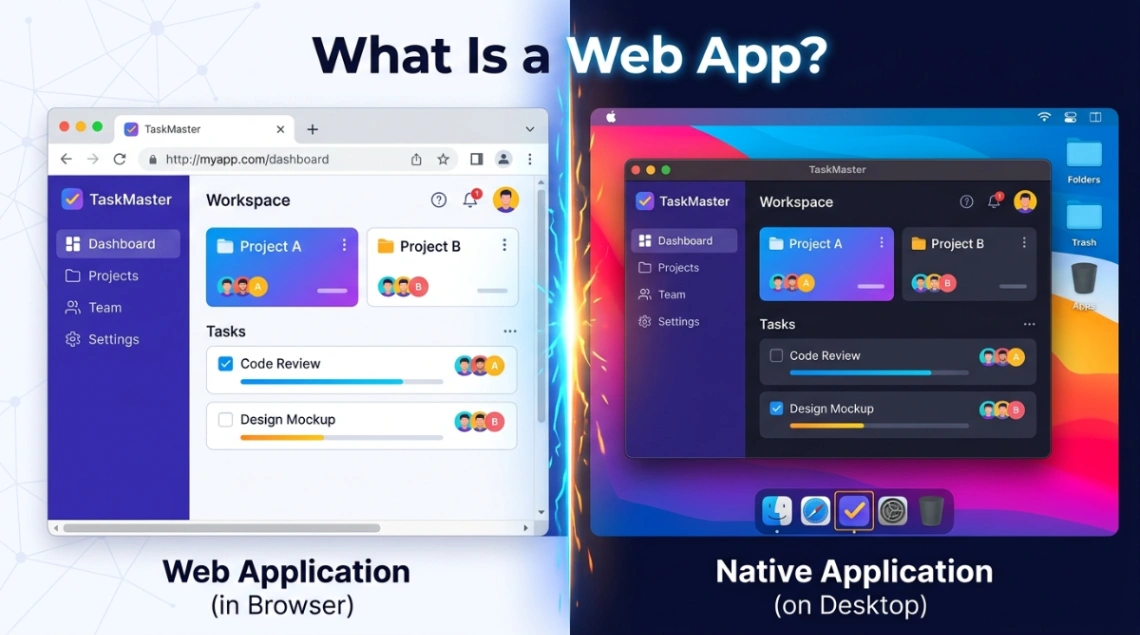
A web app is software that runs inside a browser instead of being installed on your device. In 2026, browsers handle hardware access, offline use, and near-native performance, which is why they're increasingly described as distributed operating systems.
Table of Contents
- So, What Actually Counts as a Web App?
- Why the Browser Quietly Became an Operating System
- WebAssembly and Project Fugu: The Reason This Works Now
- PWAs vs Native Apps: The Real Cost Math for Founders
- Deal-Breakers: The Questions Every Non-Technical Founder Asks
- Key Takeaways
- FAQ
Introduction
Marc Andreessen said in 1995 that the browser would one day reduce Windows to "a poorly debugged set of device drivers." In 2026, that's basically what happened. Figma runs in a tab. So does Photoshop. So does most of your day. For non-technical founders and small teams sizing up their first app build, this shift changes the answer to a very expensive question: do you actually need a native app, or will a web app do the job for a fraction of the cost? Here's a plain-English breakdown of what a web app is in 2026, what the browser can really do now, and how to pick the right path before you spend a cent on development.
So, What Actually Counts as a Web App?
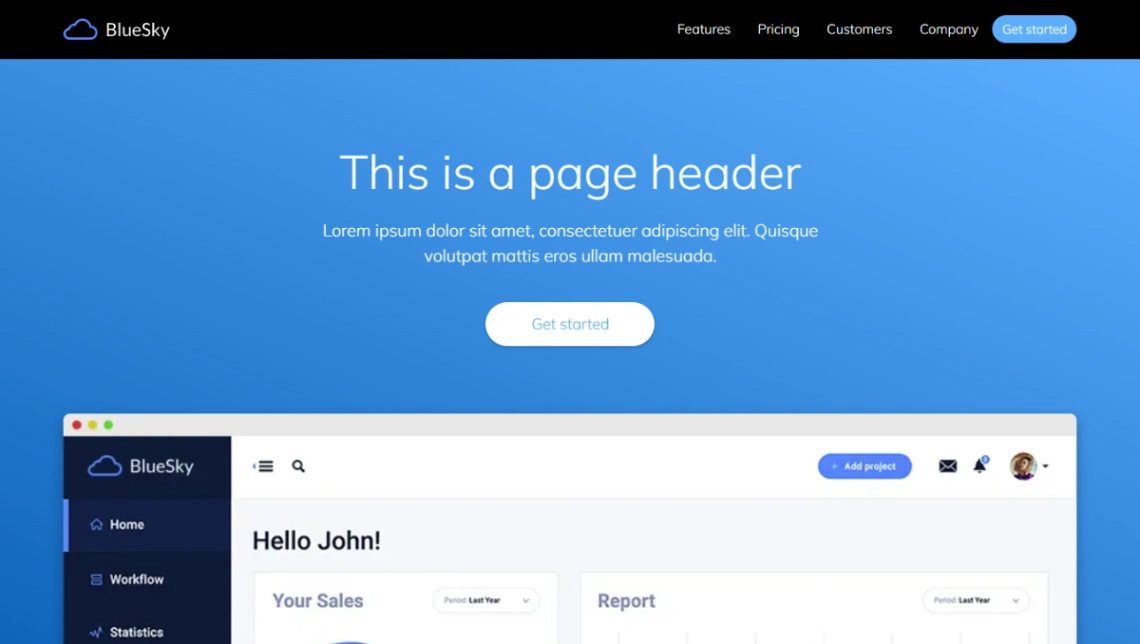
A web app is software you use through a browser. No download, no app store, no install wizard. You hit a URL and it runs.
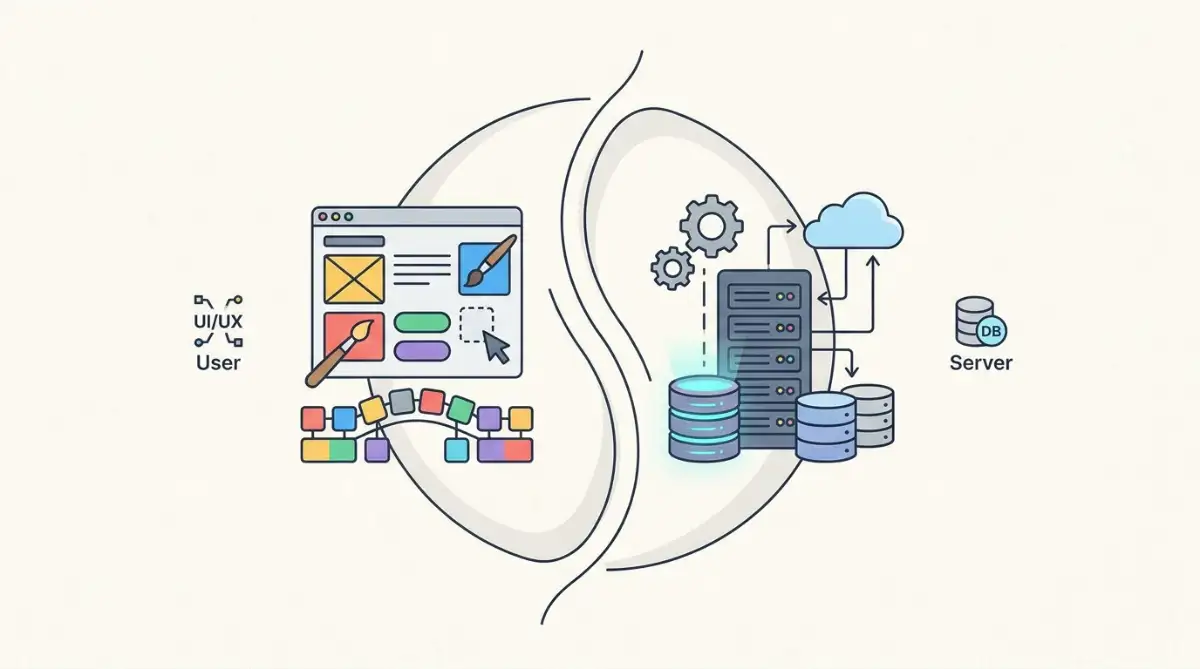
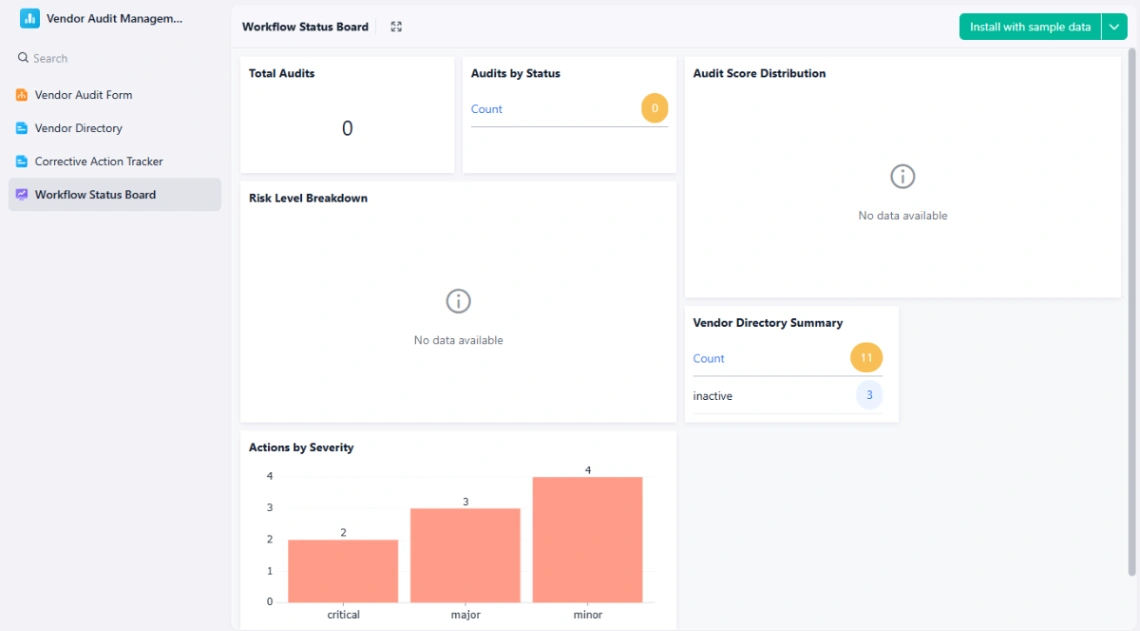
That sounds basic, but it's where most confusion starts. A website shows you information. A landing page sells one thing. A web app lets you do things: edit a document, manage a CRM, run a design file, book appointments. The defining trait is state, your work persists, your account remembers, the app responds to your input in real time.
Modern development web app workflows lean heavily on JavaScript frameworks (React, Vue), no-code builders, and edge backends. The result feels like software because, functionally, it is.
A few quick distinctions for the native vs web debate:
- Web app: runs in any browser, one codebase, instant updates
- Native app: installed from an app store, separate iOS and Android builds
- PWA (Progressive Web App): a web app you can install to your home screen, works offline
Why the Browser Quietly Became an Operating System
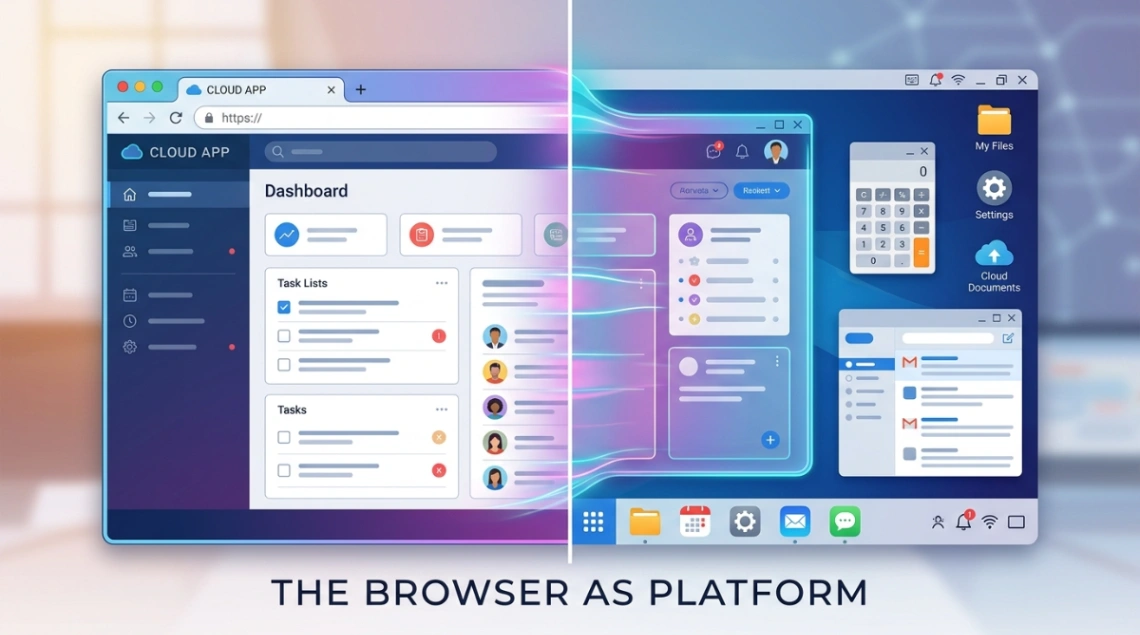
The short version: the browser now does what an OS does. It manages processes, isolates untrusted code in sandboxes, schedules tasks, and talks to hardware.
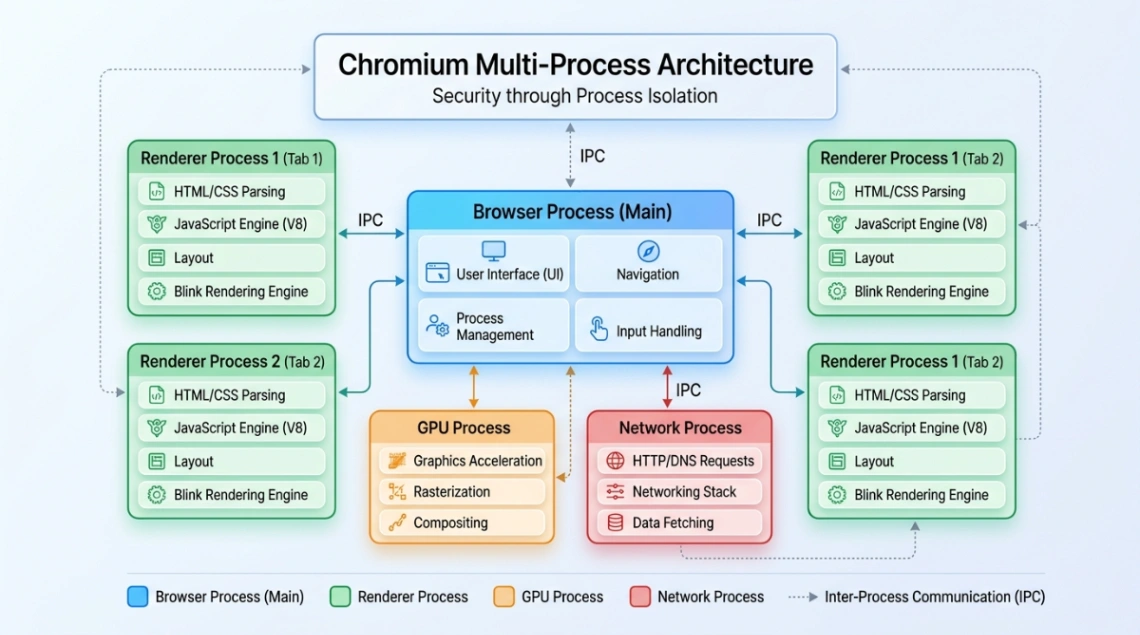
Google Chrome kicked this off in 2008 by giving every tab its own process, so a crash in one tab doesn't kill the others. According to Chromium's sandbox documentation, modern browsers run a privileged "broker" process plus isolated renderer, GPU, and network processes, the same separation-of-duties model a traditional OS kernel uses. Each renderer runs in a sandbox that blocks file system writes, kernel calls, and reads of other processes' memory.
ChromeOS is the literal version of this idea: an operating system where the browser is the desktop. The browser wars of the late 1990s, which I've written about in how IE vs Netscape gave us modern site builders, set the philosophical groundwork for exactly this outcome.
A Quick Tour of How Web Got Here
| Era | Years | What Changed |
|---|---|---|
| Static Web | 1990–1994 | HTML pages, no interaction |
| Early Dynamic | 1995–2004 | JavaScript, CSS, server-side scripts |
| Web 2.0 | 2005–2010 | AJAX, real-time updates, social platforms |
| SPA Era | 2011–2018 | React, Angular, app-like UX |
| Modern Web | 2019–2026 | WebAssembly, PWAs, hardware APIs |
Tools like WordPress (launched 2003) and the original WYSIWYG builders democratized who could ship to the web. The platform got more capable; the barrier to entry kept dropping.
WebAssembly and Project Fugu: The Reason This Works Now
Two technologies closed the gap between "web page" and "real software."
WebAssembly (Wasm) is a binary format that runs in browsers at near-native speed. According to ResearchGate's performance benchmarks, Wasm outperforms optimized JavaScript by 1.5x to 3x on compute-heavy tasks. That's why Figma's design engine, Adobe Premiere Rush, and Unity WebGL games run smoothly in a tab. According to Uno Platform's 2025–2026 State of WebAssembly report, Wasm adoption is now standard across major browsers and is the default compile target for performance-critical web work.
Project Fugu is the Google-Microsoft-Intel-Samsung collaboration that gives the browser hardware access. Today, web apps can talk to:
- USB devices, Bluetooth peripherals, serial ports
- The local file system (with user permission)
- NFC tags, MIDI instruments, gaming controllers
- The GPU, via WebGPU, for 3D and ML workloads
Per Chrome's Project Fugu API showcase, Fugu APIs only run in secure HTTPS contexts and require explicit user consent, so they keep the web's security model intact while closing the capability gap with native apps.
PWAs vs Native Apps: The Real Cost Math for Founders
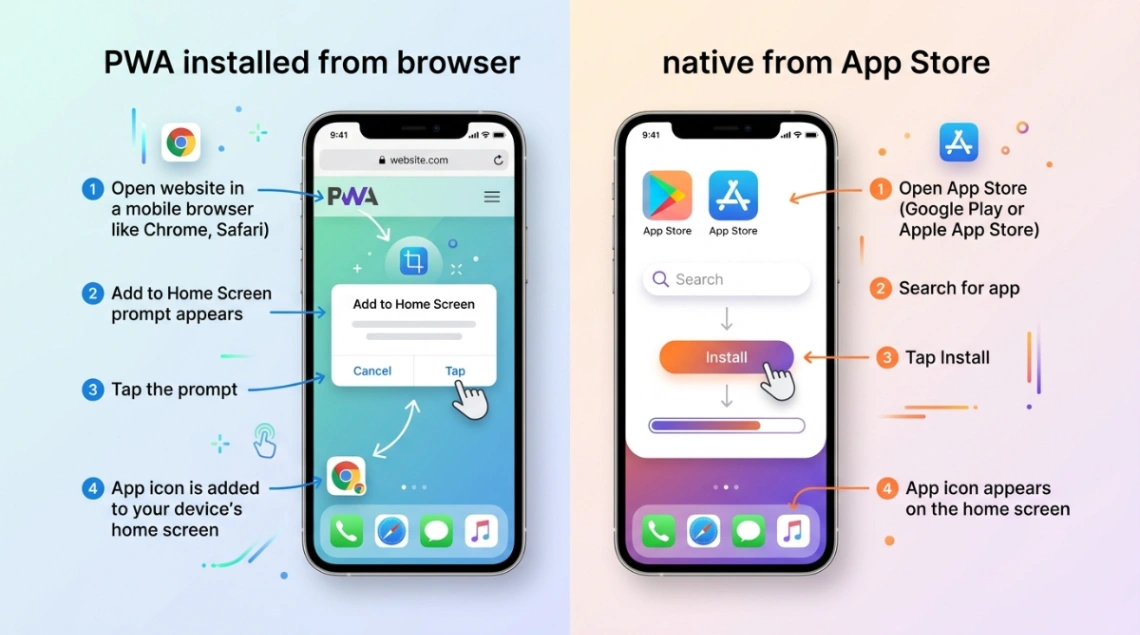
A Progressive Web App is a web app dressed up to behave like a native one. It installs to your home screen, runs offline via a Service Worker, and sends push notifications. For a small team picking a first build, the economics are usually decisive.
| Factor | PWA / Web App | Native App |
|---|---|---|
| Codebases | One | Two (iOS + Android) |
| Distribution | URL or install prompt | App Store + Play Store |
| Updates | Instant on refresh | Store review, days to weeks |
| Discoverability | SEO indexable | Buried in store search |
| Typical cost range | Lower | 2–3x higher |
Starbucks rebuilt its ordering experience as a PWA and reportedly doubled daily active users while shrinking the app to under 1MB. For most founders shipping a v1, that math wins. The exception is anything that needs deep OS integration, heavy background processing, or App Store-only monetization, which is where a native app still earns its cost.
Deal-Breakers: The Questions Every Non-Technical Founder Asks
Will it feel as fast as a native app? For most use cases, yes. Wasm-powered apps like Figma prove it. Heavy 3D gaming is still native-favored.
Can users install it without an app store? Yes, with a PWA. They tap "Add to Home Screen" and it lives like any other app.
Does it work offline? Yes, if you implement a Service Worker. Caching, sync, and push notifications all work without a connection.
How much cheaper is it really? Roughly half to one-third the cost of building separate iOS and Android apps, because you maintain one codebase.
Is it secure enough? Browser sandboxing is arguably stricter than desktop OS security because it's designed to run untrusted code by default.
Start exploring launch-ready no-code templates here!
Key Takeaways
- A web app is software in a browser, not a document. State, interactivity, and hardware access are what separate it from a static page.
- The browser is now an operating system in everything but name. Process isolation, sandboxing, GPU access, and offline support all live in the engine.
- For non-technical founders in 2026, PWA-first usually wins. One codebase, instant updates, no store gatekeepers, and roughly half the cost of going native.
The deeper shift is philosophical: the device you own matters less than the browser profile you log in to. Your software follows you. That's not a 2026 prediction, it's a 2026 fact, and it changes what "shipping an app" even means for the next wave of founders.
FAQ
Is a web app the same as a website? No. A website displays information; a web app does work. A web app is stateful, interactive, and behaves like installed software, even though it lives at a URL.
Do I still need a mobile app if I have a PWA? Usually not for v1. A well-built PWA installs to home screens, works offline, and sends push notifications. Go native only if you need deep OS features or App Store distribution.
What's the easiest way to build a web app in 2026? No-code and low-code platforms, paired with edge hosting (Cloudflare Workers, Vercel). You can ship a working v1 without writing backend code, then add custom logic as you grow.
Why is WebAssembly important for development web app projects? Wasm lets browsers run code at near-native speed. It's why heavy apps like Figma and video editors now work smoothly in a tab, no install required.
Are web apps secure for handling user data? Yes, when built on HTTPS with modern auth. Browser sandboxing isolates each app, and Fugu APIs require explicit user consent for hardware and file access.
Start building without code
Browse thousands of no-code templates for Webflow, Framer, Bubble, Lovable, Replit and more.
Explore Templates