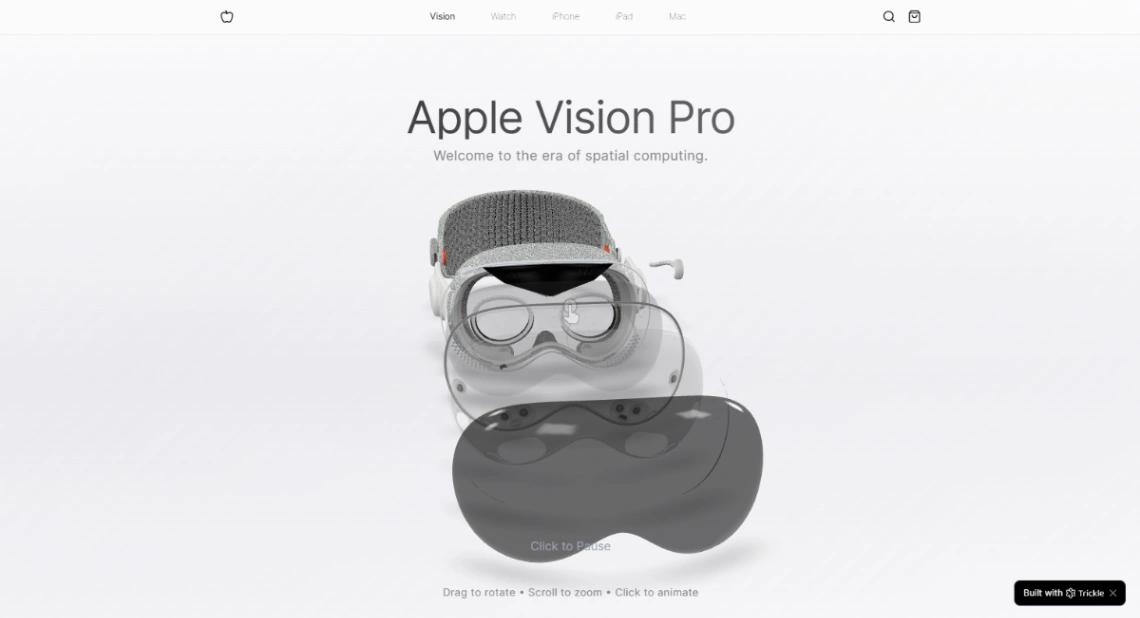
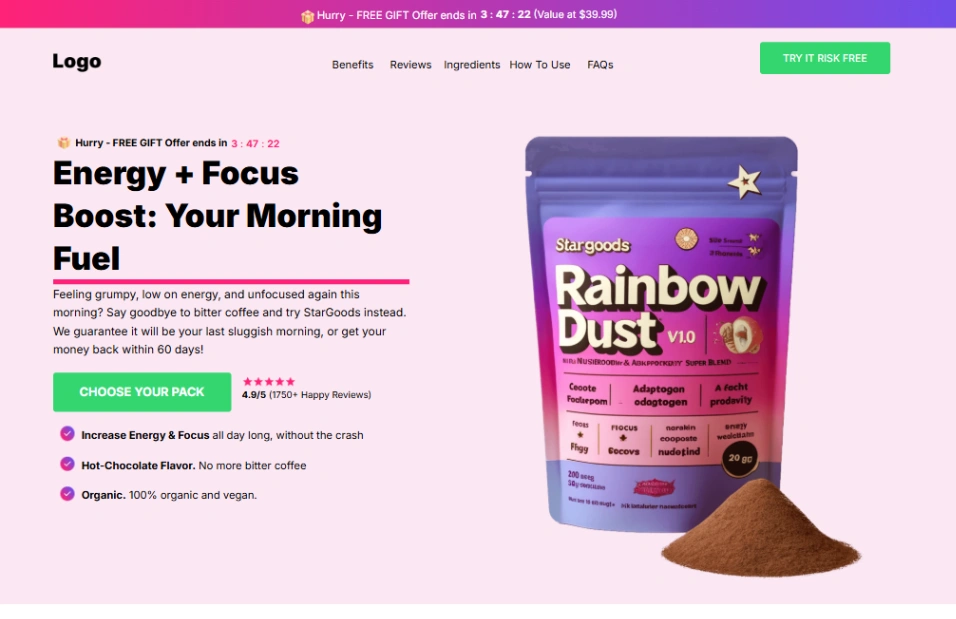
What Is a Landing Page? Solopreneur's 2026 Guide
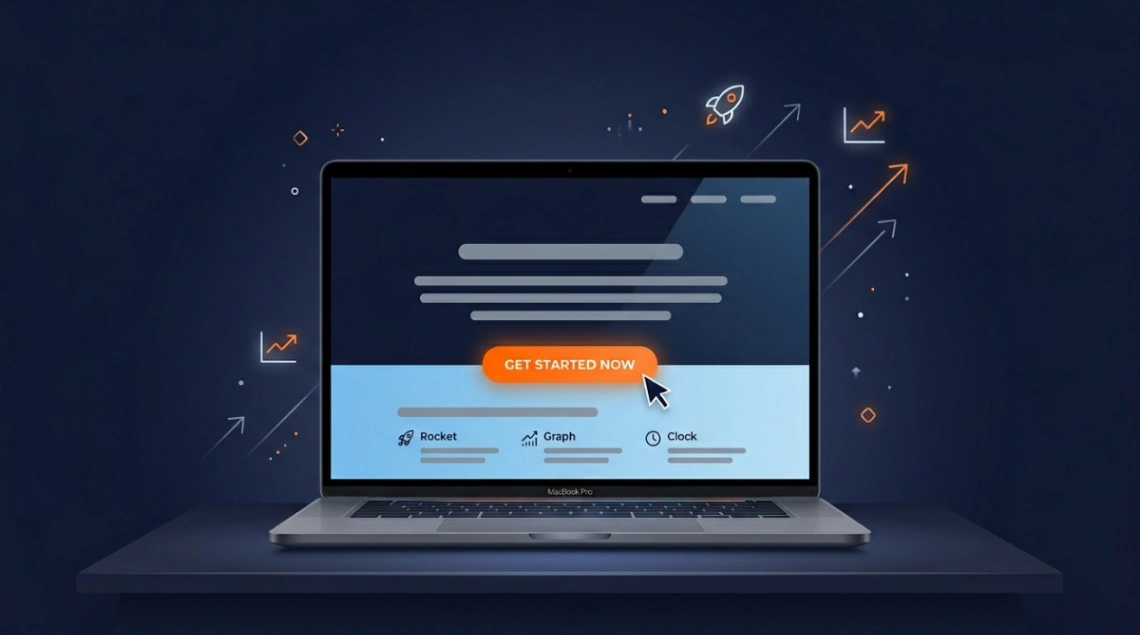
A landing page is a standalone web page built for one specific marketing goal, like capturing leads or driving a sale. Unlike a homepage, it removes navigation to eliminate distractions. Landing pages convert up to 10 times better than homepages for targeted campaigns, according to Unbounce.
Table of Contents:
- What Is a Landing Page, Really?
- Landing Page vs Homepage: The Key Difference for Solopreneurs
- The Main Types of Landing Pages (and When to Use Each)
- The Anatomy of a Page That Actually Converts
- How to Build a High-Converting Landing Page (Step by Step)
- Deal-Breakers: What Solopreneurs Ask Before Building
- Key Takeaways
- FAQ
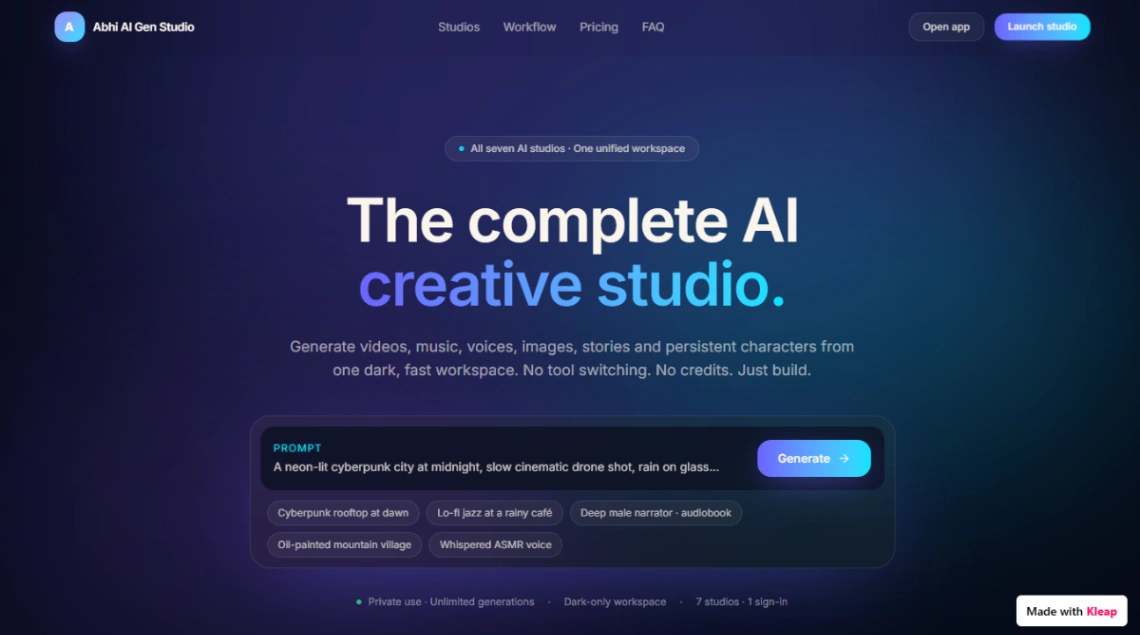
A landing page is a standalone web page built around one goal and one action, nothing else. If you're a solopreneur running ads or launching an MVP in 2026, it's the single most important asset you can build, because it's where cold clicks turn into paying customers. I've built dozens of these over the years, and the gap between a good one and a bad one is literally the difference between profitable ads and burning cash.
Here's the wild part: according to Unbounce, landing pages convert up to 10 times more effectively than homepages for targeted campaigns. That's not a rounding error, that's your runway.
What Is a Landing Page, Really?
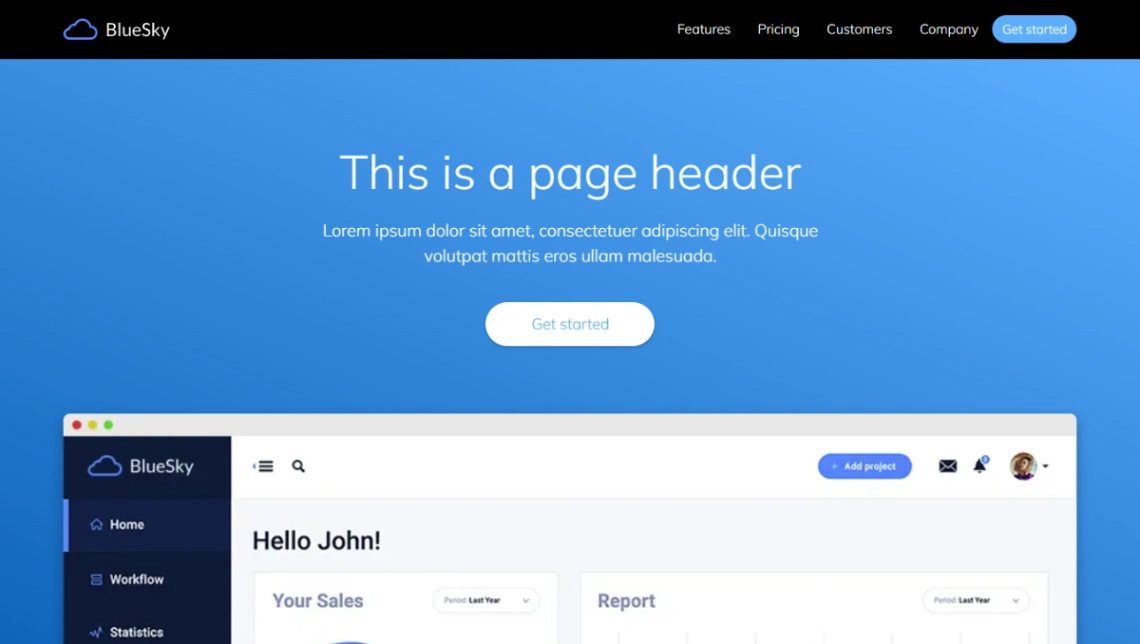
A landing page is a single web page with one purpose: convert a specific visitor into a specific action. No menu, no blog links, no "About Us" rabbit hole, just your offer and your call to action.
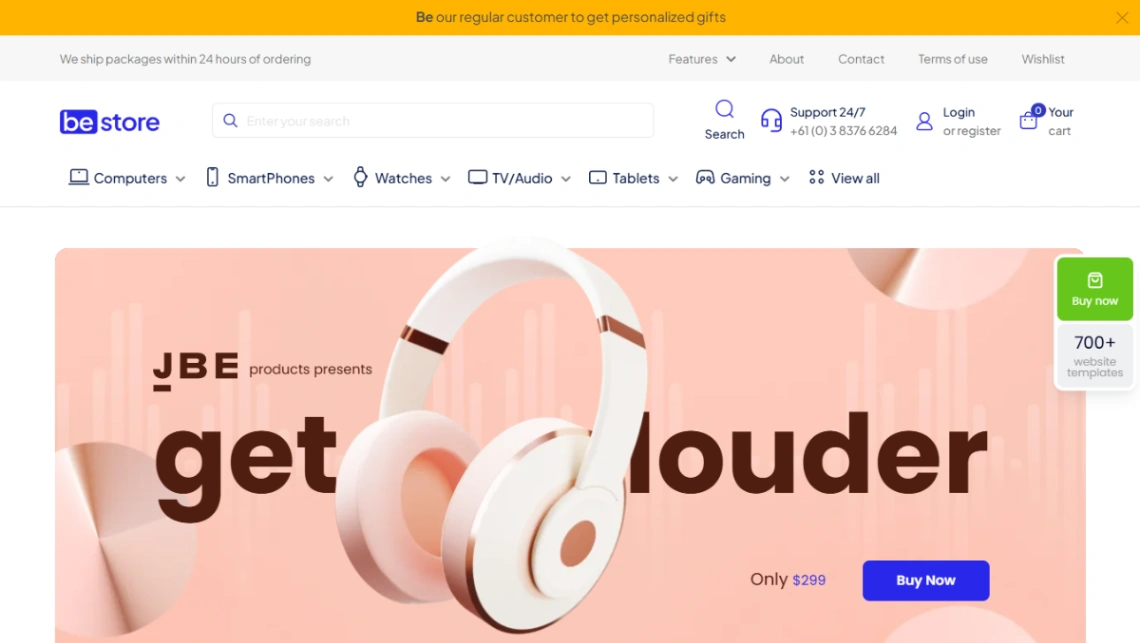
Think of your homepage as a shopping mall and your landing page as a vending machine. One invites browsing, the other exists to make a transaction happen. When someone clicks a Facebook ad for your free guide, they don't want to explore your company history. They want the guide. A landing page delivers it without friction.
The concept isn't new either. No-code tools have been letting non-developers spin up pages since the GeoCities and Angelfire days of the late 90s, but the modern landing page is a much sharper instrument.
Landing Page vs Homepage: The Key Difference for Solopreneurs
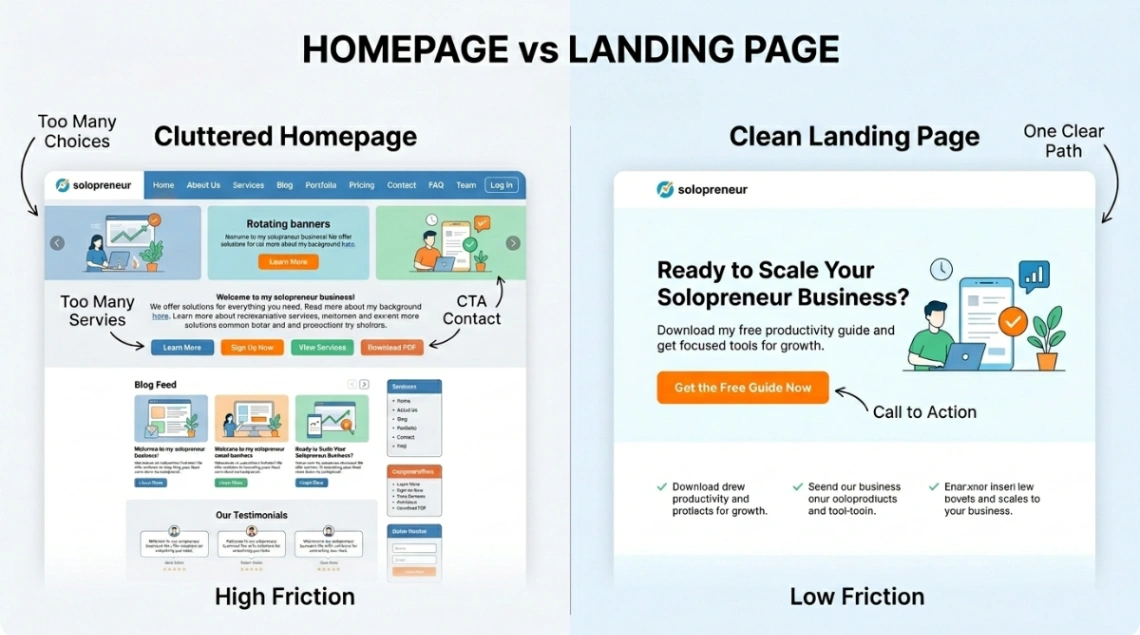
A homepage serves many audiences with many goals, while a landing page serves one audience with one goal. That's it. That's the difference that makes or breaks your ad spend.
For solopreneurs with limited budget, this matters enormously. Every extra link on a page is a chance for your visitor to leave. Conversion experts call this the "Attention Ratio," and the gold standard is 1:1, meaning one link per one conversion goal. Most homepages sit at 40:1 or worse, according to research published by Involve.me.
| Feature | Homepage | Landing Page |
|---|---|---|
| Purpose | Brand discovery | Single conversion |
| Navigation | Full menu | None or minimal |
| Audience | Broad | One specific segment |
| Best for | Organic branding | Paid ads, email, launches |
| Attention Ratio | 40:1+ | 1:1 |
Pro tip from my own campaigns: message match matters. When your ad headline and your landing page headline say the same thing, conversions climb significantly, which is why Instapage data shows dedicated landing pages outperform homepages even for branded search traffic.
The Main Types of Landing Pages (and When to Use Each)
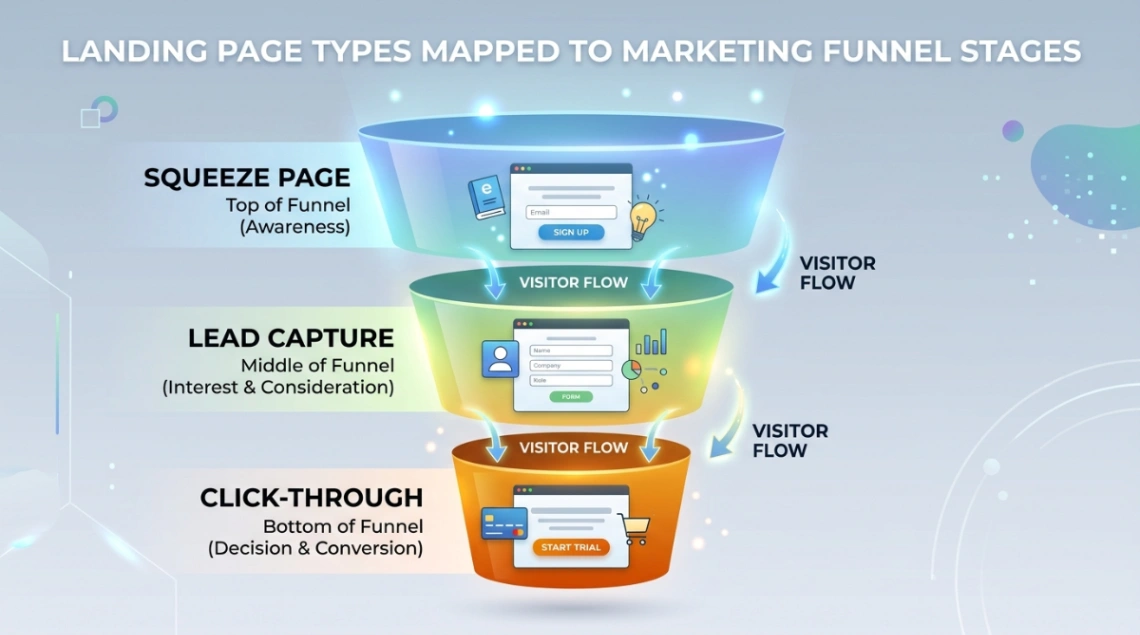
There are two dominant categories: lead generation pages and click-through (transactional) pages. Picking the wrong one for your funnel stage is like bringing a fork to soup.
- Squeeze page: Top-of-funnel, grabs an email in exchange for a freebie. Minimal fields, single goal.
- Lead capture page: Mid-funnel, asks for more qualifying info in exchange for bigger value.
- Click-through page: Bottom-funnel, warms up the visitor before sending them to checkout. Beloved by SaaS and ecommerce.
- Long-form sales page: For complex or high-ticket offers that need heavy education and objection handling.
Unbounce breaks down 13 landing page types if you want to go deeper, but for 90% of solopreneurs, those four cover every scenario you'll actually face.
The Anatomy of a Page That Actually Converts
Every high-performing landing page has six non-negotiable elements working together. Miss one and your conversion rate tanks.
- A specific headline. 80% of visitors never read past it. Promo boosted conversions by 81% just by changing "Create Videos That Convert" to "Make a Video in 5 Minutes."
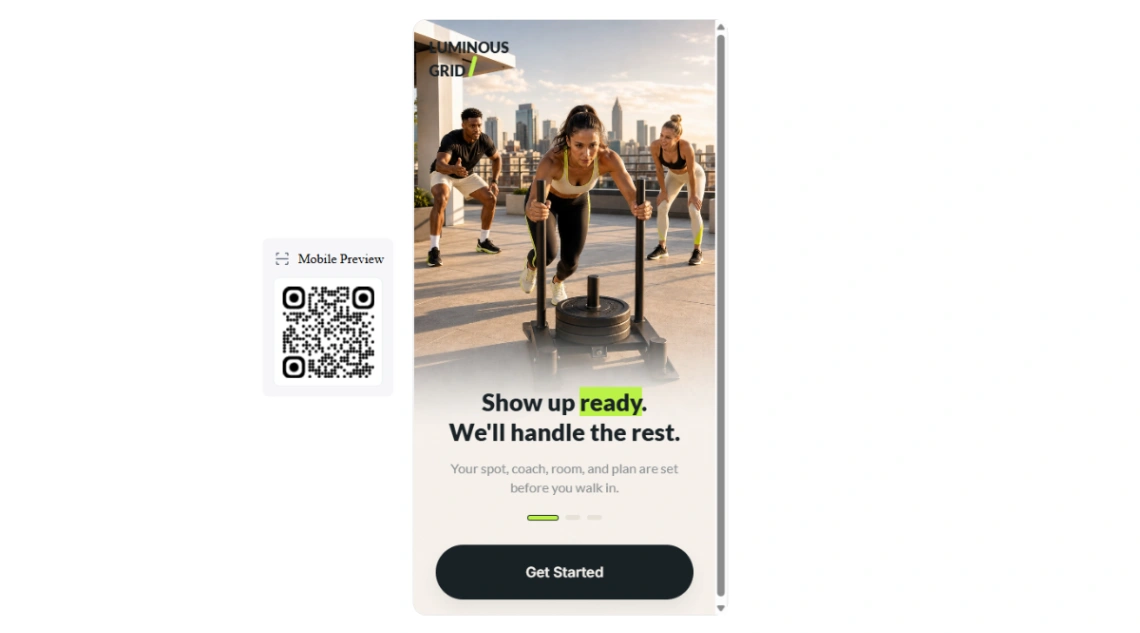
- A hero shot. Humans process visuals 60,000 times faster than text. Show your product doing its thing.
- Benefit-focused copy. Tell people what changes in their life, not what your tool does.
- Social proof. Testimonials with photos lift conversions by up to 102.5%, according to data from SamCart.
- An irresistible CTA. Personalized CTAs outperform generic ones by 202%. Skip "Submit." Try "Get My Free Guide."
- A short form. Cutting form fields from 11 to 4 can raise conversions by 120%.
Oh, and speed? A one-second delay cuts conversions by 7%, and 53% of mobile visitors bounce after three seconds. Considering that mobile traffic accounted for over 83% of landing page visits by late 2025 per SEO Sherpa's 2026 benchmark report, a slow page is basically a closed shop.
How to Build a High-Converting Landing Page (Step by Step)
Building one isn't complicated, but the order matters. Here's the workflow I use for every client project, start to finish.
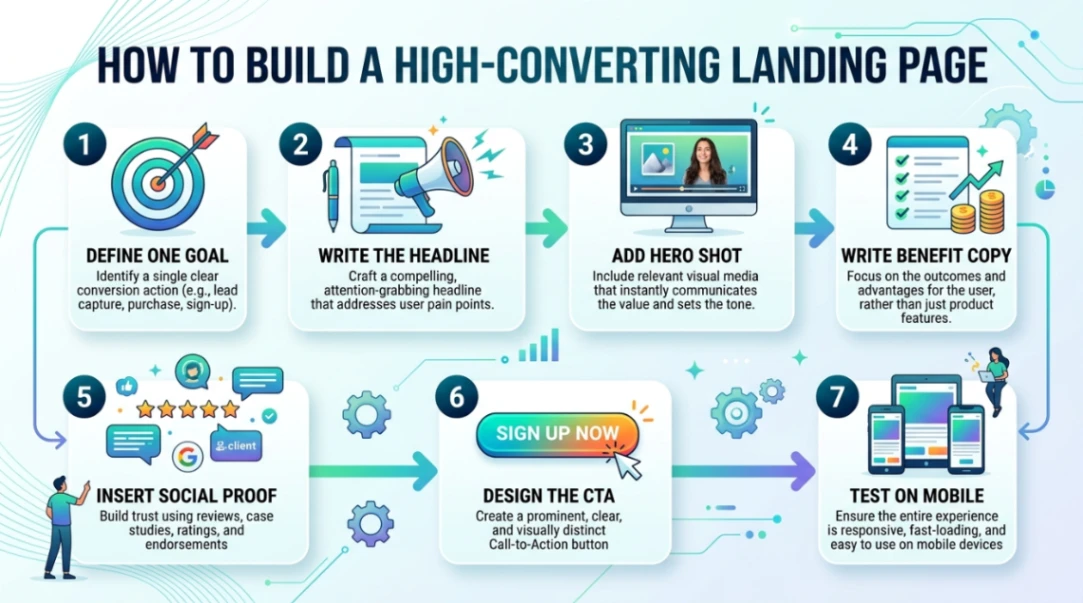
- Define one goal. Email signup OR demo booking OR purchase. Never all three.
- Write the headline first. Make it specific, outcome-driven, and match your ad copy word for word.
- Pick the hero shot. A product screenshot or short GIF beats a stock photo every time. Mixpanel does this beautifully.
- Write scannable benefit copy. Bullet points, bold text, short paragraphs.
- Stack your social proof. Testimonials with faces, client logos, and real numbers.
- Design the CTA button. Contrasting color, action language, positioned both above and below the fold.
- Stress-test on mobile. If it doesn't load in under 3 seconds on a slow connection, fix it before launching.
Deal-Breakers: What Solopreneurs Ask Before Building
Before you pick a builder, here are the questions I always hear from fellow solopreneurs, answered straight:
- Do I need to code? No. Modern no-code builders handle everything via drag-and-drop, a huge leap from the old Dreamweaver vs FrontPage days.
- How much does it cost? Entry-level builders start around $15 to $49 per month. Enterprise tools like Instapage run much higher, as KlientBoost's 2025 builder breakdown details.
- Will it work on mobile? Any builder worth using in 2026 is mobile-first by default. Confirm it before you commit.
- How fast can I launch? With a template, under an hour. From scratch, half a day tops.
- Does it integrate with my ads and email? Check for native Meta, Google Ads, Mailchimp, and ConvertKit integrations.
Start exploring launch-ready landing page templates here!
Key Takeaways
- Focus beats features. A landing page wins because it removes choices. One goal, one CTA, zero distractions. That's the whole game.
- Speed and mobile are non-negotiable in 2026. With 83% of traffic on mobile and a 7% conversion drop per second of delay, your technical performance is your conversion rate.
- Specificity sells. Generic headlines, generic CTAs, and generic audiences all lose. Name your ICP, promise one outcome, and prove it with social proof.
Here's my honest take: most solopreneurs overthink branding and underthink conversion. Your visitors don't care about your logo, they care whether your page answers the exact question that made them click. Nail that, and the ROI takes care of itself.
FAQ
What's the average landing page conversion rate in 2026? The global median sits around 6.6%, according to Unbounce's conversion benchmark report covering 57 million conversions. SaaS averages 3.8%, while events and education run higher.
How long should a landing page be? It depends on price and complexity. Low-ticket or email captures work great short. High-ticket B2B offers often need long-form pages with FAQs, demos, and heavy social proof.
Do I need a separate landing page for each ad? Yes, ideally. Matching ad copy to page copy (message match) can lift conversions 25% to 40%, so one page per campaign is worth the effort.
What's the best landing page builder for solopreneurs? Leadpages is beginner-friendly and affordable, Unbounce is better for AI-driven optimization, and Swipe Pages leads on mobile speed. Match the tool to your priority.
Can I build a landing page without any design skills? Absolutely. No-code builders with pre-converted templates handle the design for you. This has been the promise of no-code since WordPress made it mainstream in 2003, and the tools have only gotten sharper since.
Start building without code
Browse thousands of no-code templates for Webflow, Framer, Bubble, Lovable, Replit and more.
Explore Templates