The First WYSIWYG: Why WebMagic (1995) Deserves More Credit.
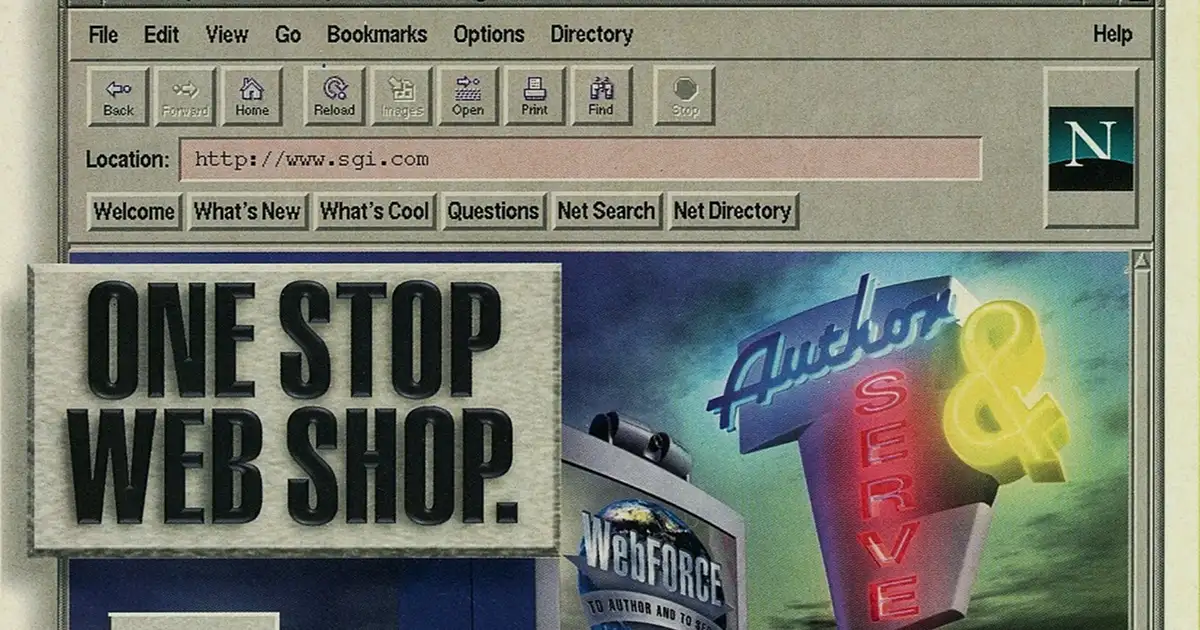
SGI's WebMagic, launched on January 26, 1995, was the world's first WYSIWYG (What You See Is What You Get) visual web editor - making it the original no-code website builder. It let users drag and drop images, movies, and text directly onto a web page without writing a single line of HTML. Microsoft's own internal memos later confirmed it was the benchmark that inspired Windows-based web tools.
Table of Contents
- The Web Before No-Code: It Was Painful
- What Was WebMagic, Exactly?
- Built in 76 Days: The Sprint Behind the Product
- How WebMagic Stacked Up Against What Came Next
- Why You've Never Heard of It
- Key Takeaways
- FAQ
The Web Before No-Code: It Was Painful
If you've ever dragged a photo into Squarespace or typed a headline into Wix, you've benefited from a paradigm that had to be invented - and it wasn't invented by any of the names you'd guess.
Before 1995, building a website meant manually typing HTML tags into a plain text file. Want a bold heading? You typed <h1> and </h1> around it. Want to add an image? You wrote the full <img src=""> tag by hand, then switched to a browser to preview it, then went back and fixed what broke. Rinse. Repeat. It was more like programming than designing.
The web was clearly the future - insiders were calling it the "Big Wave" of computing - but the tools to build for it were stuck in the Stone Age. You basically needed a computer science background just to publish a web page. Creative professionals, marketers, and business owners were completely locked out.
That's the world Silicon Graphics, Inc. (SGI) walked into when they decided to build something different. If you want to dig into the full timeline of visual web editors, this evolution of WYSIWYG editors is a solid read.
What Was WebMagic, Exactly?
WebMagic was SGI's answer to the HTML nightmare - a native visual web editor that let you see your web page as you built it, no code required. Think of it as the great-great-grandparent of every no-code website builder you've ever used.
Launched as the centerpiece of the WebFORCE suite on January 26, 1995, WebMagic ran on SGI's IRIX operating system and was designed to give web pages the same drag-and-drop simplicity as a word processor. Here's what made it genuinely impressive for its time:
- Tear-off menus for formatting styles that floated as palettes on your screen
- A "Drop Pocket" system where you could drag image, video, or audio file icons directly from your desktop into the editor - and it auto-generated the correct HTML markup for you
- Real-time rendering of HTML tags, so what you saw on screen matched exactly what Netscape Navigator would show your visitors
- Support for GIF, JPEG, MPEG-1, and AIFF - multimedia formats that PCs could barely handle at the time
The goal was simple: make web publishing feel "as natural as working with text." In 1995, that was borderline revolutionary.
Built in 76 Days: The Sprint Behind the Product
Here's where the story gets genuinely wild. WebMagic didn't have years of development behind it. It was built in 76 days.
In late 1994, SGI product manager John McCrea pitched the idea to SGI President Tom "TJ" Jermoluk and walked out with $2.5 million in funding and a hard deadline: ship a complete web authoring and serving product line by January 1995. The fear was real - Sun Microsystems and Apple were circling the same opportunity, and whoever got there first would own the market.
The team scrambled. They evaluated an early WINTERP-based prototype but ditched it. They found a more promising Motif-based HTML editor being developed at Amdahl by contractor David Koblas and built on that foundation. Then came the sprint:
| Milestone | Date | What Happened |
|---|---|---|
| Project Funded | November 1994 | $2.5M secured for "Spider" project |
| Code Foundation Selected | December 1994 | Koblas's C++/Motif codebase acquired |
| Brand Born | December 6, 1994 | "WebFORCE" replaces the codename "Spider" |
| Product Launched | January 26, 1995 | SGI and Netscape unveil WebMagic to the world |
The team - David Koblas, Ken Kershner, Ashmeet Sidana, Baron Roberts, and Victor Riley - worked through late nights to port the code to IRIX and integrate it with SGI's media tools. The January 26 launch date wasn't a target; it was a promise. And they kept it. John McCrea, the product manager who drove the whole thing, documented the untold story behind the launch in his own words - worth a read if you want the full behind-the-scenes picture.
How WebMagic Stacked Up Against What Came Next
WebMagic didn't just show up first - it showed up nearly nine months before its closest competitor. Here's how the early WYSIWYG web editor timeline actually looked:
| Product | Launch Date | Platform | Target User |
|---|---|---|---|
| WebMagic | January 1995 | IRIX (Unix/SGI) | Professional media creators |
| FrontPage 1.0 | October 1995 | Windows | Business users |
| PageMill 1.0 | December 1995 | Macintosh | Entry-level creatives |
| Dreamweaver | December 1997 | Windows/Mac | Professional developers |
And it wasn't just a matter of showing up first. Microsoft knew WebMagic was setting the standard. An internal memo from Microsoft executive Paul Maritz to Bill Gates, dated June 1995 - which later surfaced as evidence in the U.S. government's antitrust case against Microsoft - explicitly stated that Microsoft couldn't close the web authoring gap "until a suite similar to SGI's WebFORCE is available on PCs." That's a pretty remarkable admission from the company that would go on to dominate the category.
At the January 26, 1995 launch event at SGI's Mountain View campus, Marc Andreessen of Netscape announced that Navigator 1.1 would support the 3D and multimedia features SGI was enabling. For a brief moment, SGI was the second hottest brand on the web, behind only Netscape itself.

Why You've Never Heard of It
So if WebMagic was so influential, why does basically no one talk about it today? The answer is one part platform, one part pricing, and one part timing.
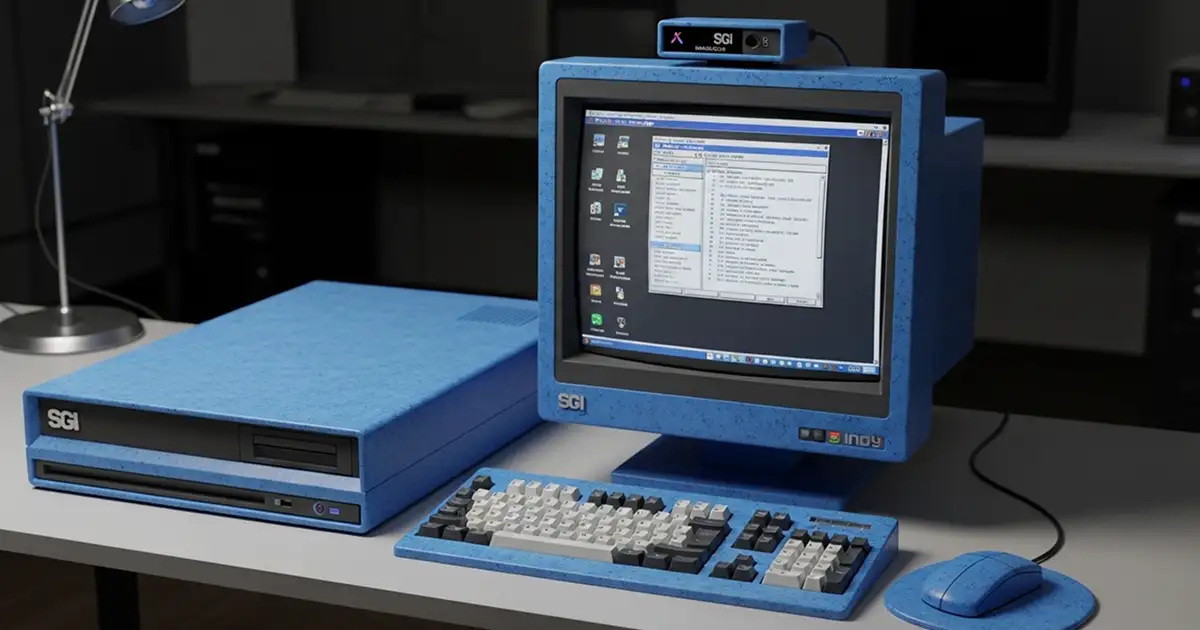
WebMagic ran on SGI's UNIX workstations - the Indy and Indigo2 models - which were powerful, gorgeous machines that also cost a small fortune. These weren't consumer products; they were sold to Hollywood studios and government agencies. Regular businesses and individual creators couldn't afford them.
When Microsoft acquired Vermeer Technologies (the makers of FrontPage) for $133 million in early 1996, FrontPage became bundled with Microsoft Office and Internet Explorer - instantly putting a visual web editor in the hands of millions of Windows users for free. WebMagic simply couldn't compete with free. (You can trace this whole saga on the Microsoft FrontPage Wikipedia page or check out this handy timeline from FrontPage to vibe coding.)
SGI did try to broaden its reach. They created the Cosmo Software division to bring their visual and 3D web tools to Windows and Mac. Cosmo Player, their VRML browser, was even bundled with Netscape Communicator - CNET covered SGI's push to merge VRML browsers with Netscape at the time. But their most ambitious vision — a truly 3D, interactive web (which ComputerWorld memorably described as "electronic LSD") - was ahead of its time. The bandwidth and processing power just weren't there yet for general audiences.
The lesson? Being right isn't always enough. Being right on the right platform at the right price is what wins the market. WebMagic was right. It just wasn't accessible.
Key Takeaways
-
WebMagic was the original no-code website builder. Launched January 26, 1995, it introduced drag-and-drop web editing, real-time visual rendering, and multimedia asset integration - nine months before any Windows-based competitor existed.
-
Its influence was acknowledged at the highest levels. Microsoft's own internal communications cited SGI's WebFORCE as the benchmark they needed to match before they could compete in web authoring. That's not a footnote - that's a legacy.
-
Platform access killed a pioneer. WebMagic lost not because it was inferior, but because it lived on expensive hardware. The tools that came after it - FrontPage, PageMill, eventually Dreamweaver - succeeded by making visual web editing available to everyone.
Every time you build a website without touching code, you're standing on a foundation that a team of engineers laid in 76 frantic days back in 1995. Maybe it's time WebMagic got a little credit for that.
FAQ
What was the first WYSIWYG web editor? SGI's WebMagic, launched on January 26, 1995, is the first documented WYSIWYG web editor. It predated FrontPage and PageMill by nearly a year.
What is a no-code website builder? A no-code website builder lets you create web pages visually - through drag and drop and menus - without writing HTML or any other code. WebMagic was the first tool to do this.
Why did WebMagic fail in the market? WebMagic was tied to SGI's expensive UNIX workstations, pricing it out of the mass market. When Microsoft bundled FrontPage with Office and IE for free, WebMagic couldn't compete on reach.
Did Microsoft know about WebMagic? Yes. A June 1995 internal Microsoft memo from Paul Maritz to Bill Gates explicitly named SGI's WebFORCE as the benchmark Microsoft needed to match on PCs.
What came after WebMagic in the history of no-code web tools? FrontPage (October 1995), PageMill (December 1995), and Dreamweaver (1997) followed. Today's tools like Wix, Squarespace, and Webflow are the modern descendants of this lineage.
Start building without code
Browse thousands of no-code templates for Webflow, Framer, Bubble, Lovable, Replit and more.
Explore Templates