No Code vs Vibe Code: What Actually Sets Them Apart
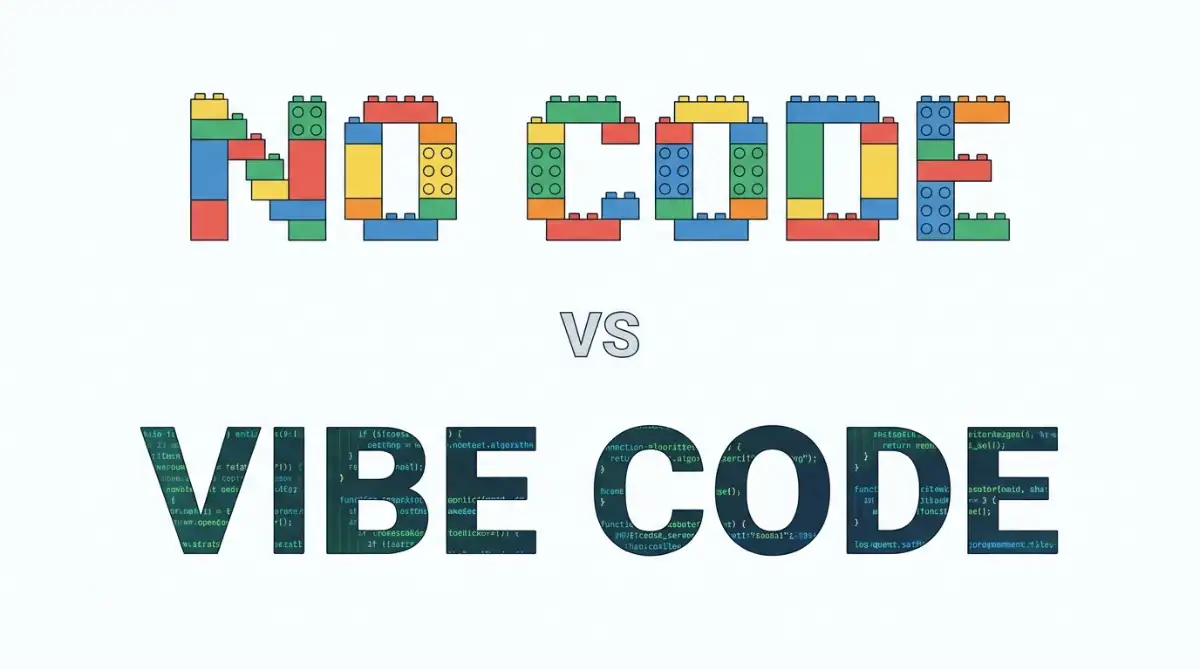
No-code and vibe coding are not interchangeable shortcuts for "building without a developer." No-code locks your project into a vendor's visual platform with predictable pricing and built-in guardrails, while vibe coding hands you a real, ownable codebase written by an AI, one you're responsible for hosting, securing, and maintaining yourself.
Table of Contents:
- Key Takeaways
- Introduction
- What's the Actual Difference Between No-Code and Vibe Coding?
- Where Did the Term "Vibe Coding" Come From?
- How Are No-Code Apps and Vibe-Coded Apps Actually Built?
- Why Is Vibe Coding Called "Shadow IT 2.0"?
- Which Option Actually Costs Less Over Time?
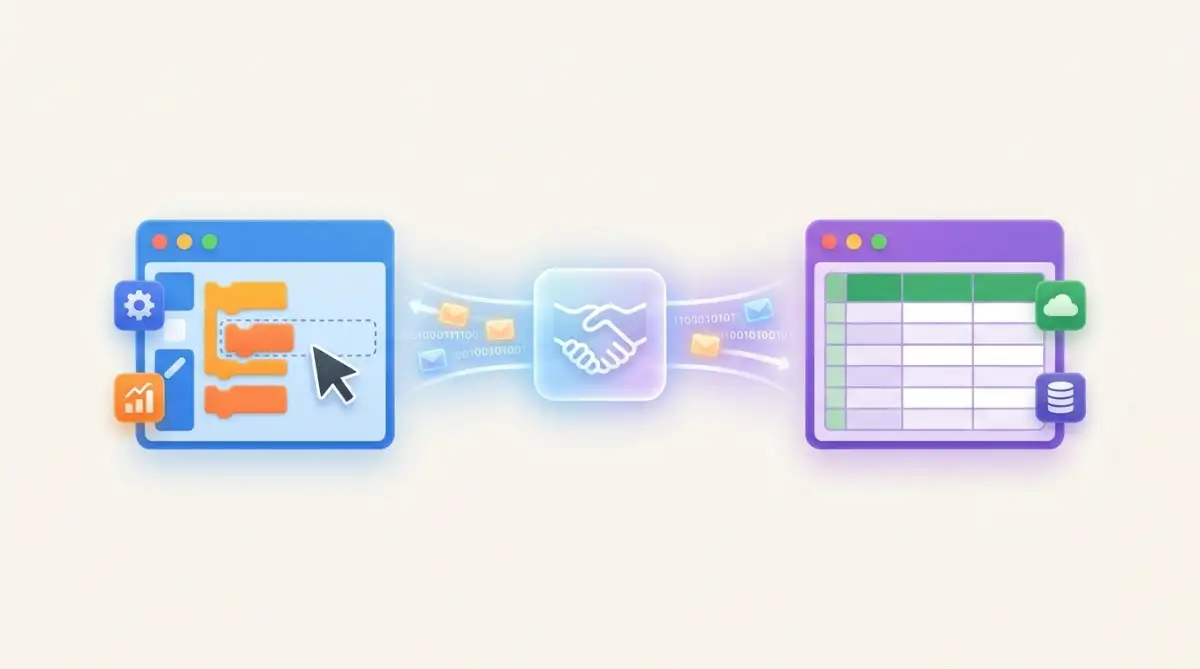
- Can No-Code and Vibe Coding Work Together?
- Decision Framework: Choosing Between No-Code and Vibe Coding
- FAQ
Key Takeaways
- No-code and vibe coding both promise you can build software without hiring a developer, but one uses fixed, vendor-maintained visual blocks and the other rolls fresh AI-generated dice every time.
- The security numbers behind AI-generated code, including real vulnerability counts from independent researchers, are a big part of why some experts now call vibe coding "Shadow IT 2.0."
- A single flat-rate no-code subscription can quietly replace the job of four or five separate vibe-coding tools once hosting, a database, and authentication are added up.
Introduction
If you've typed a prompt into an AI tool and called the result "no-code," you're not alone, and you're also not quite right. Solo founders and small agency owners without a technical co-founder are choosing between two very different build paths right now: no code vs vibe code. One runs on drag-and-drop blocks a vendor maintains forever, while the other runs on AI-generated source code that only exists because a language model predicted it, one line at a time, from a plain-English prompt.
These two paradigms get lumped together constantly, but they split apart at the architecture level, not just the interface. Below, we'll walk through how each one is actually built, what it costs over a year, and which one can quietly wreck your security posture.
What's the Actual Difference Between No-Code and Vibe Coding?
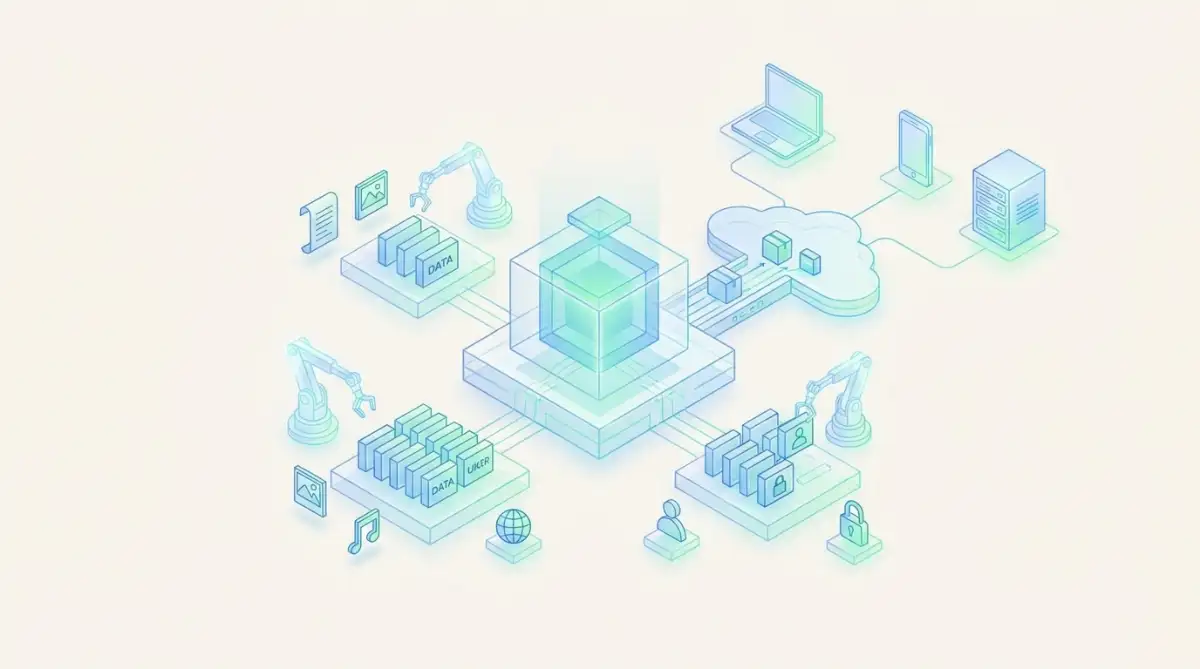
The real split in no code vs vibe code comes down to one mechanical fact: no-code platforms compile your visual work into a fixed, vendor-managed configuration, while vibe coding uses an AI model to generate raw, editable source code from natural language. Everything downstream, cost, security, who maintains it, flows from that single architectural choice.
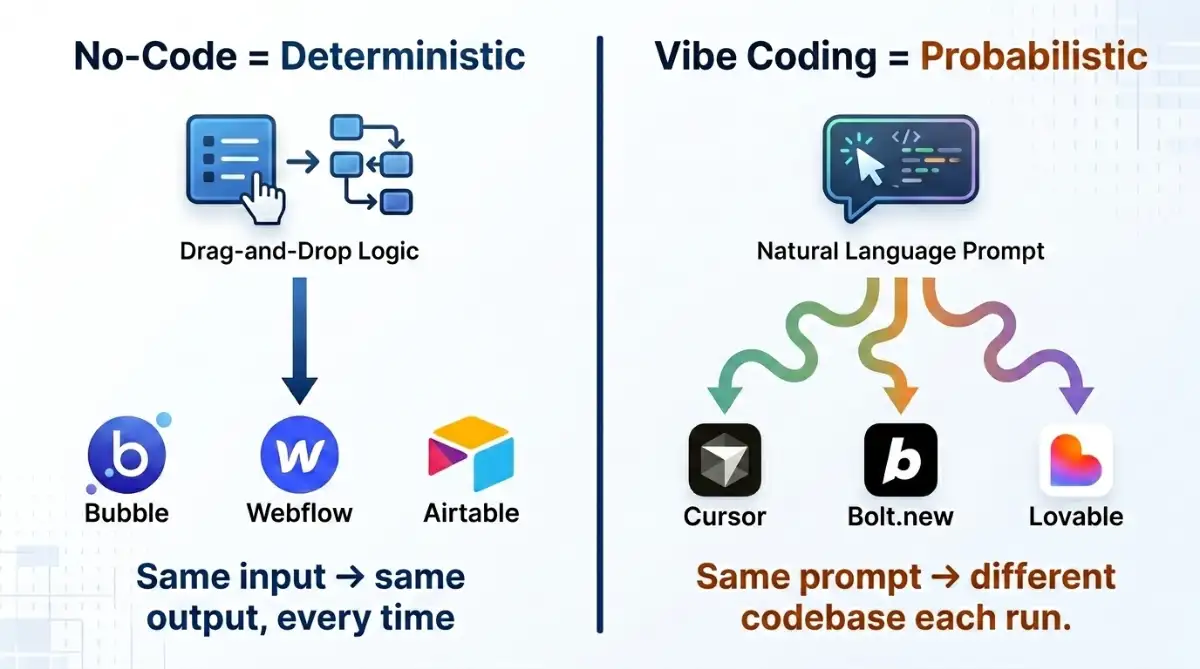
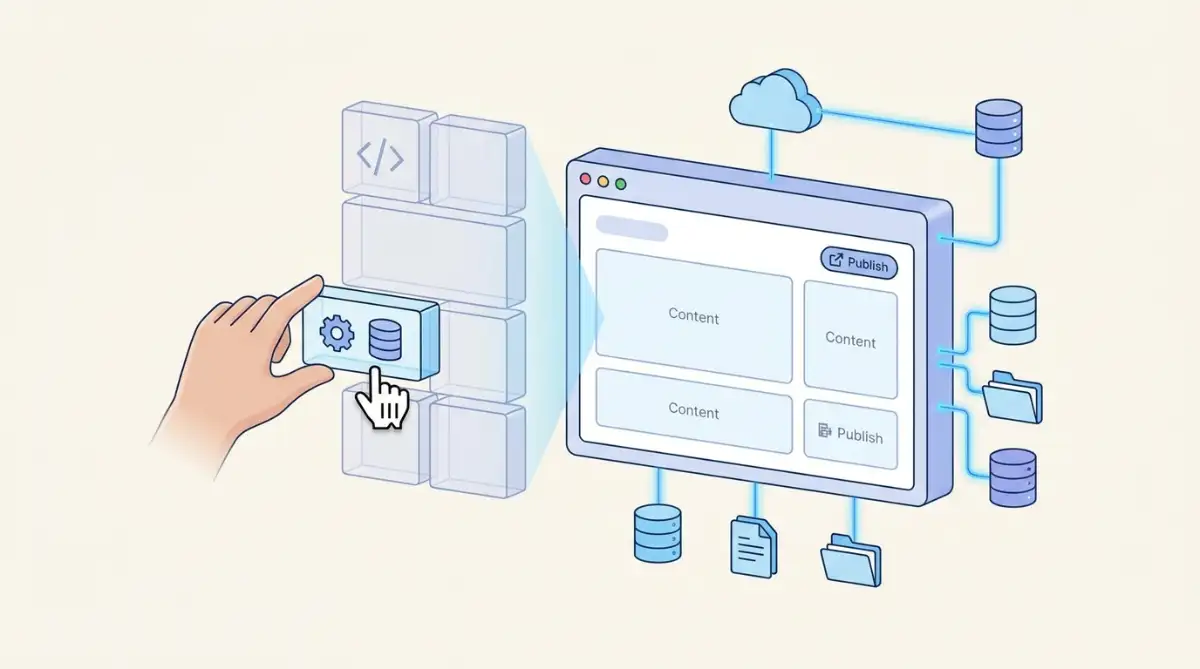
No-code platforms like Bubble, Webflow, and Airtable follow the definition Microsoft and Gartner have used for years: you assemble pre-built visual components, and the platform's compiler turns your layout into declarative configuration. Run the same setup twice and you get the exact same result every time. That's what "deterministic" means, and it's why IT departments trust these tools enough to hand them to non-engineers. Our guide to what a no-code builder actually is covers that compiler layer in more depth.
Vibe coding flips that model. Tools like Cursor, Bolt.new, and Lovable take a plain-English prompt and generate a real codebase, usually React on the frontend with Node.js or Python on the backend. Ask for the same feature twice and you can get two structurally different codebases back. That's the probabilistic part, and it's why no two vibe-coded apps built from the "same" prompt are ever quite identical.
Our breakdown of what vibe coding actually involves has more on that generation process. Low-code sits somewhere between the two, blending visual building with limited scripting, but that's its own comparison.
No-code platforms are deterministic by design: the same visual configuration produces the same program state every time you run it, while the same AI prompt can produce a different codebase twice in a row.
A quick gut-check on the two models:
- Deterministic (no-code): same input, same output, every time
- Probabilistic (vibe coding): same prompt, potentially different code each run
- Compiler layer: proprietary visual engine vs. an LLM inferring syntax
- Who owns the result: the platform vendor vs. you, fully
Where Did the Term "Vibe Coding" Come From?
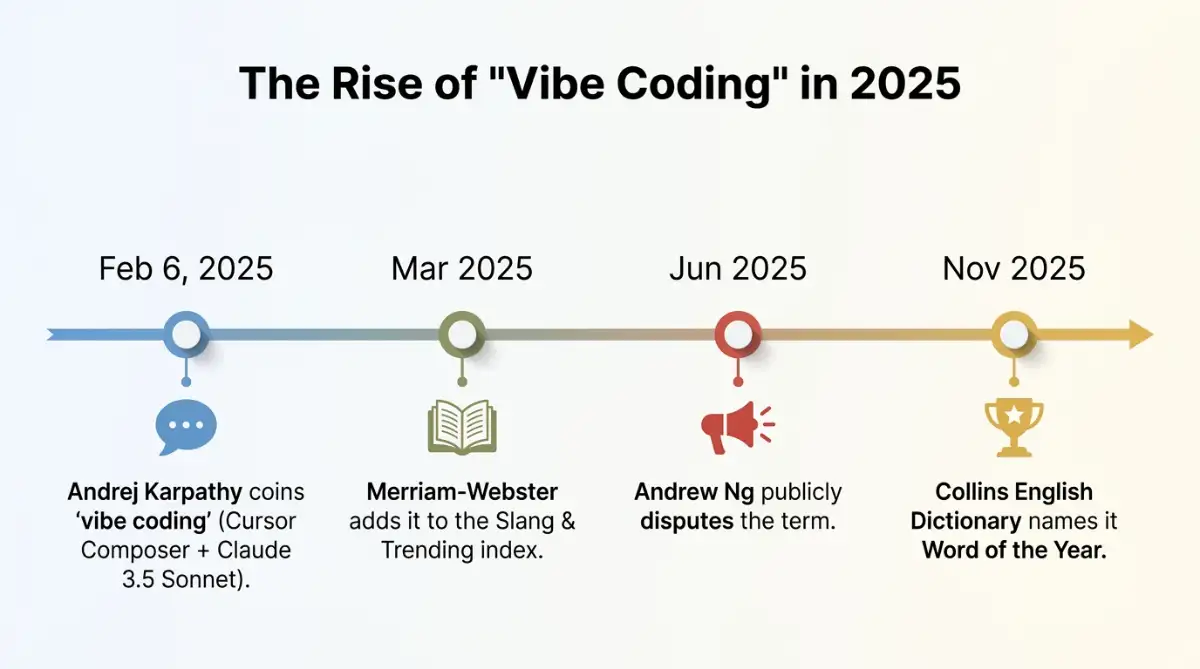
Computer scientist Andrej Karpathy coined "vibe coding" in February 2025 to describe letting an AI model write code while you barely touch the keyboard yourself. Within a year, Merriam-Webster added it to a slang and trending index, Collins English Dictionary named it Word of the Year, and programmers like Simon Willison started drawing sharper lines around what the term should actually mean.
Karpathy described a workflow that used a voice-to-text tool called SuperWhisper to feed spoken prompts into Cursor Composer, running on Claude 3.5 Sonnet. He'd hit "Accept All" on suggestions, skip reading the diffs, and paste error messages straight back into the AI for a fix. It's a style built for fast, throwaway ideation, not production software.
By March 2025, Merriam-Webster's online slang index defined vibe coding as writing code in a careless fashion with AI assistance. The term even spawned spinoffs: The Economist floated "vibe valuation" for venture firms pricing AI startups without looking at metrics like annual recurring revenue.
Not everyone agrees on where the line sits. Simon Willison argues that if you actually review, test, and understand every line an AI writes, you're not vibe coding, you're using a very capable typing assistant. AI pioneer Andrew Ng pushed back too, arguing in June 2025 that the term wrongly implies engineering can be reduced to casual intuition.
If you review, test, and understand every line an AI hands you, you're not vibe coding anymore, you're just using a very good typing assistant.
How the definition kept shifting:
- Karpathy's original framing (Feb 2025): exploratory, disposable, hands off the keyboard
- Merriam-Webster (Mar 2025): careless code writing with AI help
- Collins English Dictionary: named 2025 Word of the Year
- Willison's correction: real vibe coding means treating the codebase as a black box
- Ng's objection (Jun 2025): professional AI-assisted engineering is still rigorous work
How Are No-Code Apps and Vibe-Coded Apps Actually Built?
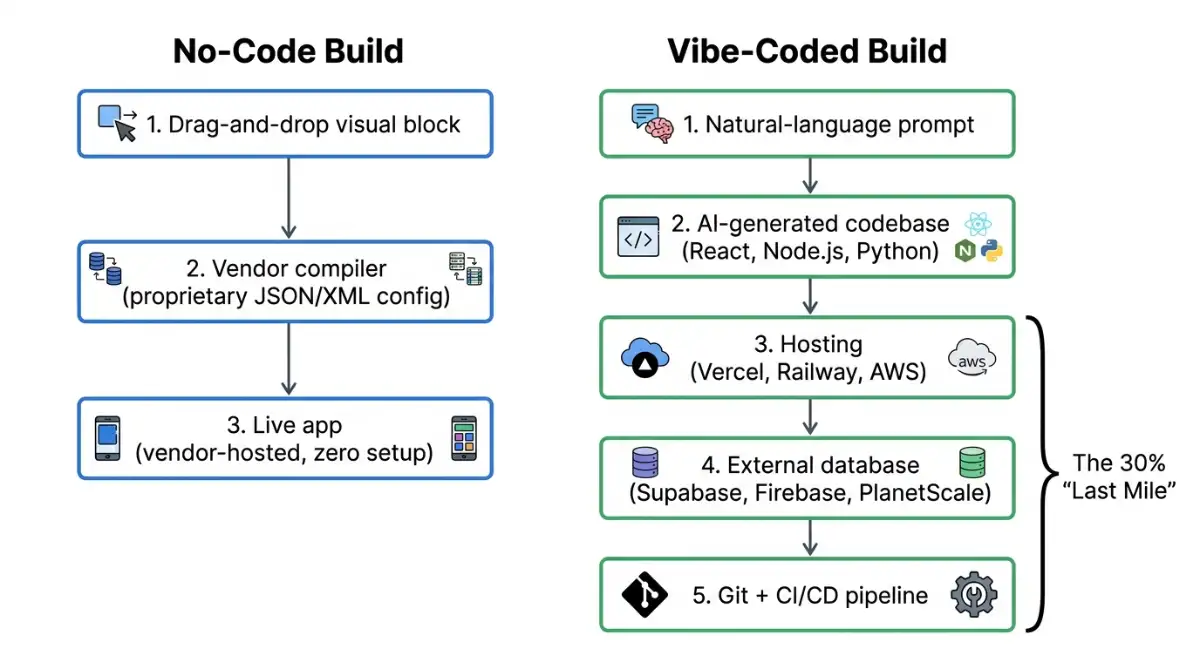
No-code apps run on proprietary metadata configurations hosted on the vendor's own infrastructure, with built-in databases and pre-maintained API connectors. Vibe-coded apps produce a real codebase in React, Node.js, or Python that you host yourself on a service like Vercel or Railway, connect to an external database, and maintain through Git and CI/CD.
The architecture gap shows up clearly once you line the pieces up side by side. No-code output stays locked inside the platform's ecosystem. Vibe-coded output walks out the door as a standalone codebase you own outright, for better and worse.
| System Layer | No-Code Platform | Vibe-Coded App |
|---|---|---|
| Compiled output | Proprietary XML/JSON configuration | Standard React, Node.js, or Python codebase |
| Hosting | Vendor-managed, zero setup | Self-provisioned (Vercel, AWS, Railway) |
| API connections | Pre-built, vendor-maintained connectors | Custom HTTP scripts written by the AI |
| Database | Embedded platform database | External service (Supabase, Firebase, PlanetScale) |
| Change management | Instant visual edits on the live app | Git branches, pull requests, CI/CD pipelines |
Vibe coding is genuinely fast for the first stretch. Tools like Bolt.new or Lovable can scaffold a working demo in minutes, covering maybe 60 to 70 percent of what a finished app needs. The remaining 30 percent, session handling, token refreshes, database rollbacks, webhook errors, and compiling React into an actual iOS or Android build, is where the real engineering hours disappear.
The first 60 to 70 percent of a vibe-coded app can show up in minutes. The last 30 percent, the part that makes it production-safe, is where the real engineering hours go.
No-code platforms like Adalo sidestep that gap by building native device permissions, push notifications, and App Store publishing straight into the visual editor. The prototype and the production app are the same thing, so there's no separate "last mile" to cross, a distinction Adalo's own comparison of vibe coding tools and no-code app builders makes directly.
Why Is Vibe Coding Called "Shadow IT 2.0"?
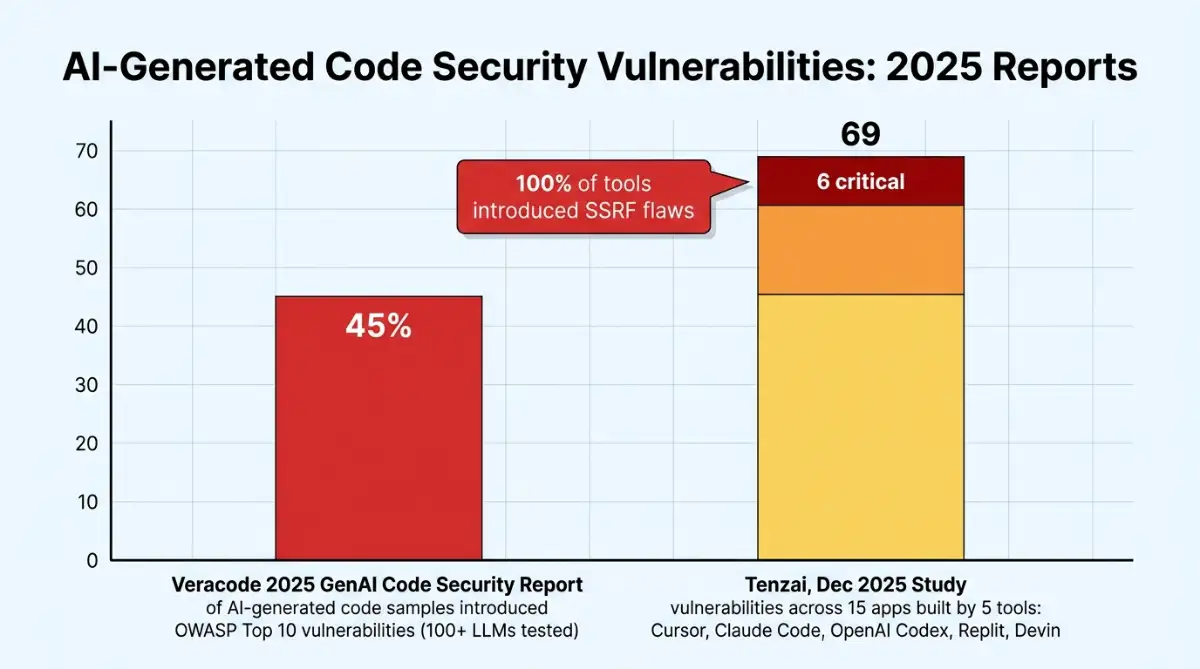
Cybersecurity researchers use the term "Shadow IT 2.0" for vibe coding because anyone with a chat window can now build and deploy an app that handles sensitive data completely outside IT's visibility. According to Veracode's 2025 GenAI Code Security Report, 45% of AI-generated code introduces real security vulnerabilities, and independent testing has found dozens more across popular vibe-coding tools specifically.
Veracode's report tested output from more than 100 large language models across 80 coding tasks and found that 45% of the samples introduced OWASP Top 10 vulnerabilities, things like SQL injection openings, hardcoded credentials, and missing input validation.
A December 2025 assessment from security firm Tenzai went further, testing five popular AI coding tools, Cursor, Claude Code, OpenAI Codex, Replit, and Devin, by building three identical apps with each. Across the resulting 15 applications, Tenzai found 69 distinct vulnerabilities, including every tool introducing server-side request forgery flaws and none of the apps shipping with CSRF protection.
No-code platforms take the opposite approach, often called "Governance-by-Design," a framework Kissflow describes in detail for enterprise teams. IT admins set the boundaries upfront: which database tables can be touched, which authentication is required, who's allowed to publish. Business users still build independently, but the guardrails are baked into the platform.
Researchers now call vibe coding "Shadow IT 2.0" because anyone with a chat window can quietly build software that touches sensitive data with zero IT oversight.
Common issues turning up in AI-generated code, per Veracode and Tenzai's separate research:
- SQL injection openings left unpatched
- Hardcoded credentials sitting in plain text
- Server-side request forgery introduced by every tool Tenzai tested
- Missing CSRF protection across all 15 apps in Tenzai's sample
For a deeper look at how exposed either model gets in practice, see our no-code security risk and reality check.
Which Option Actually Costs Less Over Time?
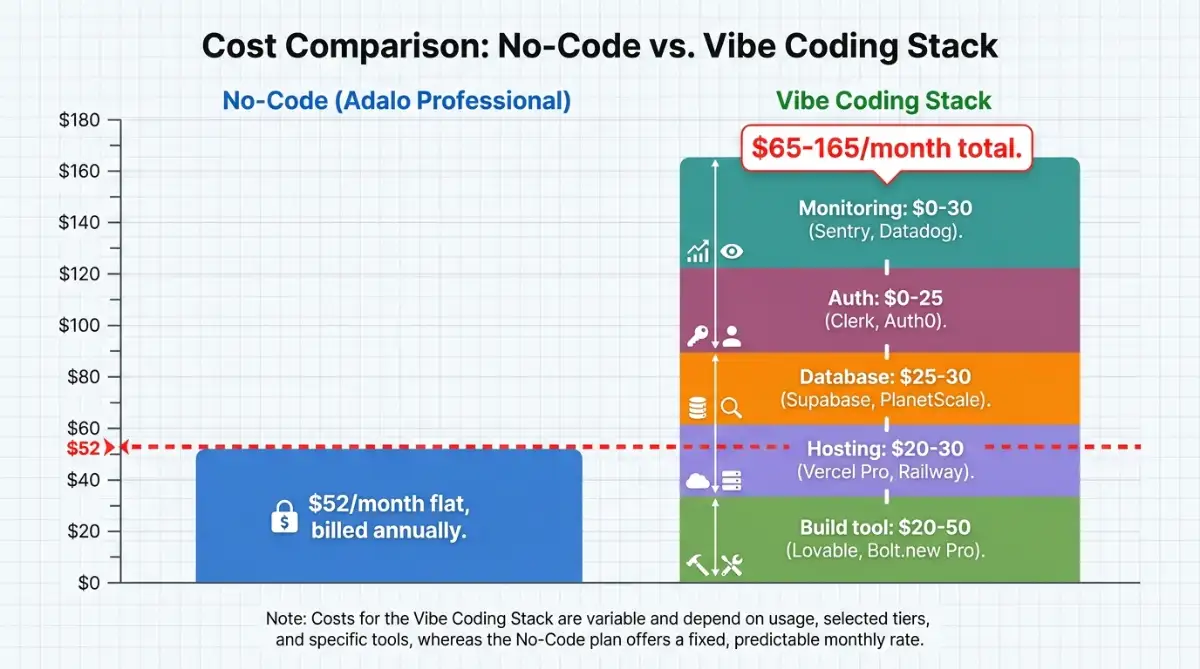
When you run the no code vs vibe code cost comparison for a production-grade app, no-code usually wins on total cost of ownership because one subscription bundles hosting, a database, authentication, and monitoring together. A comparable vibe-coding stack means paying separately for a coding tool, hosting, a database service, auth, and monitoring, which typically lands between $65 and $165 a month before you count your own maintenance time.
Take Adalo's Professional plan as an example of the unified model: $52 a month billed annually, covering hosting, a Postgres database up to 25GB, built-in authentication, analytics, and native App Store compiling with no Mac or Xcode setup required.
| Cost Element | No-Code Unified Stack | Vibe Coding Fragmented Stack |
|---|---|---|
| Build tool subscription | Included in platform fee | $20 to $50/month (Lovable, Bolt.new Pro) |
| Hosting and CDN | Included | $20 to $30/month (Vercel Pro, Railway) |
| Database storage | Included, up to 25GB | $25 to $30/month (Supabase, PlanetScale) |
| Authentication | Included | $0 to $25/month (Clerk, Auth0) |
| Monitoring and logging | Included | $0 to $30/month (Sentry, Datadog) |
| Total monthly cost | ~$52 | $65 to $165 |
That $65 to $165 range doesn't include the hours you'll spend fixing whatever the AI's custom integration scripts break when a third-party API changes. Solo founders juggling five different SaaS bills for one app tend to find the flat-rate model easier to budget around. Vibe coding can absolutely be cheaper for a simple, low-security, web-only prototype you plan to throw away. It stops being cheaper the moment you need reliability at scale.
Our full cost and scaling guide walks through where each model actually breaks down as usage grows.
Can No-Code and Vibe Coding Work Together?
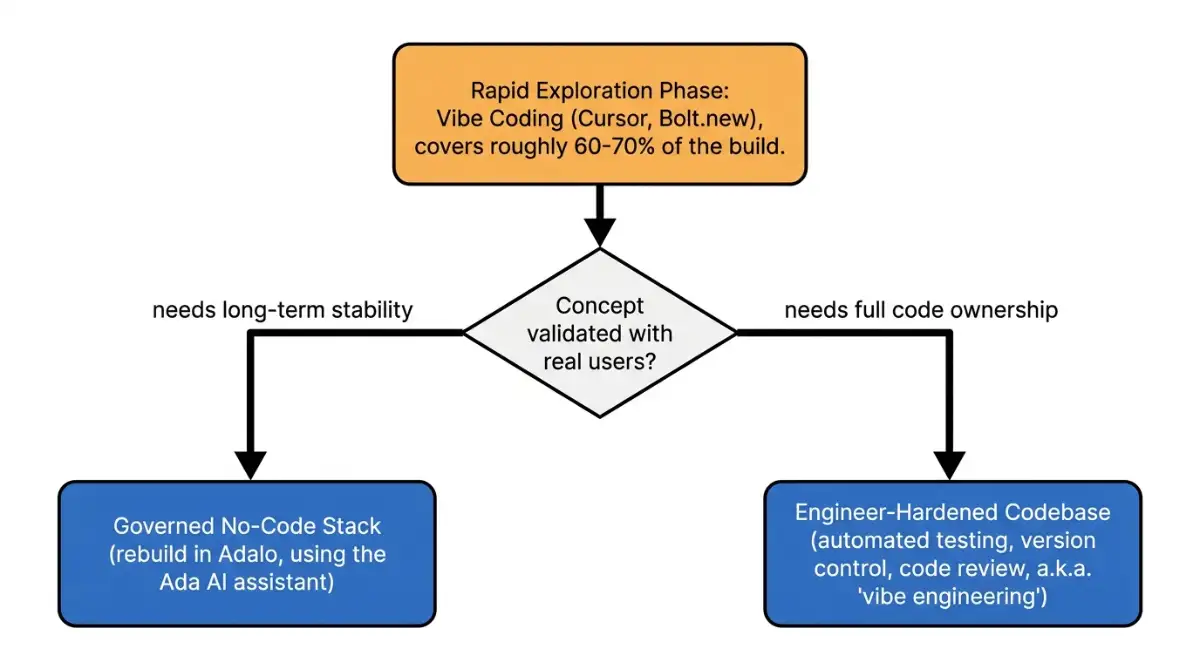
Yes, and a hybrid workflow is becoming the practical default for a lot of small teams. Use a vibe-coding tool like Cursor or Bolt.new to rapidly prototype and test a concept with real users, then rebuild the validated idea inside a governed no-code platform, or hand it to a developer for what Simon Willison calls "vibe engineering", a disciplined, tested, production-grade way of using the same AI tools.
Simon Willison's idea of "situated software" fits this rapid-exploration phase well: small, personal, disposable tools built fast, used for a specific problem, then thrown away without needing years of maintenance. That's exactly what early-stage vibe coding is good for.
No-code platforms are increasingly closing the gap from the other direction too. Adalo built an AI assistant called Ada directly into its editor, so you can describe a layout or database in plain English and still keep the platform's built-in security and hosting.
A workable hybrid sequence looks like this:
- Explore fast: draft UI and test with users in a vibe-coding tool like Cursor or Bolt.new
- Validate the concept: confirm real users actually want the thing before investing further
- Choose your production path: rebuild in a governed no-code stack, or hand the codebase to a developer for hardening
- Lock down the guardrails: add automated testing, version control, and manual review either way
Decision Framework: Choosing Between No-Code and Vibe Coding
Skip the no-code vs vibe code debate and run your project through these five checkpoints instead. If you can answer each one honestly, the right build path usually becomes obvious fast.
- Who maintains this in two years? If the answer is "whoever's around," pick no-code. Non-technical teammates can safely edit a visual workflow without breaking anything underneath it.
- Does it touch regulated or sensitive data? Payment info, health records, or personal data pushes you toward no-code's guardrails, or a fully reviewed, engineer-hardened vibe-coded build. Skip pure, unreviewed vibe coding here entirely.
- Do you need full code ownership? If escaping vendor lock-in matters more than convenience, for a proprietary algorithm or a SaaS product you'll eventually sell, vibe coding gives you a real, portable codebase.
- Is this a disposable tool or a long-term system? A one-off internal utility fits the "situated software" model perfectly. A client-facing business system needs the stability no-code provides.
- Can you budget one flat fee, or five stacked subscriptions? If predictable monthly costs matter more than flexibility, no-code's bundled pricing usually beats assembling your own hosting, database, and auth stack.
Most solo founders and small agencies land on a mix: vibe code the experiments, no-code the parts of the business that need to keep working next year.
Start exploring launch-ready no-code templates here!
FAQ
Is vibe coding cheaper than no-code? For a quick, low-security prototype, often yes. But once you add up a coding tool subscription, hosting, a database, and authentication separately, a fragmented vibe-coding stack typically runs $65 to $165 a month, more than a bundled no-code plan like Adalo's roughly $52 flat rate.
Do I need to know how to code to use vibe-coding tools? No, you can start by typing plain-English prompts into tools like Cursor or Bolt.new. But when the AI's generated code breaks or a third-party API changes, understanding programming basics is the difference between a quick fix and getting stuck in a repeating error loop.
Can I combine no-code and vibe coding in one project? Yes, this hybrid approach is increasingly common. Many teams prototype quickly with a vibe-coding tool, validate the idea with real users, then rebuild the finished concept inside a governed no-code platform or hand it to a developer for a hardened, production-ready codebase.
Which option is better for building a mobile app? No-code platforms like Adalo generally win here, since native device permissions, push notifications, and App Store publishing are built directly into the editor. Vibe-coded apps need separate, manual compiling of code into iOS or Android builds, which requires real engineering effort.
Is no-code becoming obsolete because of AI coding tools? Not so far. Several no-code platforms, including Adalo with its Ada assistant, are adding AI-powered natural language features into their governed, secure environments instead of being replaced by them, keeping the deterministic guardrails while speeding up the visual building process.
Start building without code
Browse thousands of no-code templates for Webflow, Framer, Bubble, Lovable, Replit and more.
Explore Templates