No Code Database: How the Modern Web Stores Data
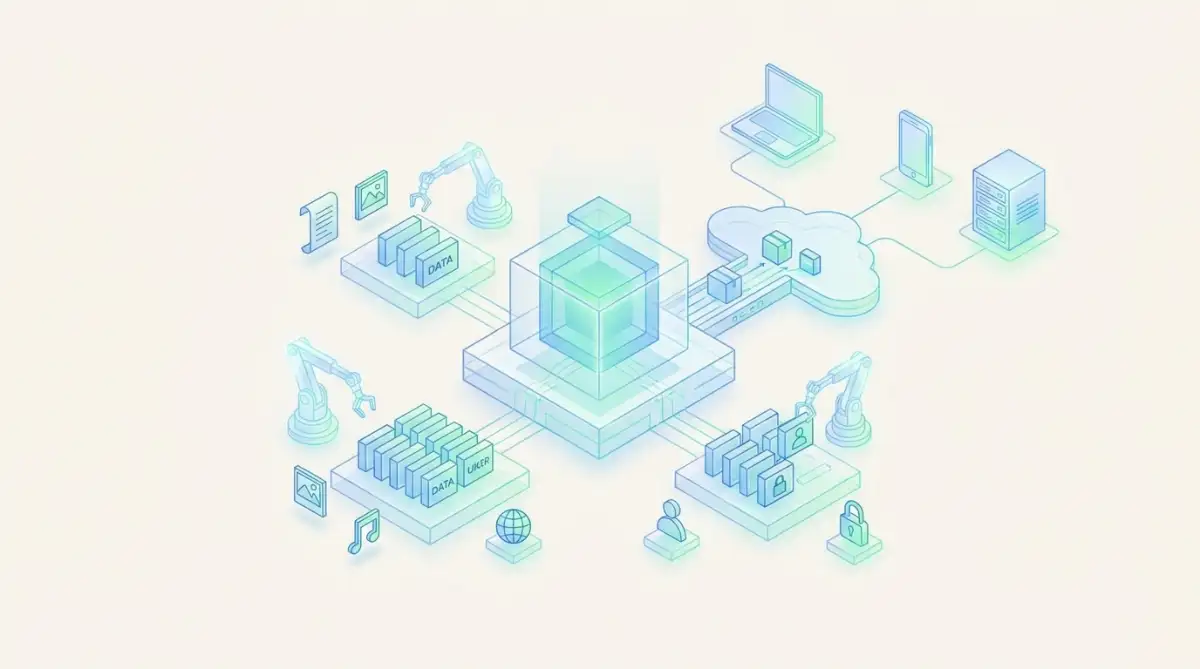
A database is system software that stores, retrieves, structures, and governs digital records while allowing concurrent users and keeping data after a crash. Visual builders present that layer as tables, forms, and permissions instead of handwritten SQL. According to Gartner, the DBMS market reached $119.7 billion in 2024, and cloud database platform-as-a-service accounted for 64 percent ($76.6 billion) of spend.
Table of Contents:
- Key Takeaways
- Introduction
- What Is a No Code Database If You Never Learned SQL?
- How Did Codd's Relational Model Kill Pointer-Chasing Code?
- How Does a Query Travel From a Form to Disk?
- Which Engines Actually Run the Modern Web's Data?
- Why Did GitLab, Knight Capital, and MongoDB Become Cautionary Tales?
- SQL, Documents, or Cache: What Should a No Code Database Sit On?
- FAQ
Key Takeaways
- Oracle can sit at rank one on DB-Engines while PostgreSQL wins Stack Overflow's admiration vote, because those scores measure installed estates and developer desire rather than the same buyer.
- GitLab's 2017 outage was not a single rm command. It was five backup and snapshot paths that had already failed in silence before anyone typed a delete.
- A visual grid does not erase CAP tradeoffs, write-ahead logs, or ransomware, which is why default-open MongoDB ports still wiped 200,000 Emory Healthcare records.
Introduction
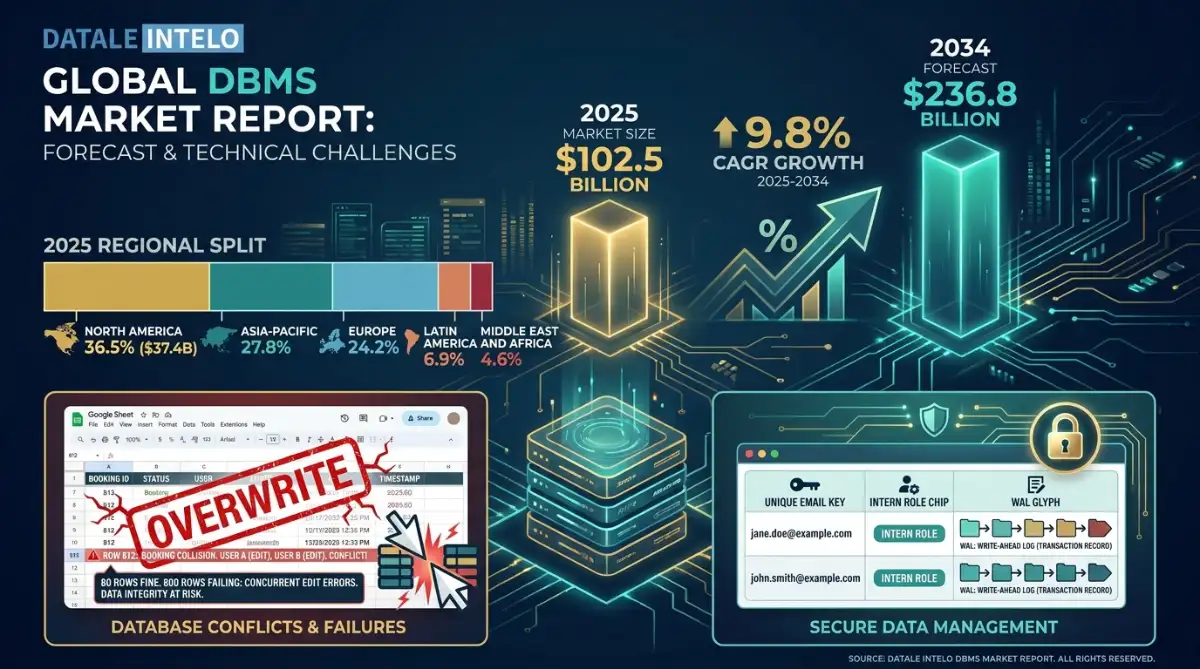
According to Dataintelo, the DBMS category was a $102.5 billion market in 2025, yet operations managers at agencies and independent consultants still park client bookings in a shared Google Sheet. A no code database is the visual version of work IBM's Information Management System started in 1968: keep the record, share it, and still have it after the laptop sleeps.
Ted Codd's June 1970 paper in Communications of the ACM is why you can ask for unpaid invoices this month instead of walking disk pointers. According to Dataintelo, the DBMS category was a $102.5 billion market in 2025. I will walk Codd to PostgreSQL 17, Knight Capital's $440 million morning, GitLab's 300 GB wipe, and which engine belongs under a client portal.
What Is a No Code Database If You Never Learned SQL?
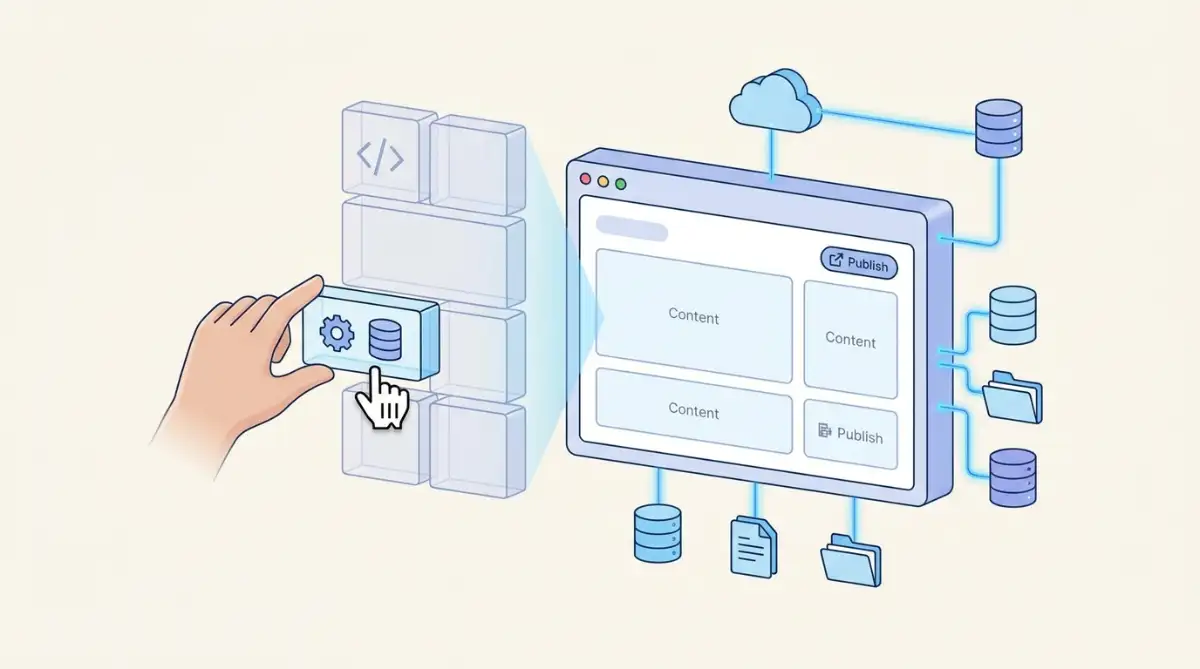
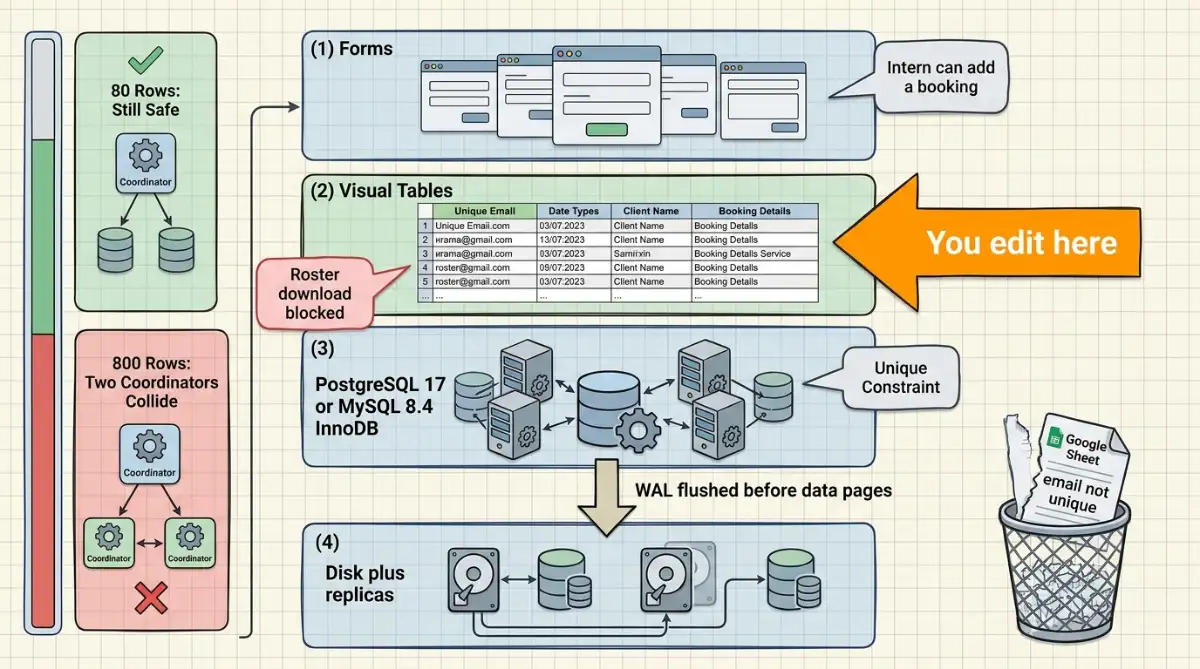
Visual tables are a management system you touch as forms and permissions rather than SQL. The files on disk are still a DBMS. You gain concurrent access and durable storage. You do not skip schema, backups, or the difference between a unique client and a duplicate row.
The spreadsheet that "works" for 80 rows starts lying at 800. Two coordinators open the same tab, one sorts, one pastes, and the unique email is no longer unique.
A visual base such as the one in what Airtable actually became still has rows, types, and access rules. Building a database website without writing code is the same persistence problem with a friendlier door.
A visual table is still a database, and it still needs backups, roles, and a model of what unique means.
What the grid gives you:
- Shared truth: one record, many viewers, last write that the engine can explain.
- Types: a date that is a date, not a string that looks like a date.
- Permissions: the intern can add a booking, not download the whole roster.
- History: versions, or at least a log, when someone deletes Friday's jobs.
Glide's spreadsheet-to-app path is useful when the sheet is already the source of truth. It is a thin wrapper if the sheet is already the incident.
How Did Codd's Relational Model Kill Pointer-Chasing Code?
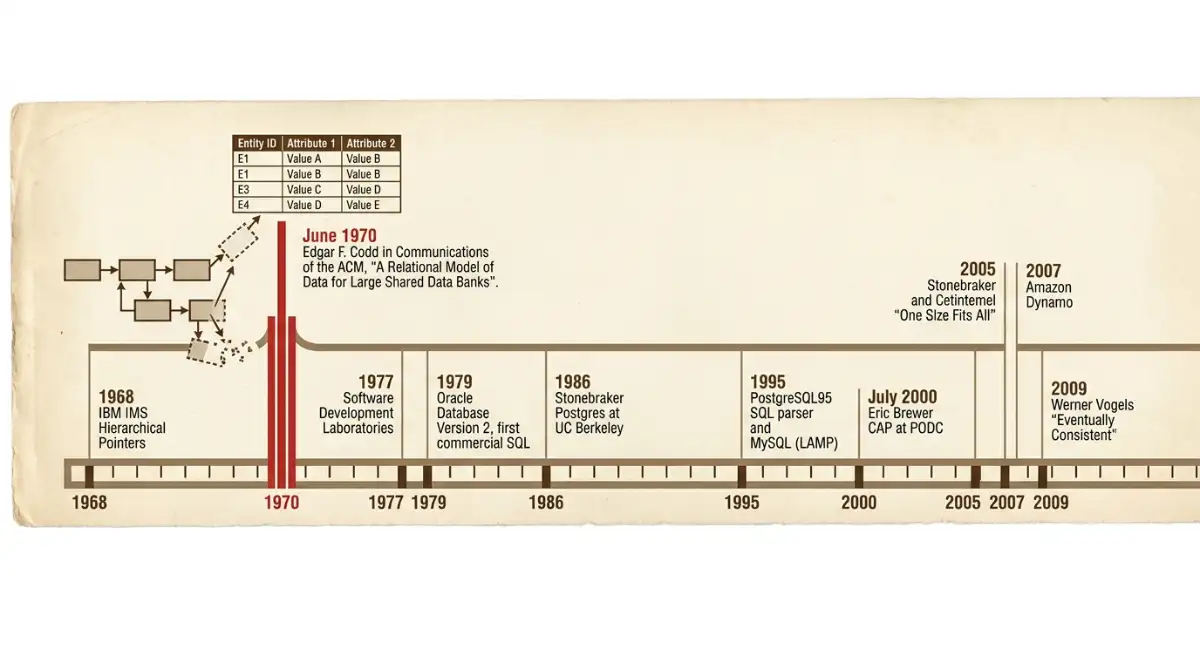
Before 1970, engines such as IBM IMS (1968) and CODASYL tied applications to physical pointers. Change the disk, rewrite the program. Edgar F. Codd's June 1970 ACM paper defined relations as tables of tuples and attributes. Oracle Database Version 2 in 1979 shipped the first commercial SQL engine.
Codd, then at IBM Research, used set theory so people could state what they wanted, and physical layout became the engine's problem.
Future users of large data banks must be protected from having to know how the data is organized in the machine.
Two labs proved it could run:
- IBM System R: SEQUEL (later SQL), cost-based optimization, system catalogs.
- UC Berkeley Ingres: Michael Stonebraker, Eugene Wong, and Larry Rowe on minicomputers, later Relational Technology, Inc.
Larry Ellison, Bob Miner, and Ed Oates founded Software Development Laboratories in 1977 and shipped Oracle Version 2 in 1979. Stonebraker's Postgres work from 1986 added object-relational types and GiST indexes for CAD. Maintainers added an SQL parser in 1995 (PostgreSQL95), the same year Michael "Monty" Widenius and David Axmark launched MySQL, the M in LAMP.
Codd's gift was not prettier files, but the right to change the disk without rewriting the business.
Hyper-scale traffic then broke the single-box story. Eric Brewer stated CAP in July 2000, Stonebraker and Ugur Cetintemel argued in 2005 that one engine could not serve transactions, warehouses, and streams, and Amazon's Dynamo paper (2007) plus Werner Vogels' 2009 essay pushed document, key-value, column-family, graph, and NewSQL systems such as Google Spanner and CockroachDB.
How Does a Query Travel From a Form to Disk?
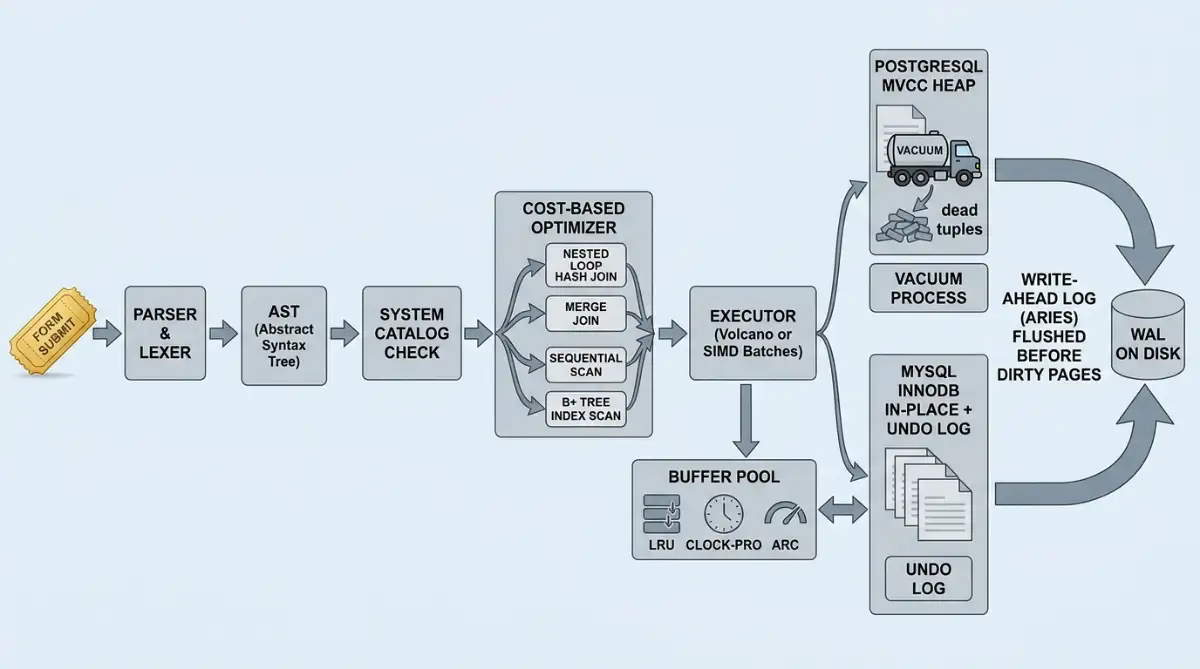
A statement is parsed into an abstract syntax tree, checked against the catalog, then planned by a cost-based optimizer that picks nested loops or hash joins. A buffer pool caches pages, MVCC versions rows, and write-ahead logging (WAL) makes crashes recoverable. Visual builders hide that pipeline. They do not remove it.
Memory and isolation are where two coordinators stop colliding:
- Buffer pool: hot pages stay in RAM. LRU, Clock-Pro, or ARC decide what gets evicted. Checkpoint writers flush dirty pages.
- MVCC: readers see a snapshot instead of blocking writers. PostgreSQL appends new row versions on the heap and needs VACUUM to reclaim dead tuples. MySQL InnoDB updates in place and keeps history in an undo log.
- WAL / ARIES: log records hit non-volatile storage before the matching data pages do. That is durability, not a marketing word.
MVCC lets two people read a booking while a third updates it, without a shared lock that freezes the office.
Distributed copies add theorems, not vibes. Seth Gilbert and Nancy Lynch formalized Brewer's CAP result in 2002: under a partition, you pick linearizable consistency or availability, not both. Daniel Abadi's PACELC (2010) adds the quiet case: if there is no partition, you still trade latency against consistency. Production shorthand: MongoDB as PA/EC, Cassandra as PA/EL, SQL clusters as ACID, caches as BASE.
The '2 of 3' formulation was always misleading because it tended to oversimplify the tensions among properties.
Eric Brewer wrote that in IEEE Computer in February 2012. A single-region member list can ignore most of CAP. A two-region checkout cannot.
Which Engines Actually Run the Modern Web's Data?
DB-Engines in August 2026 ranks Oracle Database first at 1,123.43, then MySQL, Microsoft SQL Server, and PostgreSQL. The Stack Overflow Developer Survey 2025 tells another story: 58.2 percent of professional developers use PostgreSQL. MongoDB and Snowflake now report multi-billion-dollar years selling the non-Oracle slice.
According to DB-Engines, Oracle's twelve-month score dropped 97.27 points, MySQL dropped 73.15, and SQL Server dropped 59.59, while PostgreSQL rose 13.32, Snowflake jumped 37.00, and Databricks jumped 49.99. Installed estate and developer desire are not the same contest. It depends whether you are replacing a sheet or a core banking suite, and I would not pick either engine from a rank alone.
According to the Stack Overflow Developer Survey 2025, PostgreSQL is the most admired engine (65.5 percent) and the most desired (46.5 percent) for a third year.
| Engine | Model | DB-Engines score (Aug 2026) | Pro usage (SO 2025) | Typical job on a site |
|---|---|---|---|---|
| Oracle Database | Relational / multi-model | 1,123.43 (rank 1) | 10.4% | ERP, core banking |
| MySQL | Relational | 842.32 (rank 2) | 39.6% | LAMP, CMS |
| Microsoft SQL Server | Relational / multi-model | 694.56 (rank 3) | 30.9% | Azure-centric line of business |
| PostgreSQL | Object-relational | 684.58 (rank 4) | 58.2% | SaaS systems of record, PostGIS, pgvector |
| MongoDB | Document | 384.88 (rank 5) | 24.3% | Catalogs, flexible JSON |
| Snowflake | Cloud warehouse | 215.89 (rank 6) | 4.2% | Analytics, not checkout |
| Redis / Valkey | In-memory key-value | 156.51 (Redis rank 8) | n/a | Sessions, rate limits |
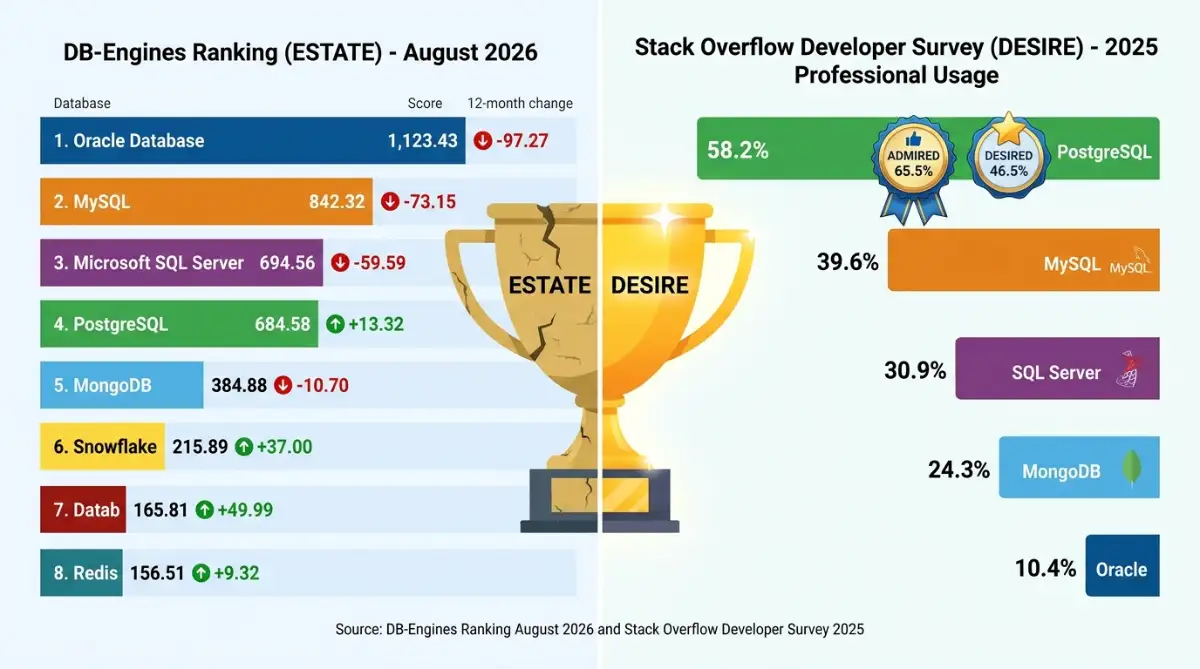
Oracle can top a popularity index while PostgreSQL wins the developers who actually type CREATE TABLE.
According to MongoDB's FY2026 results (year ended January 31, 2026), revenue was $2,463.8 million, up 22.8 percent, with Atlas up 29 percent and more than 65,200 customers.
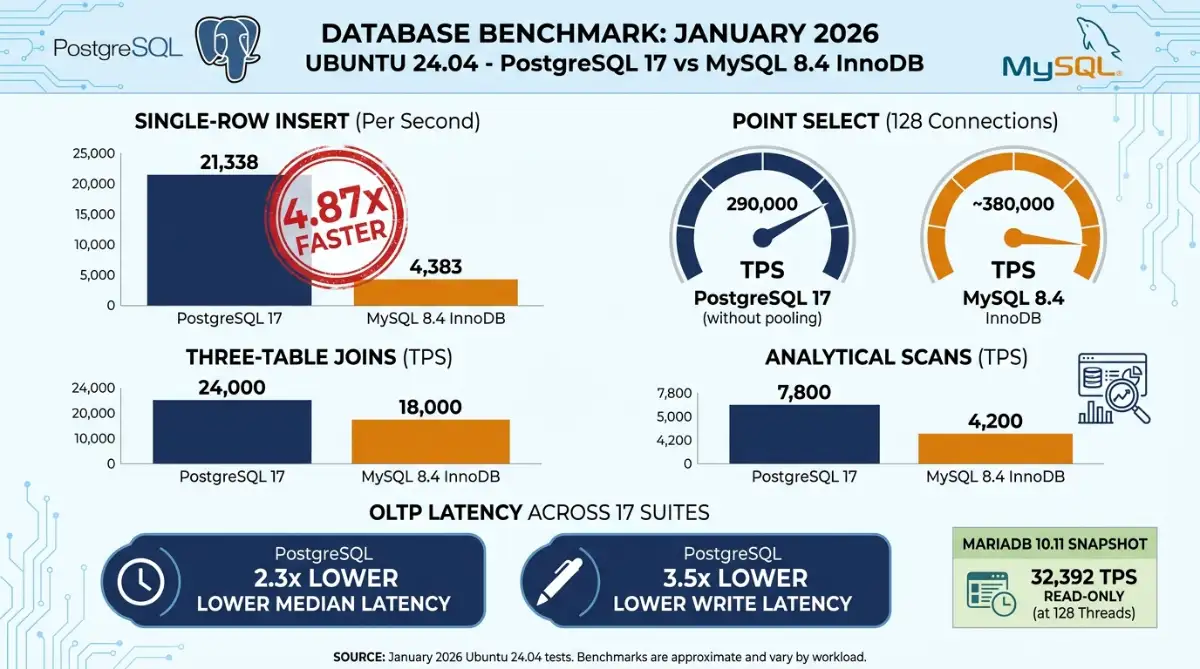
January 2026 Ubuntu Linux 24.04 tests [unverified lab]:
- PostgreSQL 21,338 single-row INSERT operations per second vs 4,383 for MySQL
- MySQL 8.4 about 380,000 TPS on point SELECTs (128 connections) vs 290,000 for PostgreSQL 17 without pooling
Licenses moved too. MongoDB, Elastic, and Redis Ltd. left permissive terms for SSPL or RSAL-style licenses between 2018 and 2024, and Debian plus Fedora dropped non-compliant packages. The Linux Foundation launched Valkey on March 28, 2024 from Redis 7.2.4, and Shay Banon put Elasticsearch and Kibana back on AGPLv3 as an option on August 29, 2024.
Elastic announces the return of open source licensing for Elasticsearch and Kibana, adding AGPL as an option alongside existing licenses.
Polyglot persistence is the boring production pattern: money on PostgreSQL or Aurora, sessions on Valkey or Redis, catalog search on OpenSearch or Elasticsearch, clickstreams on ClickHouse or Cassandra, reports on Snowflake or Databricks.
Why Did GitLab, Knight Capital, and MongoDB Become Cautionary Tales?
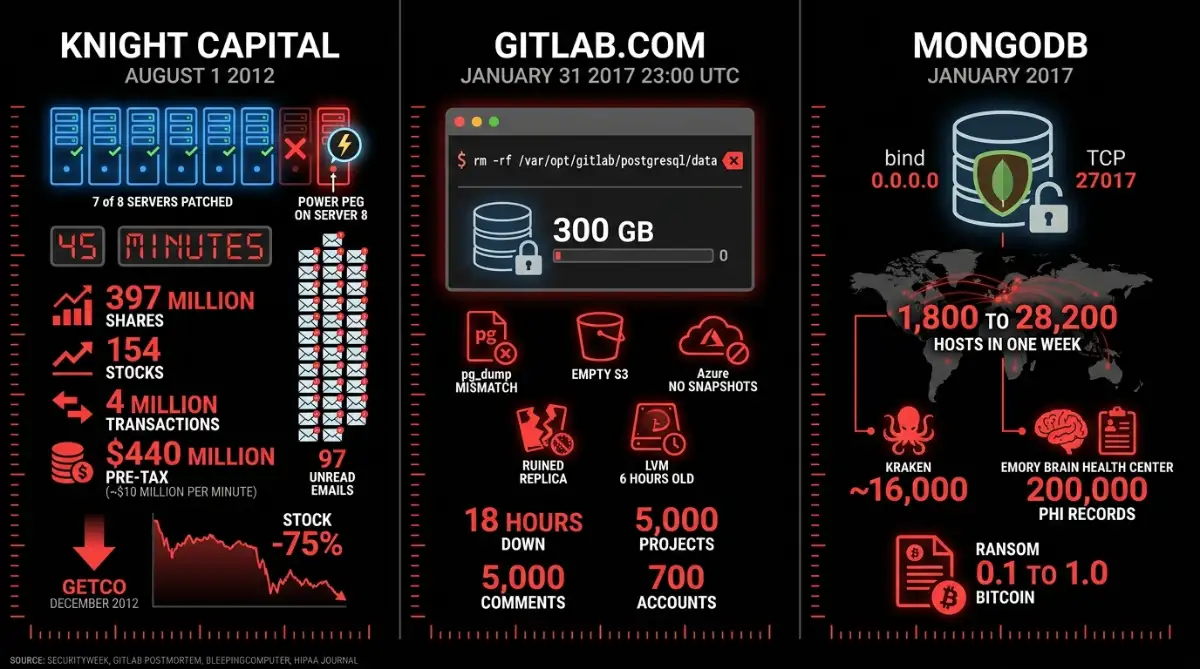
Database disasters are operations failures. On August 1, 2012, Knight Capital lost $440 million in 45 minutes after a partial deploy. On January 31, 2017, GitLab wiped about 300 GB of PostgreSQL data. That same month, open MongoDB servers were ransomed by the tens of thousands.
Knight Capital Group patched trading software for the NYSE Retail Liquidity Program on seven of eight production servers. The eighth still ran a test function nicknamed Power Peg, and a reused flag turned it on so the box bought at offers and sold at bids.
What 45 minutes cost:
- About 397 million shares across 154 stocks and a $440 million pre-tax loss
- 97 unread error emails, no API kill switch, then a Getco acquisition in December 2012
GitLab.com hit replication lag at 23:00 UTC on January 31, 2017. An administrator ran rm -rf on /var/opt/gitlab/postgresql/data on the primary. About 300 GB vanished. The public postmortem listed five recoveries that were already dead:
pg_dumpcron had failed for weeks on a client/server version mismatch. DMARC ate the alerts.- Amazon S3 targets were empty.
- Azure disk snapshots were never configured.
- The replica was already ruined by the resync attempt.
- LVM recovery came from a six-hour-old manual snapshot.
- About 18 hours of downtime, and six hours of writes gone (about 5,000 projects, 5,000 comments, 700 accounts)
The rm -rf was one mistake, and five silent backup paths were the real outage.
I still refuse to trust a green backup badge until I restore a copy onto a throwaway machine.
Victor Gevers and Niall Merrigan tracked the January 2017 MongoDB ransoms. Old defaults bound the daemon to 0.0.0.0 with auth off, so scanners hit TCP 27017, dropped tables, and left a Warning collection asking for 0.1 to 1.0 Bitcoin. Compromised hosts rose from 1,800 to more than 28,200 in a week, and Emory Healthcare lost 200,000 brain-health PHI records, which is why no-code security reviews start with bind addresses and roles, not with the theme.
SQL, Documents, or Cache: What Should a No Code Database Sit On?
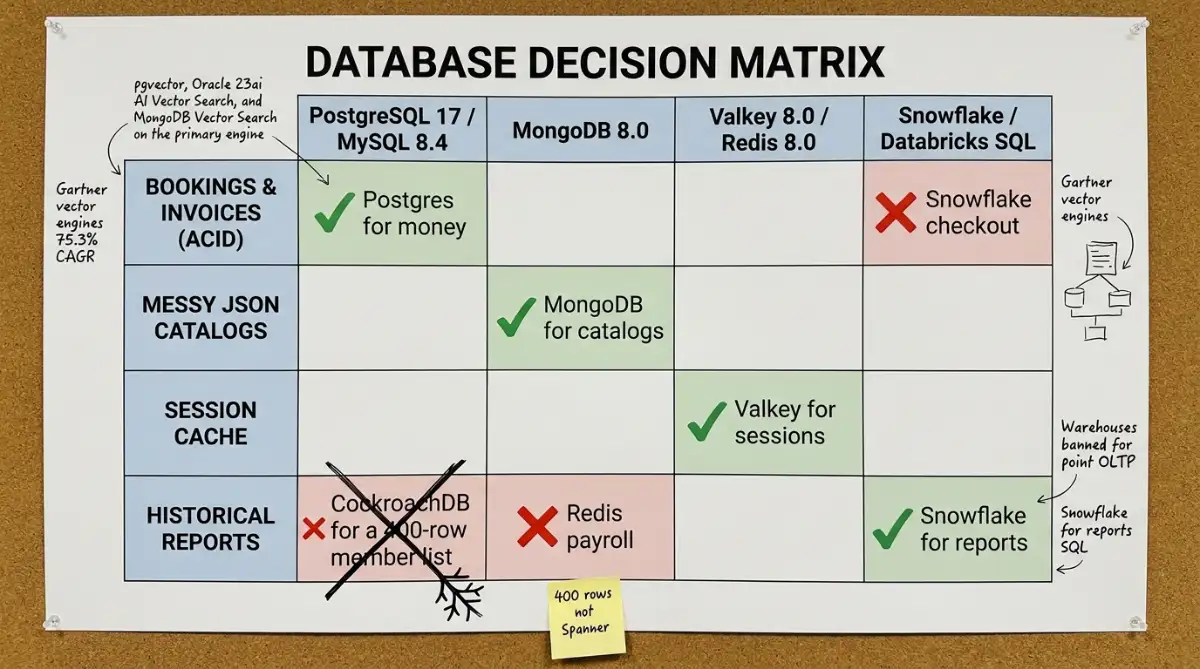
Match the engine to the workload. Use PostgreSQL or MySQL when bookings and invoices need ACID. Use MongoDB when catalogs are messy JSON. Use Valkey or Redis for sessions, never as the only copy of money. Keep Snowflake and Databricks on the analytics side of the house.
Operations managers and independent consultants should name the job in one sentence before they pick a logo. A 400-row member list does not need CockroachDB. Softr-style portals on top of a base only work if that base already has unique clients and tested restores. Retool-class internal tools still sit on the same engines.
When the model fits:
- PostgreSQL / MySQL: transactional sites, invoices, bookings, extensions such as PostGIS and pgvector.
- MongoDB: semi-structured catalogs and fast prototypes without a frozen schema.
- Snowflake / Databricks SQL: terabyte reports, not live checkout.
- Valkey / Redis: cache and ephemeral state beside a durable primary.
- Skip: single-node SQL for active-active global writes, documents for heavy foreign keys, warehouses for checkout, and Redis as the only copy of money.
PostgreSQL heap bloat versus InnoDB undo-log contention is a real fork: lagging VACUUM fills disks, and undo-log latch storms show up under write bursts. Vector search is collapsing back into the primary engine (pgvector, Oracle 23ai AI Vector Search, MongoDB Vector Search). According to Gartner, vector engines were still projected at a 75.3 percent CAGR off that first RAG wave.
Werner Vogels, CTO of Amazon.com, described the BASE bet in Communications of the ACM in January 2009:
In a system that is eventually consistent, all replicas will gradually converge to the identical state given no new updates.
Checkout rows do not belong in Snowflake, and payroll does not belong in an in-memory cache.
Start exploring launch-ready no-code templates here!
FAQ
What is a visual database if you do not write SQL?
It is a DBMS you edit with tables, forms, and roles instead of SQL files. The storage engine underneath is still relational or document-based, so concurrent edits, permissions, and backups still decide whether client data survives a messy afternoon in the office.
How is relational storage different from NoSQL?
Relational engines such as PostgreSQL and MySQL store rows in tables with a declared schema and ACID transactions. Document, key-value, wide-column, and graph families relax that shape so catalogs and sessions can scale out, usually with BASE instead of immediate consistency on every read.
Are PostgreSQL and MySQL free to run?
The open-source engines are free to install, but you still pay for machines, managed cloud time, and people who watch VACUUM and replicas. Oracle and Microsoft SQL Server add per-core licenses, while MongoDB Atlas and Snowflake meter consumption on managed cloud bills.
Will a visual table connect to a website builder?
Most builders either ship a built-in collection or talk to an external base through an API. The compatibility test is whether that base enforces unique records, roles, and restores, not whether the template looks current on a laptop and a phone.
Can Redis or Valkey replace PostgreSQL?
Redis and Valkey cannot replace PostgreSQL because they are in-memory stores for sessions, rate limits, and caches beside a durable primary. Using them as the only copy of invoices or payroll risks data loss if a node dies before persistence catches up.
Start building without code
Browse thousands of no-code templates for Webflow, Framer, Bubble, Lovable, Replit and more.
Explore Templates