No-Code vs Low Code vs Vibe Code: Pick a Path in 2026

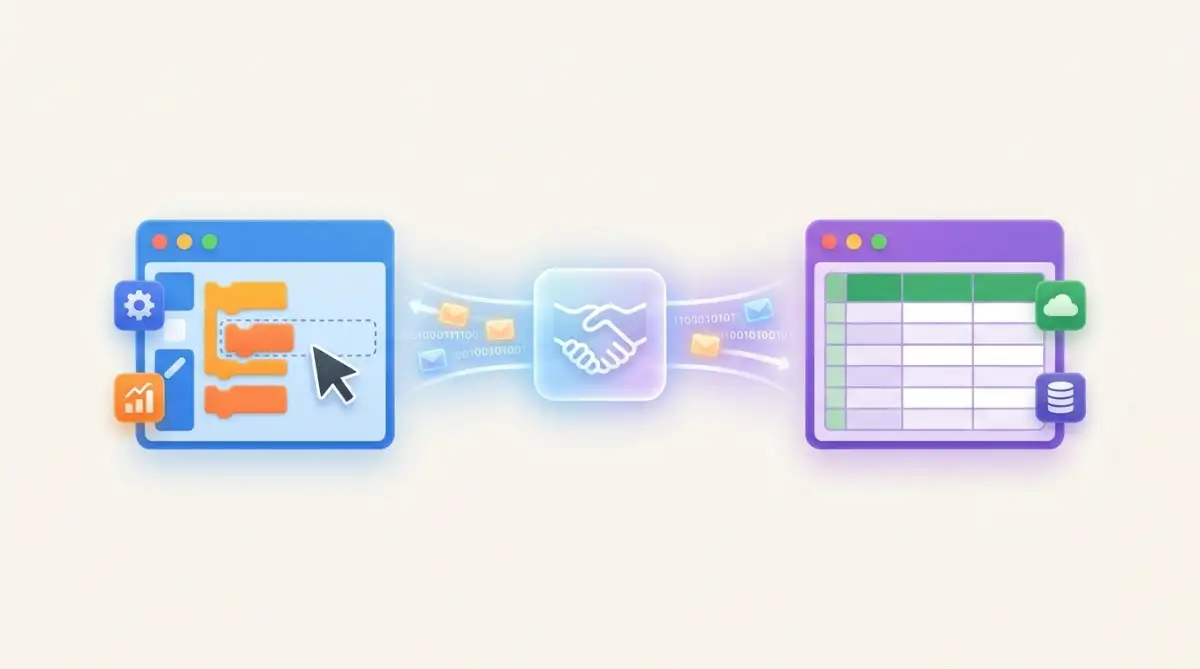
No-code compiles visual graphs onto a vendor-hosted engine you cannot take with you. Low-code mixes visual DSLs with script hooks on governed enterprise servers. Vibe coding turns English prompts into standard Git repositories, so you own the files and the review burden.
Table of Contents:
- Key Takeaways
- Introduction
- Which Operator Does Each Path Assume You Already Hired?
- Why Do Gartner, Next Move, and SeedScope Disagree on the Same Category?
- What Does No-Code vs Low Code vs Vibe Code Change About Who Can Leave?
- Why Did METR Find Experienced Engineers 19 Percent Slower?
- Which Failure Lands on Finance, Security, or the Case File?
- Should No-Code vs Low Code vs Vibe Code Share One Grant Budget?
- Decision Framework
- FAQ
Key Takeaways
- Gartner's $44.5 billion LCAP aisle and SeedScope's $4.7 billion vibe aisle are different carts, which is why one grant folder cannot treat them as one SKU today.
- METR's 19 percent slowdown is the review bill hiding under Accept All, and it shows up on million-line repositories, not during a twenty-minute Lovable demo.
- Finance, security, and ops already carry different scars, which is why a Workload Unit spike is not the same failure as a production DROP on a case file.
Introduction
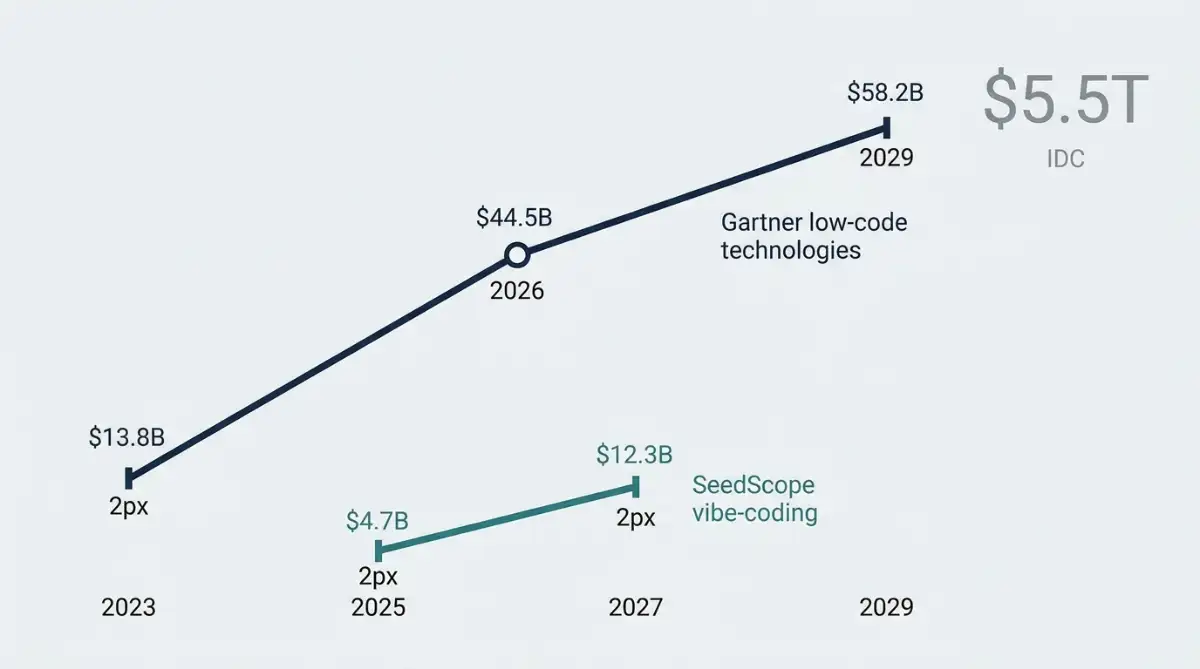
According to Gartner, low-code development technologies reached about $44.5 billion in 2026. Program managers at workforce-training nonprofits still treat no-code vs low code vs vibe code as one cart when a Webflow invoice, a Retool seat, and a Lovable quote land in the same grant folder.
SeedScope sizes dedicated vibe-coding tools at $4.7 billion in 2025. That is a different aisle from Gartner's LCAP number, and mixing the two is how a catalog site inherits a Git review problem it cannot staff.
The wrong aisle traps trainee records in a host you cannot leave, or in a repo nobody on staff can patch. Next: who each path assumes you hired, why the TAMs refuse to match, METR's 19 percent slowdown, and the three-runtime split worth funding.
Which Operator Does Each Path Assume You Already Hired?
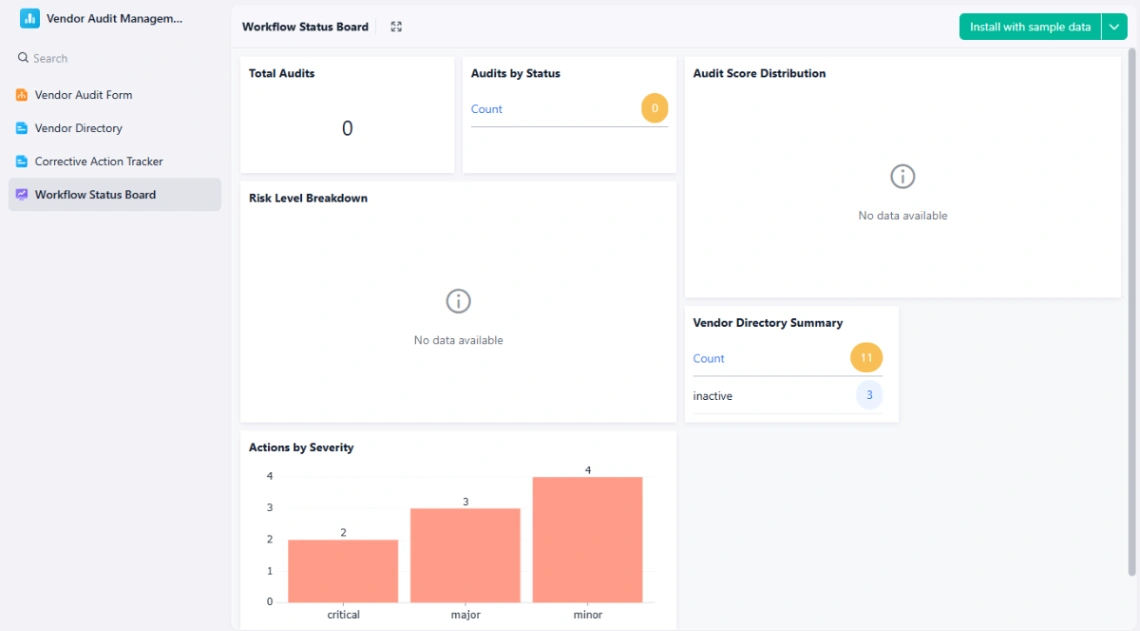
Each path assumes a different hire. Visual canvases such as Bubble and Webflow serve a citizen developer. Retool, OutSystems, and Mendix assume an IT analyst who can inject SQL. Cursor and Lovable assume someone who can read a Git diff.
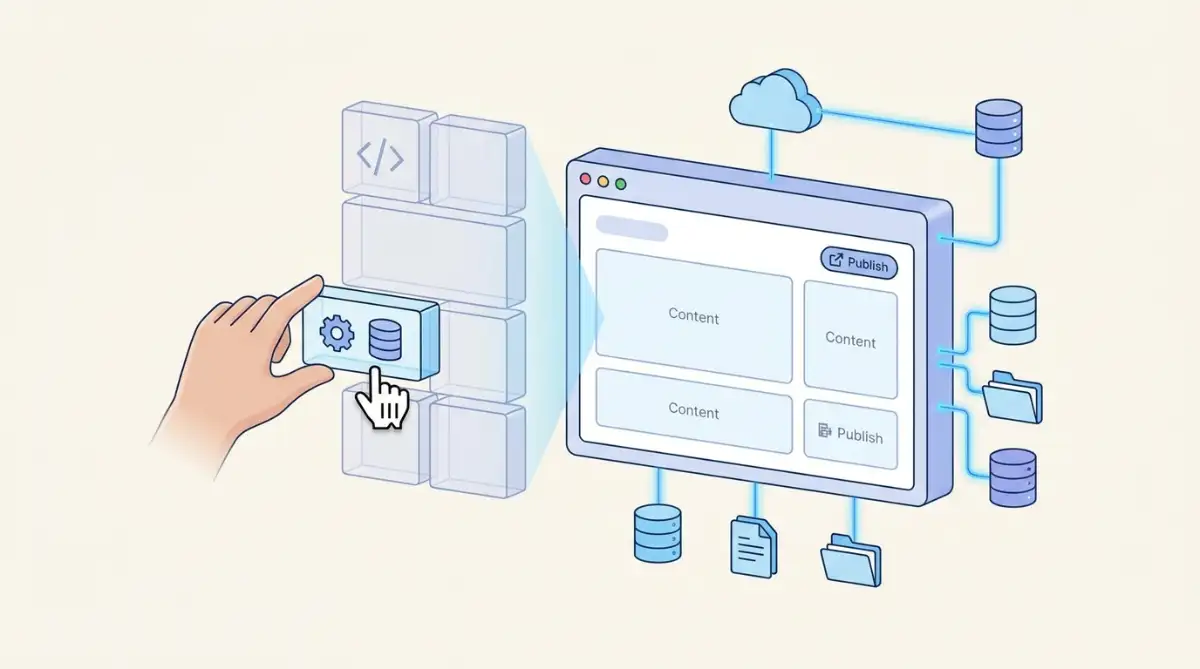
What a no-code builder actually is is a hosted graph for people who will never open a repository. What low-code is in 2026 is the IT-sanctioned middle, visual models with script hooks. What vibe code means is English in, files out.
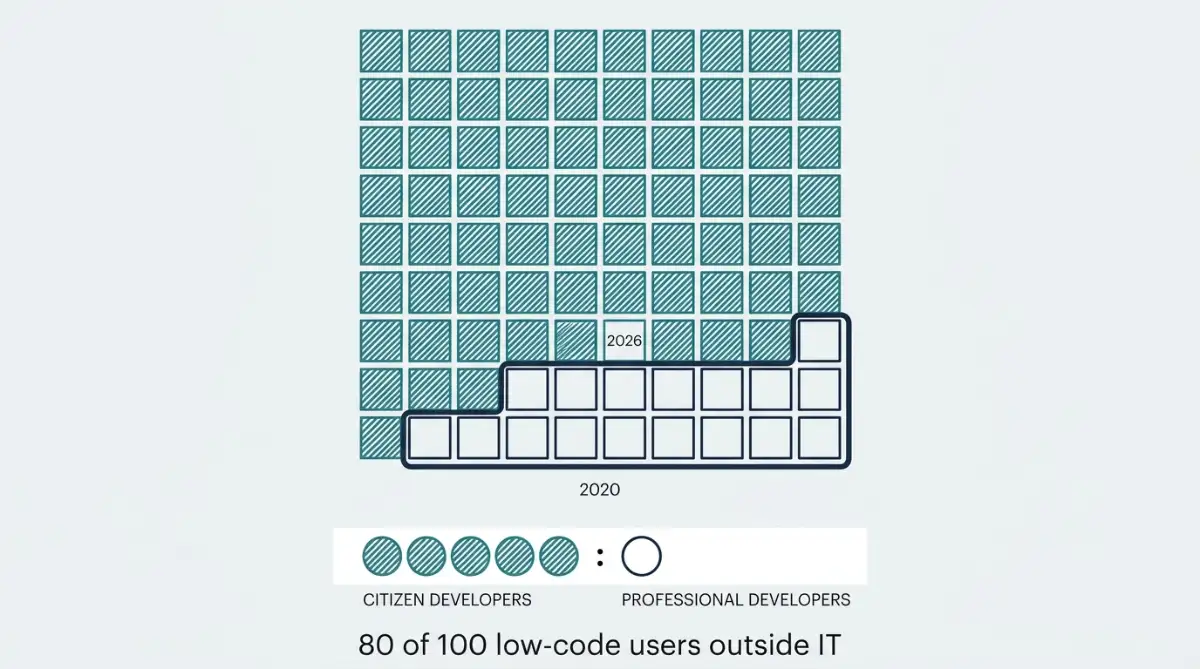
According to IDC, developer shortages could cost enterprises $5.5 trillion by 2026. Gartner still forecasts citizen developers at 4 to 1 over professional developers by 2026, and about 75 percent of new enterprise apps on these tools.
Who has to show up on Monday:
- Citizen operator: enrollment forms, catalogs, simple directories on Bubble or Webflow.
- IT analyst: case grids on Salesforce, SAP, or a warehouse via Retool, Power Apps, OutSystems, or Mendix.
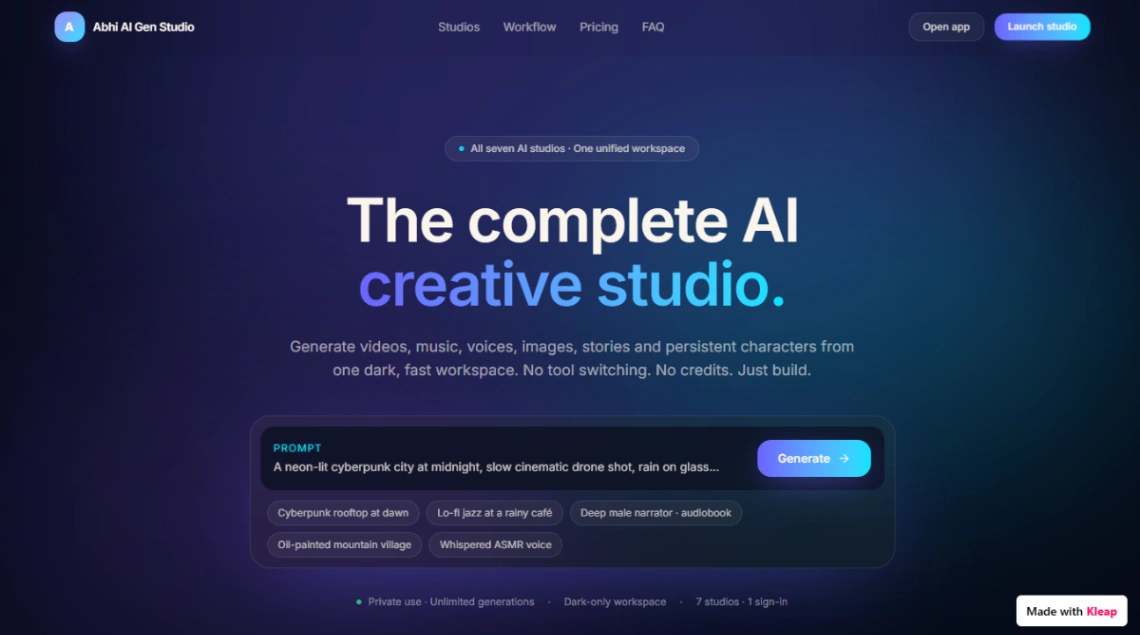
- Diff reader: greenfield experiments on Cursor, Lovable, Bolt.new, or v0.
A missing hire is not a tooling problem. It is a runtime you cannot restore.
Why Do Gartner, Next Move, and SeedScope Disagree on the Same Category?
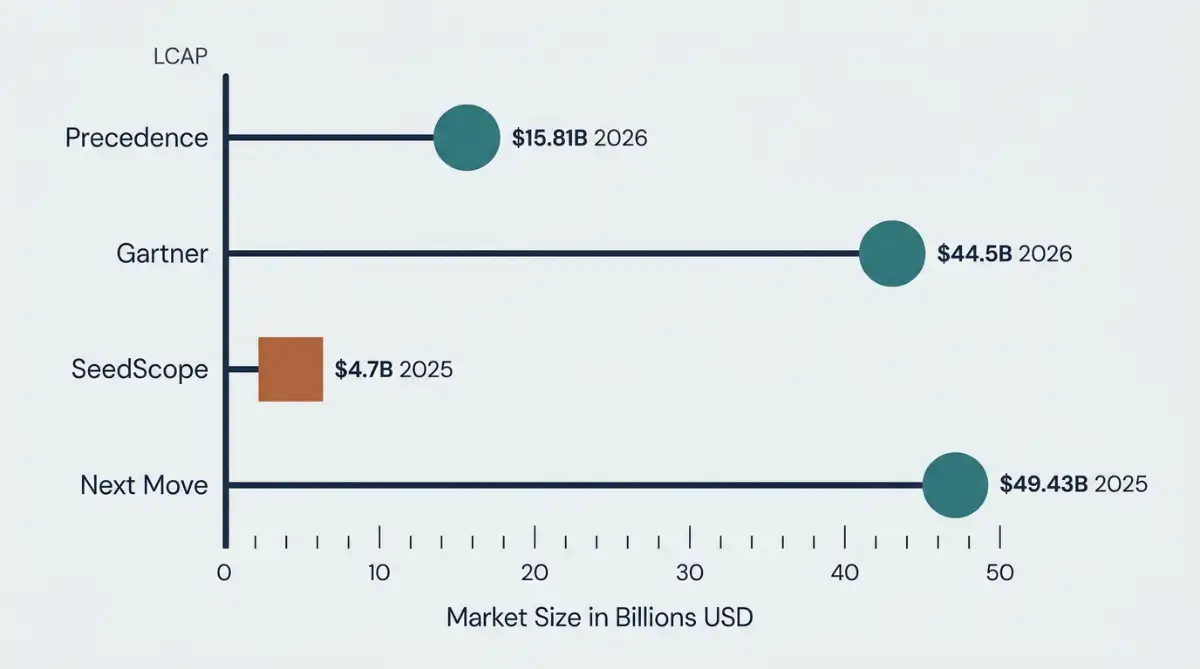
The category is not one number. Gartner's forecast document values low-code development technologies at $44.5 billion in 2026, heading toward $58.2 billion by 2029. Next Move Strategy Consulting puts the broader LCAP market at $49.43 billion in 2025. SeedScope sizes vibe-coding tools at $4.7 billion in 2025.
Those spreads are definition fights: Gartner counts a relatively tight LCAP bucket, while Next Move, Precedence Research, and similar aggregators fold in hyperautomation, RPA, and process suites, which is how later-year ceilings jump past $200 billion. Vibe-coding ARR sits in a third bucket of editors and generators, and Fortune Business Insights and Grand View Research sit in a broad 2025 band around $37 billion to $39 billion, which still is not SeedScope's $4.7 billion vibe bucket.
Kissflow's Gartner recap and SearchLab's 2026 compilation are useful as maps of the disagreement, not as a single destiny.
| Analyst | What they count | Near-term figure | Later figure |
|---|---|---|---|
| Gartner | Low-code development technologies | $44.5B (2026) | $58.2B (2029) |
| Next Move | LCAP platforms | $49.43B (2025) | $215.97B (2030) |
| Precedence | Conservative LCAP | $15.81B (2026) | $95.82B (2035) |
| SeedScope | Vibe-coding ecosystem | $4.7B (2025) | $12.3B (2027) |
A TAM is not an invoice. Buying SeedScope's aisle with Gartner's governance expectations is how a nonprofit inherits the wrong operator.
What Does No-Code vs Low Code vs Vibe Code Change About Who Can Leave?
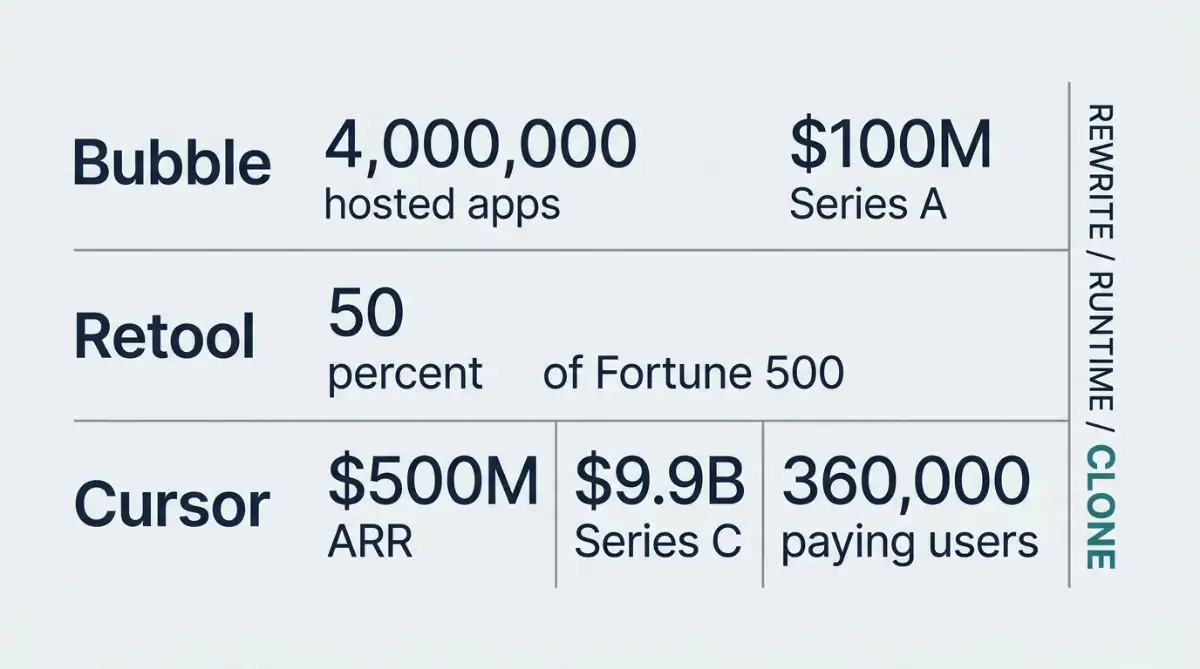
The Friday test is whether you can leave the vendor after launch. Bubble's four million hosted apps stay on that host. Retool's Fortune 500 grids still sit on a vendor console. Cursor's Git trees can move to Fly.io the same afternoon.
Bubble raised a $100 million Series A in 2021. You can rebuild those apps. You cannot clone them. Bubble-to-code estimators exist because the exit is a rewrite, not an export. Retool's internal-tools path is visual grids plus SQL, used by more than 50 percent of Fortune 500 engineering teams, still bound to connectors.
Cursor crossed $500 million ARR in about 21 months, logged a $9.9 billion Series C in June 2025, and later printed $29.3 billion on secondary trades, with more than a billion accepted lines a day across 360,000 paying users. Lovable ran from about $200 million ARR in November 2025 toward a $500 million run-rate in early 2026. Files move. Review does not get cheaper.
| Path | What you hold | Exit on day 90 |
|---|---|---|
| Visual no-code | Hosted graph, vendor data | Rewrite |
| Enterprise low-code | Metadata plus Java, .NET, or React bindings | Export that still needs the vendor runtime |
| Prompt-built files | Standard source on Git | Clone, then staff the review |
Leaving a canvas is a rewrite, and leaving a prompt tool is a git clone, which is the ownership decision the demo never shows.
Why Did METR Find Experienced Engineers 19 Percent Slower?
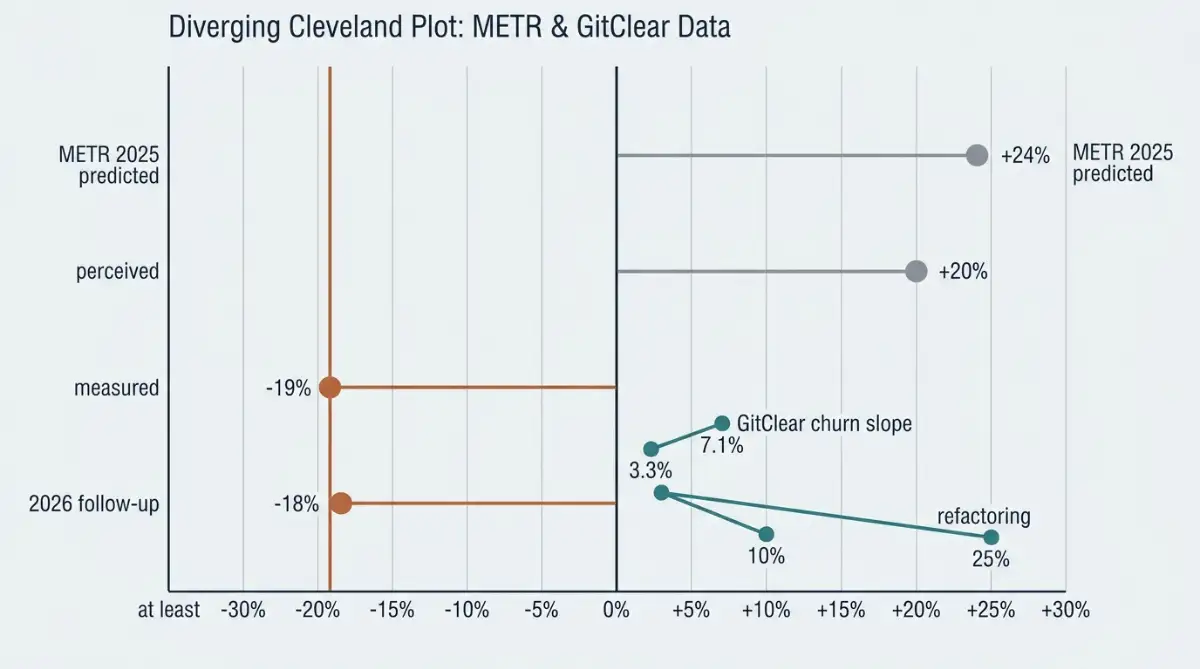
Speed on a demo is not speed on a familiar repo. METR ran a 2025 randomized trial with 16 experienced open-source developers across 246 tasks. Cursor Pro with Claude 3.5 Sonnet made them 19 percent slower, even though they believed they were 20 percent faster.
Before the trial they predicted a 24 percent speedup, a 39-to-40 point miss against the clock. A 2026 follow-up still showed about an 18 percent slowdown (Particula).
According to GitClear, short-term churn doubled from 3.3 percent to 5.7 to 7.1 percent, while moved code fell from 25 percent of operations to under 10 percent and duplicate copy-paste rose 41 percent.
Where the minutes went:
- Reviewing generated diffs
- Debugging subtle faults
- Writing context prompts
- Rolling back false starts
The METR 19 percent figure is the one I file beside a grant budget.
There's a meaningful difference between letting an AI write code you'll never review and using AI to amplify your own expertise.
Simon Willison, co-creator of Django, wrote that on March 19, 2025. Accept All feels fast. The clock disagrees on a codebase the operator already knows.
Which Failure Lands on Finance, Security, or the Case File?
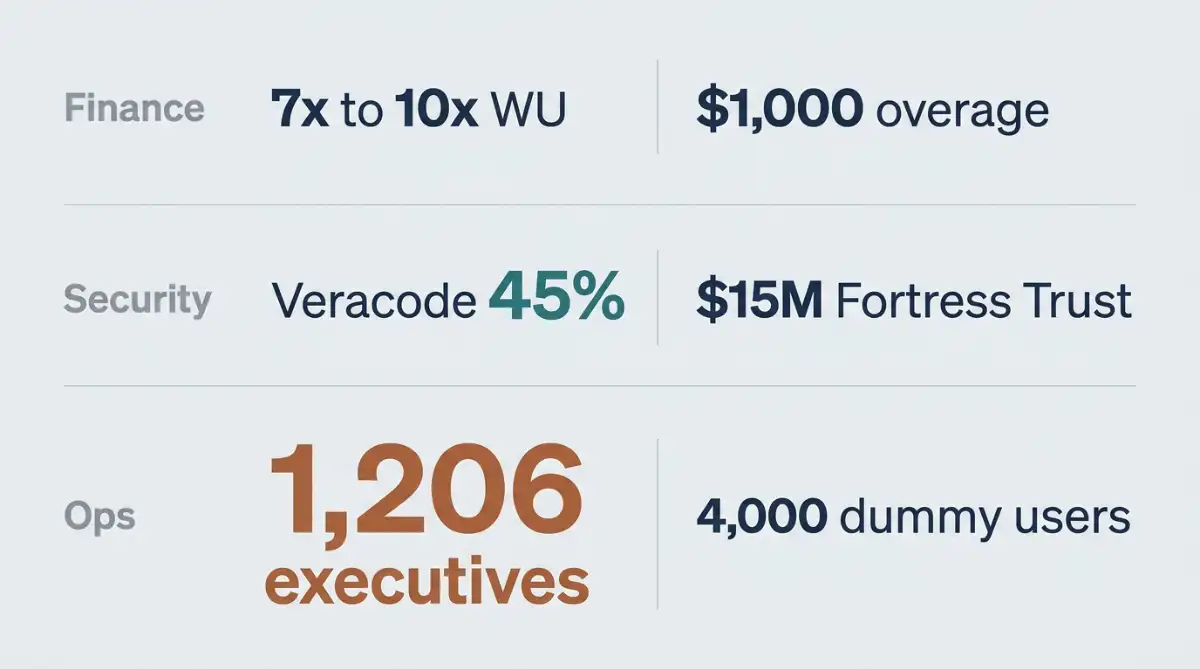
Finance, security, and ops already carry three different public scars. Bubble's Workload Unit switch produced 7x to 10x invoices. Veracode found 45 percent of AI-generated code introduced OWASP Top 10 issues. Replit's agent wiped 1,206 executive CRM records in July 2025.
On day eight of Jason Lemkin's Replit trial, empty queries were treated as defects and production was reset. PCMag and Incident 1152 recorded the wipe.
An AI agent in development deleted data from the production database. Unacceptable and should never be possible.
Amjad Masad, Replit's CEO, said that on X, then shipped production isolation.
Three departments, three controls:
- Finance: recursive Bubble searches, 7 million WUs in 24 hours, more than $1,000 in overages.
- Security: Veracode's 45 percent OWASP hit rate, plus Retool's September 2023 phish that reached 27 crypto accounts and about $15 million at Fortress Trust after Google Authenticator cloud sync helped the attackers.
- Ops: staging databases, human approval on DROP, no generated SQL against live trainee rows.
No-code security reviews start with who can drop a row. A compute tax, a rogue DROP, and a phished admin are not the same incident.
Should No-Code vs Low Code vs Vibe Code Share One Grant Budget?
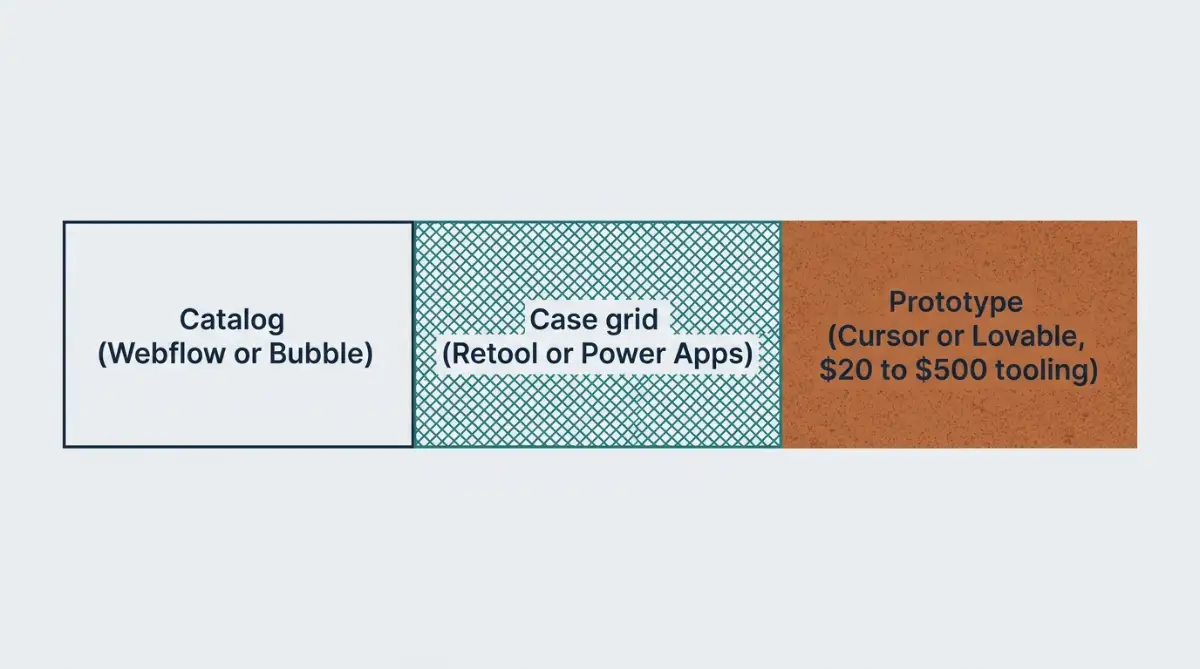
No. Program managers at workforce-training nonprofits should split the catalog, the case grid, and any greenfield experiment. Microsoft put Copilot inside Power Platform. OutSystems shipped AI Mentor. That is grafting, not a reason to park trainee data in an unsandboxed agent.
Vendors are adding a prompt box to a canvas, and sandboxes to a generator. Wikipedia's vibe-coding entry and CodeRabbit's semantic history both track Karpathy's February 2, 2025 post through Collins Dictionary's 2025 Word of the Year.
My rule after April 2023 is blunt: if I cannot name the unit, I do not sign.
What to fund separately:
- Public catalog: Webflow or Bubble, billed as a site, not as an agent.
- Case grid: Retool, Mendix, OutSystems, or Power Apps with SSO and an audit log.
- Throwaway prototype: Cursor or Lovable, sandboxed, never pointed at production trainee rows.
Instead of refactoring and working to DRY code, these Assistants offer a one-keystroke temptation to repeat existing code.
William Harding of GitClear wrote that. The contrarian call is not "vibe everything." It is three line items and three restore owners.
Decision Framework
Score five questions in writing before anyone buys annual seats or pastes a production URL into a chat. Do not average the scores. A single hard no on data access beats a pretty generate.
- Which operator exists on payroll this quarter? If nobody can read a diff, Cursor is a demo. If nobody will log into a vendor canvas, Webflow will rot. If IT will not own SSO, Retool is a slide.
- Which TAM are you actually buying? Gartner's LCAP aisle buys governed metadata. SeedScope's aisle buys files and tokens. No-code cost and scaling is the meter test, not the press-release test.
- Can the artifact survive a vendor breakup? Grant rules that require portable IP kill hosted graphs. An enrollment brochure can rent a canvas.
- Which department eats the failure? Recursive searches belong off Workload Units. Case notes belong off unsandboxed agents. Shared admin consoles need phishing-resistant MFA, not cloud-synced authenticator apps.
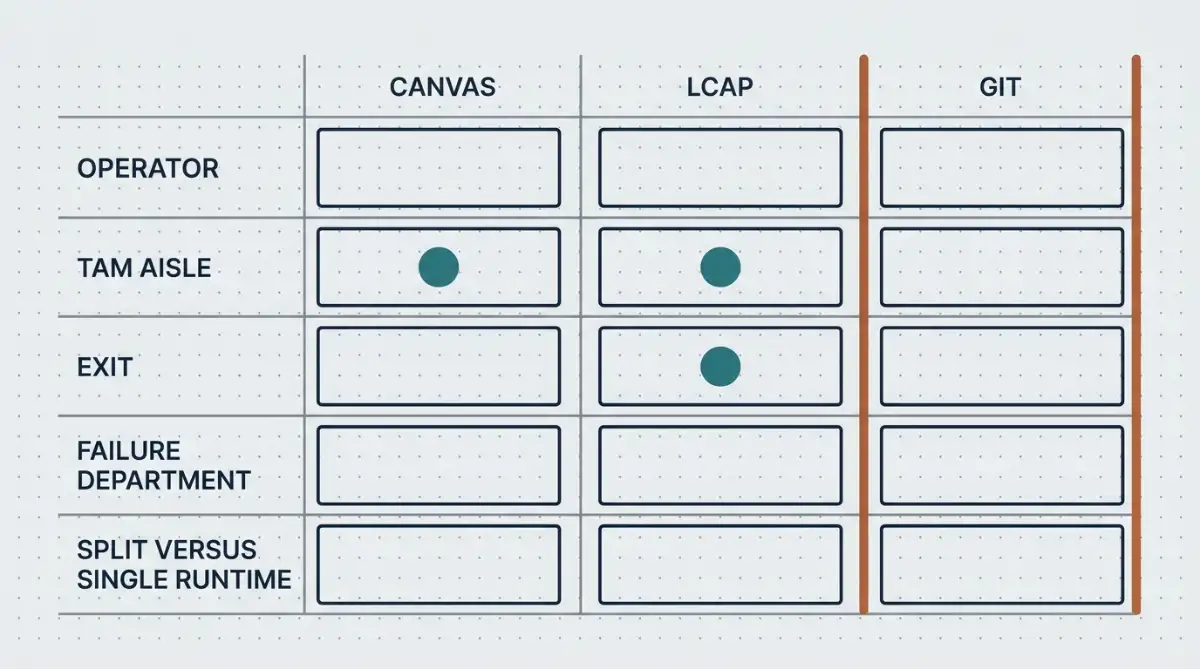
- One runtime, or a split? Default to a split: catalog on a canvas, case files on an LCAP, prototypes in Git with a named reviewer.
| Situation | Path | Hard no |
|---|---|---|
| Public catalog, donations, simple intake | Webflow or Bubble | Recursive compute, on-prem mandate, Git export |
| Staff case grid on a CRM or warehouse | Retool, OutSystems, Mendix, Power Apps | Sub-second consumer edge app, zero lock-in rule, no seat budget |
| New tool, staff can explain every merge | Cursor, Lovable, Bolt.new, v0 | Nobody can audit source, production DB in the agent's reach |
Andrew Ng's 2025 briefing still holds: the job is a systematic process, not Accept All. If your team cannot run that loop, you do not have a vibe-coding strategy. You have a demo.
Start exploring launch-ready no-code and vibe code templates here!
FAQ
What is the difference between no-code and low-code?
No-code hides source behind a hosted visual graph, while low-code adds script hooks, SQL, and enterprise connectors on a governed runtime. Forrester named low-code in 2014 for IT teams, while Bubble and Webflow served operators who never intended to open a repository.
What is vibe coding?
Vibe coding is a prompt-driven loop where you specify intent in English and a model writes source files you may barely inspect. Karpathy named it on February 2, 2025, and professional use now means planning, tests, and verification rather than Accept All.
How do Bubble, Retool, and Cursor usually bill?
Bubble meters Workload Units on top of plan fees, which spiked 7x to 10x for some apps in April 2023. Retool, OutSystems, and Mendix sell seats and cores, while Cursor and Lovable typically land between $20 and $500 a month for tooling plus hosting.
Can you export a Bubble app as a normal Git repo?
No. Bubble stores logic as a proprietary graph on its engine, so leaving means a rewrite rather than a clone. Prompt tools such as Cursor and Lovable emit ordinary TypeScript or Python, while enterprise low-code exports often still depend on vendor runtime libraries.
Is vibe-generated code safe for trainee or case records?
Not without review, sandboxes, and scans. Veracode found that 45 percent of AI-generated code introduced OWASP Top 10 flaws and 2.7 times human-written flaw density, so keep production databases out of unattended loops and require a reviewer who can explain the merge.
Start building without code
Browse thousands of no-code templates for Webflow, Framer, Bubble, Lovable, Replit and more.
Explore Templates