What Is a No Code Builder? 2026 Guide for Founders
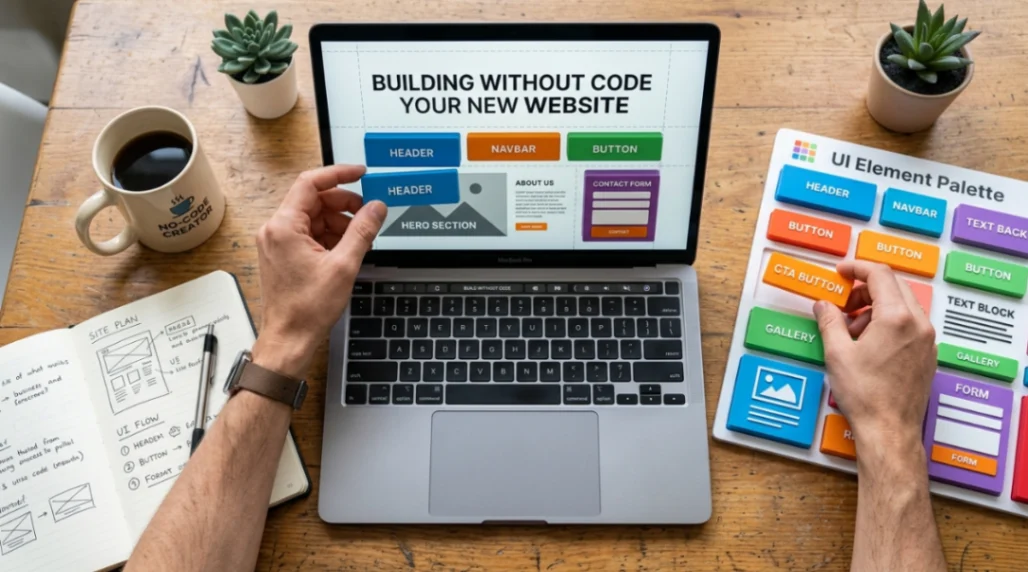
A no code builder is a visual platform that lets non-developers design and deploy working software through drag-and-drop interfaces instead of writing code. By 2026, Gartner projects 70% of new business apps will be built this way, driven by citizen developers and AI-assisted tools.
Table of Contents
- The Shift From Code-First to Human-First Software
- What Is a No Code Builder, Really?
- No-Code vs Low-Code vs Custom Development
- Why Non-Technical Founders Are Betting on Visual Builders
- How AI Turned No-Code Into "Vibe Coding" in 2026
- The Honest Limits of a No Code Builder
- Deal-Breaker Questions, Answered
- Key Takeaways
- FAQ
The Shift From Code-First to Human-First Software
Forty years ago, building software meant learning syntax. Today, a non-technical founder can sketch a prototype at breakfast and have a live app by lunch. That's not hype, it's a measurable shift. According to Gartner, 70% of new business applications will be built with no-code or low-code tools by 2026, up from less than 25% in 2020.
For non-technical founders evaluating their first no code builder, the stakes are practical: the wrong platform costs months of rebuild time, and the right one compresses a year of dev work into weeks. This guide covers what a no code builder actually is, where it came from, what it can (and can't) do in 2026, and how AI is reshaping the whole category.
What Is a No Code Builder, Really?
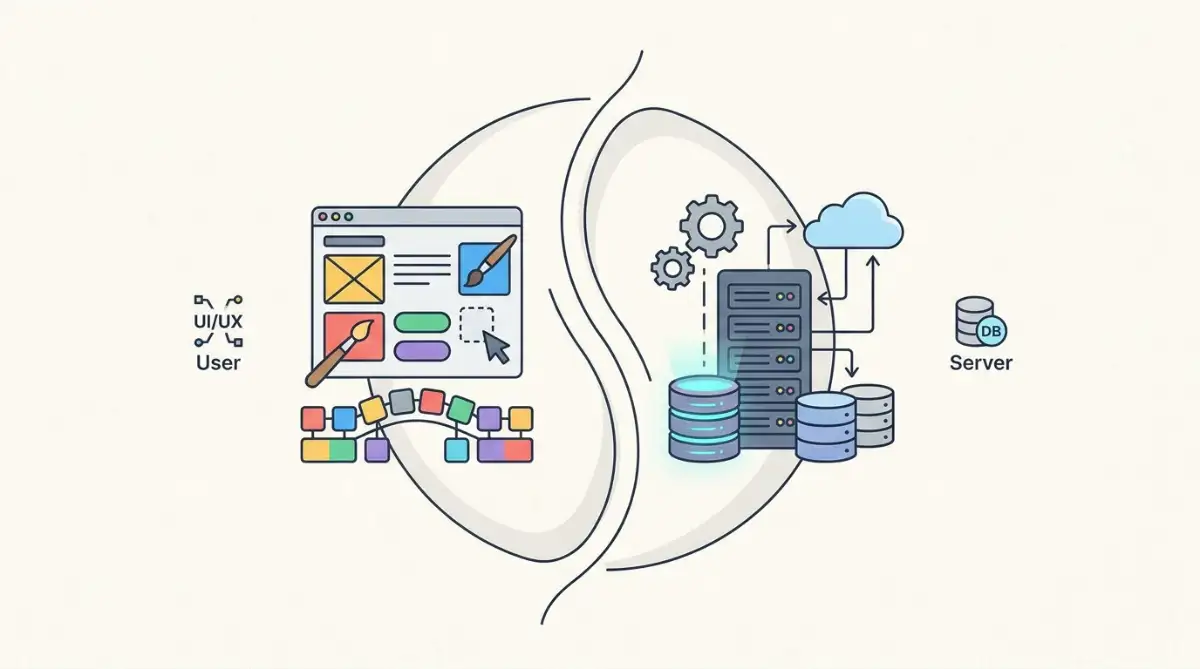
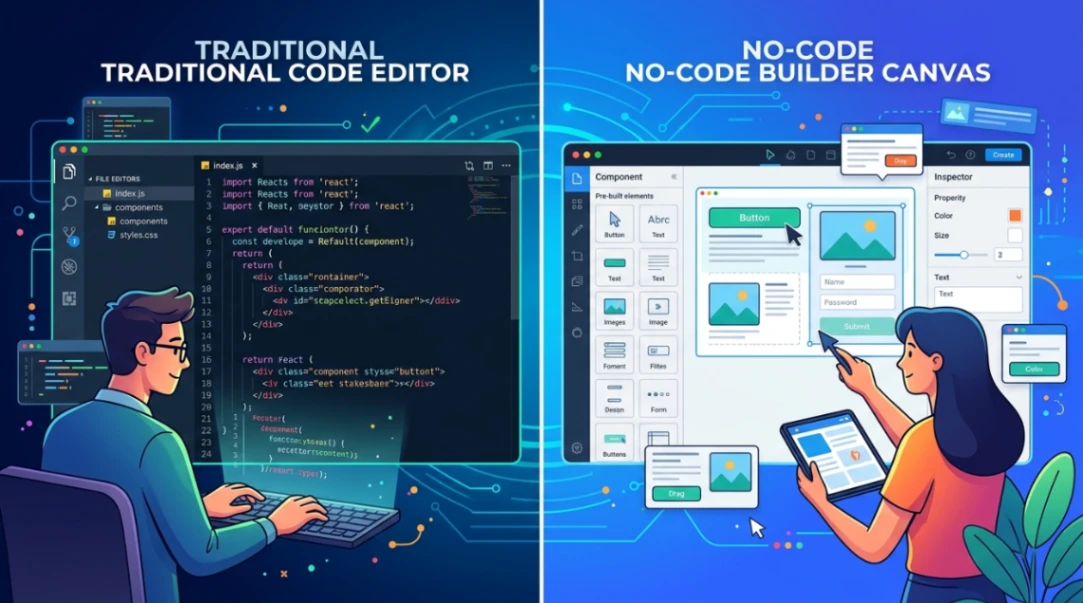
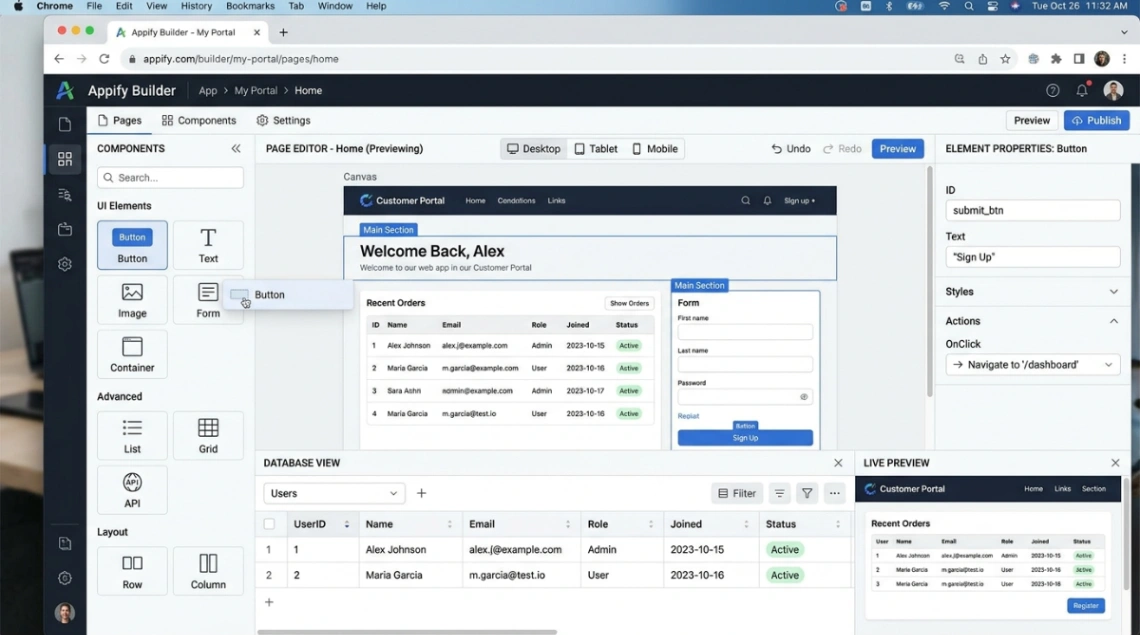
A no code builder is a platform where the visual interface is the programming language. You drag components, connect data, and define logic through menus, not syntax. The platform compiles your visual choices into working software at runtime. Bubble's own primer on the basics of visual programming frames it well: visual elements replace code as the primary instruction layer.
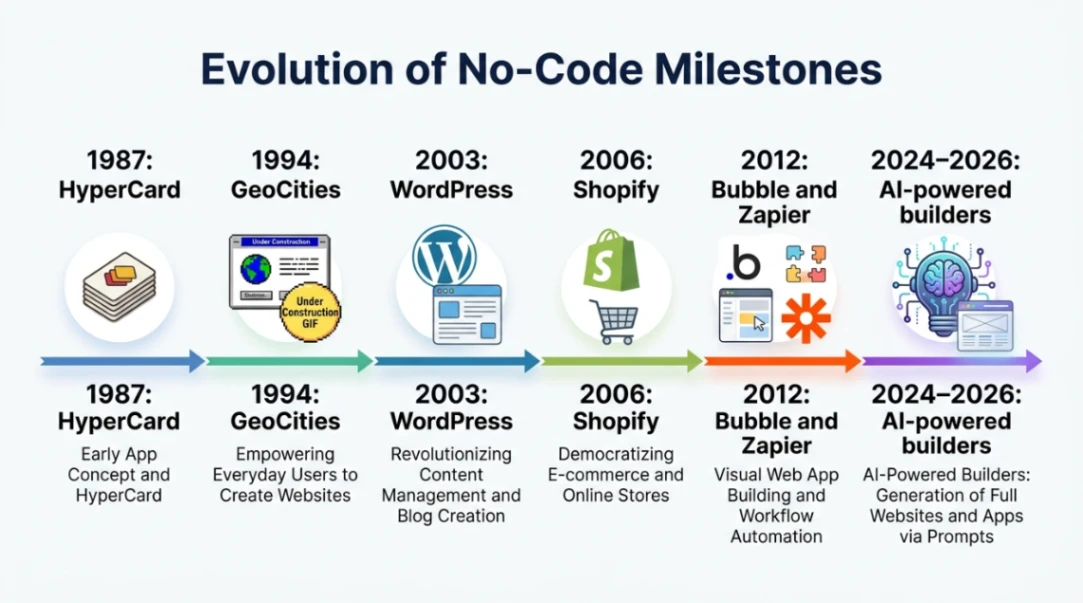
This idea isn't new. The conceptual roots go back to the 1960s with visual systems like Pygmalion and GRaIL. The first mass-market example was Apple's HyperCard in 1987, which packaged UI, database, and an English-like scripting language into one app. Tim Berners-Lee cited HyperCard as a direct influence on the World Wide Web, and even the pointing-finger hyperlink cursor was borrowed from it.
The modern era kicked off in 2012, when Bubble launched full-stack visual app-building and Zapier introduced cross-platform automation. WordPress had already made no-code real in 2003 for websites, but 2012 was when visual builders started producing real applications, not just pages. Formstack's history of the no-code movement walks through the full timeline for anyone who wants the long version.
No-Code vs Low-Code vs Custom Development
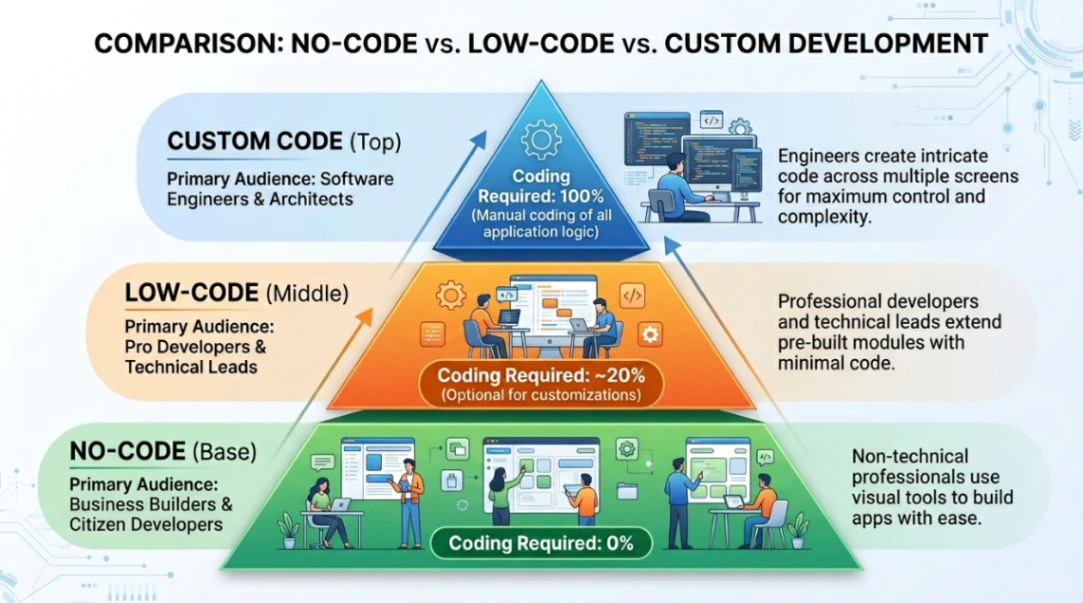
Short answer: no-code is 100% visual, low-code mixes visual building with optional custom scripts, and custom dev is pure code. Your choice depends on complexity, not preference.
IBM's breakdown of low-code vs no-code and OutSystems' comparison guide both land on the same core distinction: target user and coding required. Here's the practical version:
| Factor | No-Code Builder | Low-Code Platform | Custom Development |
|---|---|---|---|
| Target user | Business builders, founders | Pro developers | Software engineers |
| Coding required | 0% | 10–20% | 100% |
| Speed vs baseline | 5x to 10x faster | 2x to 3x faster | Baseline |
| Best for | Standard workflows, MVPs | Enterprise integrations | Mission-critical systems |
| Maintenance | Platform managed | Shared | Fully manual |
For most non-technical founders launching a first product, a no code website builder or app platform handles the job. Low-code enters the picture when you need custom integrations with legacy systems. A composite enterprise study cited in recent research found no-code projects complete in an average of 3.2 weeks versus 14.8 weeks for traditional development, a 74% faster time-to-market.
Why Non-Technical Founders Are Betting on Visual Builders
Short answer: because the global developer shortage makes hiring impossibly slow and expensive, and no code builders deliver working products in weeks at a fraction of the cost.
The developer talent gap is projected to hit 85.2 million workers by 2030, representing an estimated $8.5 trillion in unrealized revenue worldwide. Founders can't wait out that shortage. According to surveyed companies in the research, 60% report saving between $100,000 and $200,000 annually by using no-code platforms. Capco's analysis of low-code/no-code and the citizen developer frames this shift as the single biggest change in how enterprises resource software in a generation.
What founders actually build:
- Landing pages and marketing sites (see the 2026 landing page guide)
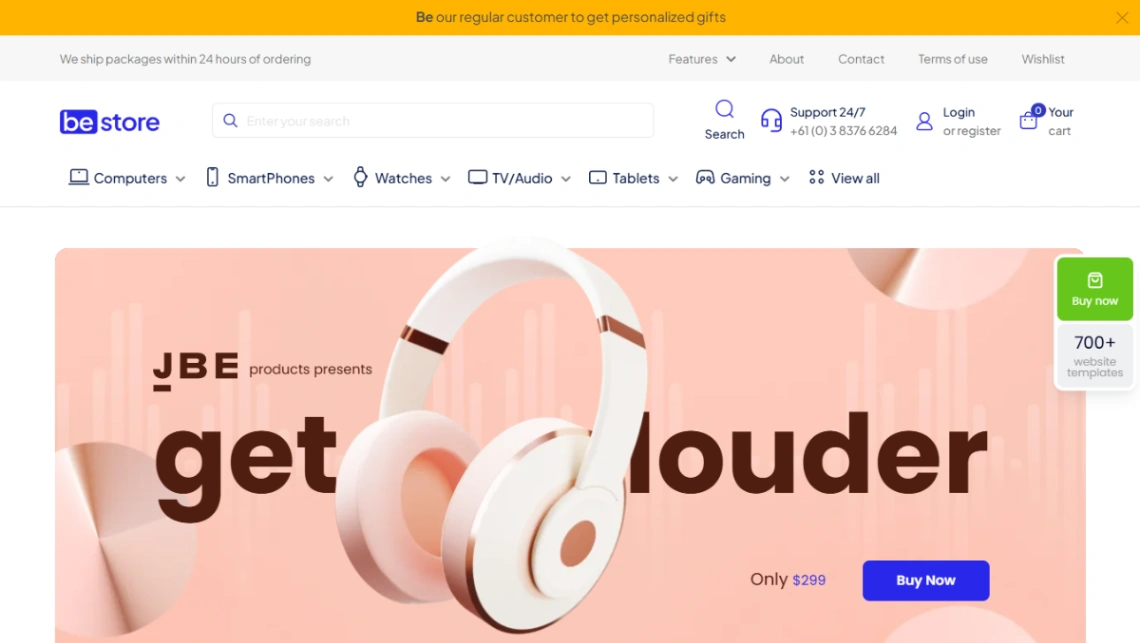
- Full web apps with logins, payments, and databases
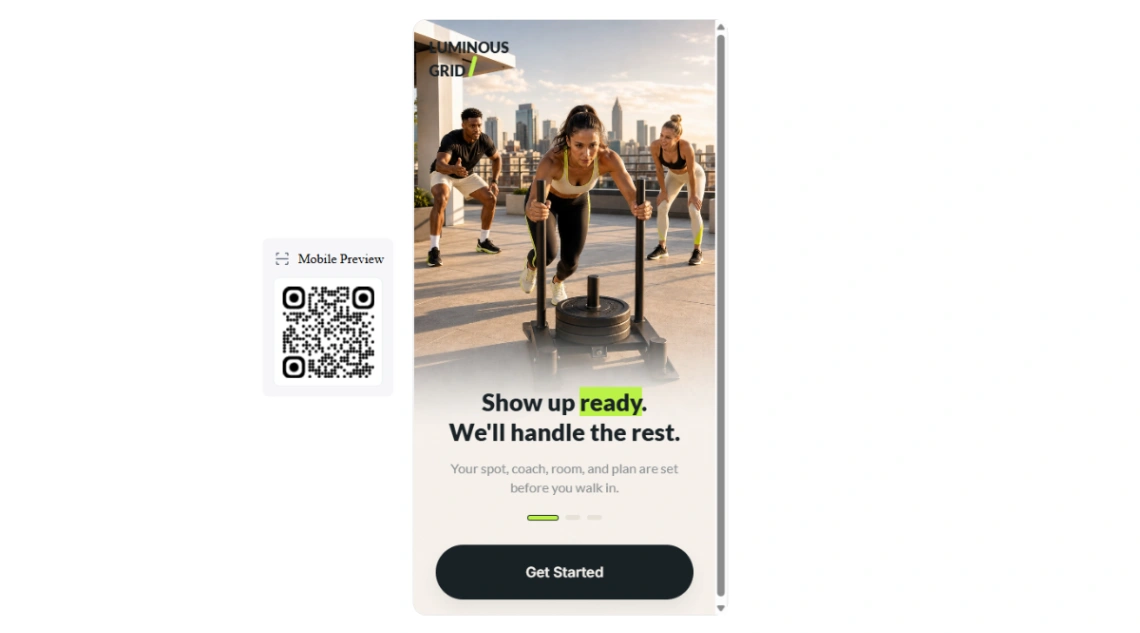
- Cross-platform mobile apps shipped to iOS and Android from one build
- Internal tools, CRMs, and automation workflows
Gartner predicts citizen developers will outnumber professional developers by 4:1 in large enterprises by 2028. That shift means the founder, the ops manager, the marketer, anyone with a problem, can ship a solution. Grand View Research values the no-code AI platforms market alone at $4.28 billion in 2024, projected to reach $44.15 billion by 2033 at a 30.2% CAGR.
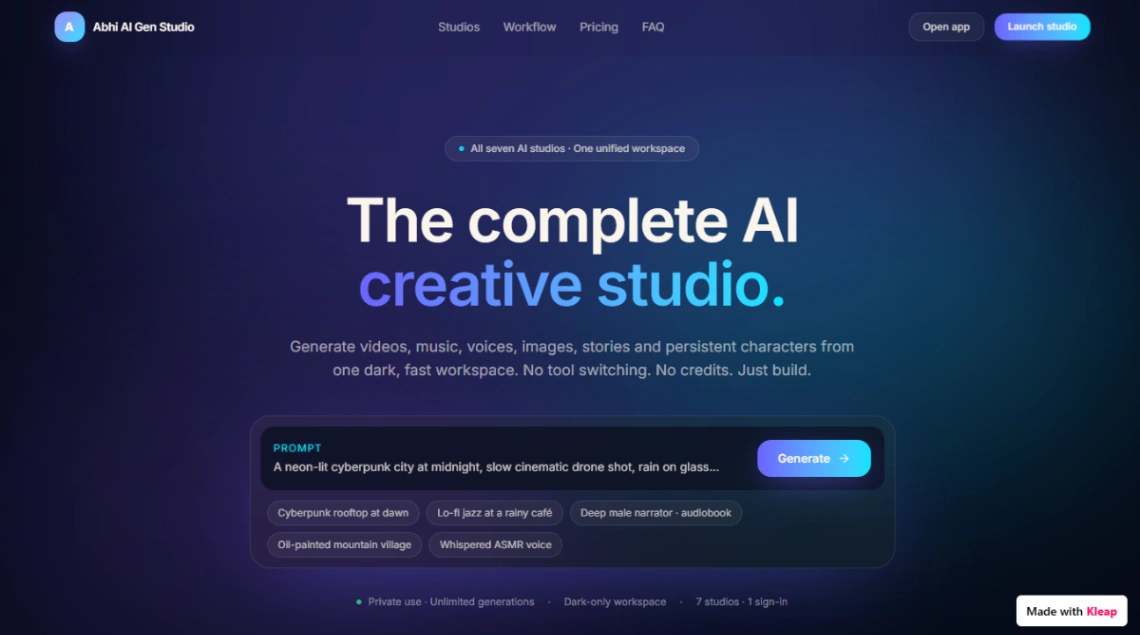
How AI Turned No-Code Into "Vibe Coding" in 2026
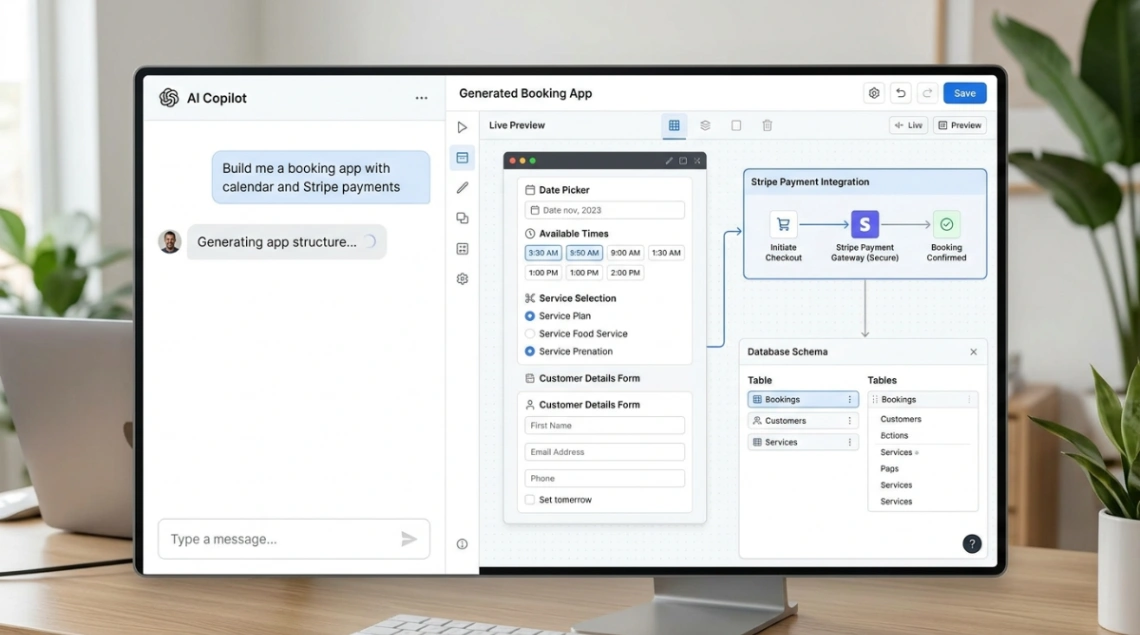
Short answer: AI agents now build entire apps from plain-English prompts inside no code builders, collapsing the learning curve from weeks to minutes.
This is the third wave of no-code, and it's the biggest shift since 2012. Per the research, 72% of no-code platforms now integrate AI features, and the frontier has moved from code autocomplete to full agentic automation. The academic case for this is laid out in "Democratizing Software Engineering through Generative AI and Vibe Coding," which tracks how natural-language interfaces are reshaping the no-code stack.
A few concrete examples from 2025 and 2026, backed by UI Bakery's 2026 platform overview:
- Bubble AI Agent generates complete web and native mobile apps (via React Native) from natural language prompts
- Airtable Omni is a conversational builder whose AI agents operate across millions of rows to trigger actions and enrich records
- UI Bakery positioned its AI agent as the primary builder in 2026, understanding full app structure including databases, CRUD operations, and permissions
This AI surge is reflected in funding too. Per Crunchbase News, North American startup funding hit $280 billion in 2025, a 46% jump from 2024, with AI categories capturing roughly 60% of that.
If you've heard the term "vibe coding," this is where it lives. You describe what you want, the AI drafts it inside a governed visual environment, and you refine visually. Stack Overflow's 2025 survey noted 84% of developers use AI coding assistants but trust in raw AI-generated text code is falling. No-code solves that trust gap by giving AI pre-tested visual components to assemble.
The Honest Limits of a No Code Builder
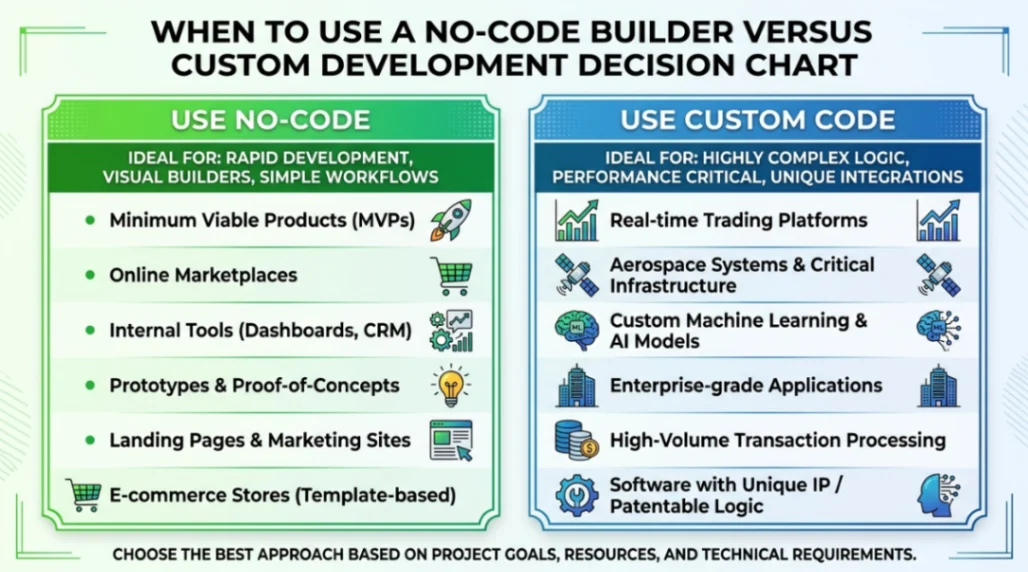
Short answer: no-code struggles with real-time fault tolerance, heavy computation, and deep vendor lock-in. For most founders, these limits don't apply until serious scale.
Being straight about this matters. Visual building isn't a universal replacement for custom code. Per the research, the real ceilings are:
- High-complexity workflows like aerospace safety layers or real-time trading systems
- Compute-heavy tasks such as custom ML models or advanced defect detection
- Vendor lock-in since migrating off a platform can be expensive and complex
- Shadow IT risks when citizen developers ship without security oversight
That said, for a founder building an MVP, a marketplace, a SaaS dashboard, or a content site, none of these ceilings bite. Pick a platform with strong export options and documented governance, and you stay flexible.
Deal-Breaker Questions, Answered
Will a no code builder scale? For standard SaaS, marketplaces, and content products, yes. Platforms like Bubble and Webflow power businesses with millions of users. Past extreme scale or ultra-low-latency needs, you may eventually migrate parts to custom code.
Cost vs hiring a developer? A solo founder using a no code builder typically ships for the price of a monthly SaaS subscription (often $30 to $300). Hiring even a junior dev runs $60K+ annually in most markets. For validation and early revenue, the math isn't close.
Does AI replace no-code? No, it amplifies it. AI writes the scaffolding, no-code provides the safe visual framework to inspect, edit, and ship. Together they outperform either alone.
Is my data safe? Reputable platforms are SOC 2 compliant with proper encryption. Risk rises when non-technical users set up integrations without guidance. Always use platform-native auth and review permission settings.
What if the platform shuts down? This is the vendor lock-in concern. Mitigation: pick platforms with data export, API access, and a track record (5+ years in market is a solid floor).
Start exploring launch-ready no-code templates here!
Key Takeaways
- A no code builder replaces syntax with visual logic, letting non-technical founders ship working software 5 to 10 times faster than traditional development, at a fraction of the cost.
- The global low-code and no-code market hit $28.75 billion in 2024 and is projected to grow past $264 billion by 2032, according to research cited in this guide. Gartner expects 70% of new business apps to be built this way by 2026.
- AI-powered "vibe coding" has merged with no-code in 2026, turning plain-English prompts into deployable apps inside governed visual environments like Bubble, Airtable, and UI Bakery.
The real story isn't that coding is dying, it's that software creation is becoming a literacy, not a specialty. If you're a founder with a clear problem and no engineering team, the question in 2026 isn't whether to use a no code builder. It's which one ships your idea fastest.
FAQ
Q: What's the difference between a no code builder and a website builder? A website builder produces pages. A no code builder produces applications with databases, logic, and user accounts. Many platforms (Wix, Webflow, Bubble) now blur the line by offering both.
Q: Can I build a mobile app with no-code? Yes. Platforms like Bubble, Glide, and FlutterFlow export to iOS and Android. Cross-platform no-code apps now power real businesses, though native performance still favors custom code for games and heavy graphics.
Q: How long does it take to learn a no code builder? Most founders ship a basic product in 2 to 4 weeks. AI-assisted builders in 2026 collapse the curve further, generating starter apps from prompts in minutes.
Q: Is no-code the same as low-code? No. No-code uses zero manual code. Low-code mixes visual building with optional custom scripts. Low-code targets professional developers; no-code targets business builders.
Q: What's "vibe coding" in 2026? Vibe coding means describing an app in plain English and letting AI build it inside a no-code platform. The AI generates visual components you can inspect, edit, and deploy without ever writing syntax.
Start building without code
Browse thousands of no-code templates for Webflow, Framer, Bubble, Lovable, Replit and more.
Explore Templates