Zapier 2012: The Birth of No Code Automation
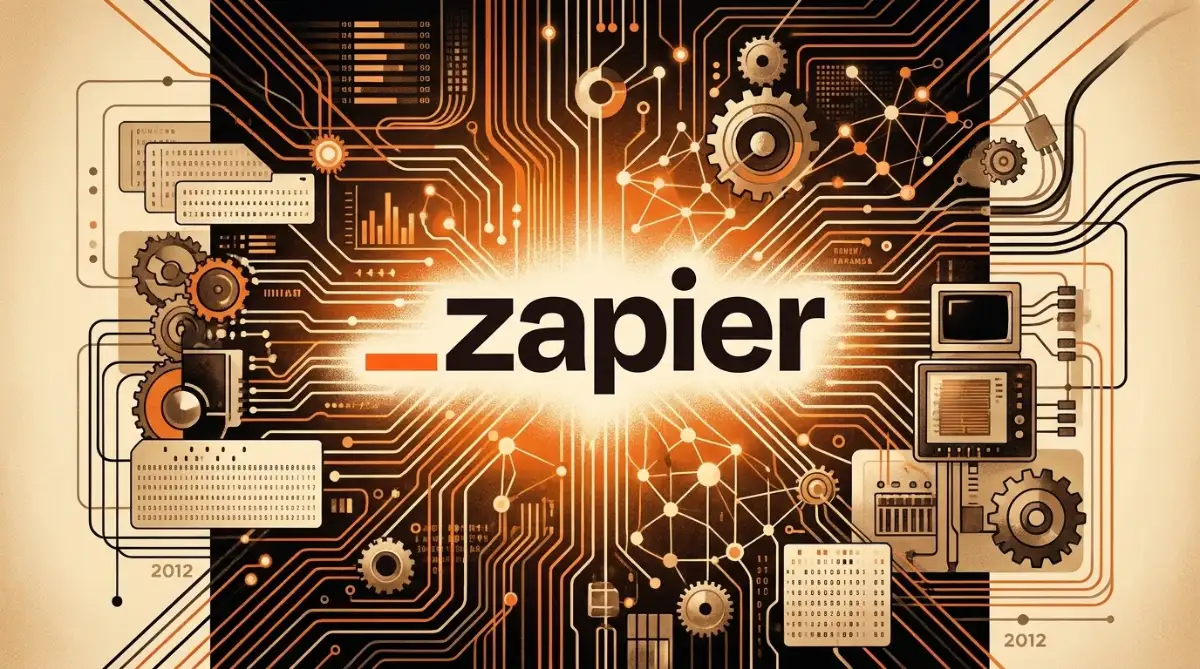
Zapier launched in May 2012 after winning the Columbia Startup Weekend, and was founded by Wade Foster, Bryan Helmig, and Mike Knoop. It introduced a "Trigger-Action" model that let non-technical users connect web apps without writing code, becoming the foundational template for the no-code automation category.
Table of Contents
- The Side Project That Became an Industry
- How Trigger-Action Logic Reshaped No Code Automation
- The Numbers Behind a Bootstrapped Giant
- Honest Tradeoffs: Where the Zapier Story Gets Complicated
- From Static Zaps to AI Agents in No Code Automation
- Key Takeaways
- FAQ
Three colleagues from a Missouri mortgage company spent a weekend in 2011 building a prototype that now processes 1.5 billion tasks a month. That weekend project, Zapier, more or less invented the category non-technical founders now call no code automation. The lessons from its first decade matter more than the product itself.
The Side Project That Became an Industry
Zapier's origin is a Startup Weekend prototype built in October 2011 by three colleagues at a Missouri mortgage company. Wade Foster, Bryan Helmig, and Mike Knoop kept building after the weekend, launched the public beta in May 2012, and got into Y Combinator that summer.
The founding story is unglamorous in a way I find refreshing. Foster and Helmig were working at Veterans United Home Loans when they noticed clients kept asking for the same favor: connect this form to that CRM, push these leads into that mailing list. The asks were small. The bills for custom development were not. The trio entered the first Columbia Startup Weekend in October 2011, won it with a prototype that let web apps talk to each other, and kept building until 3:00 AM most nights while holding down day jobs.
The early growth playbook was almost embarrassingly manual:
- The team scoured Salesforce and Evernote support forums for users begging for integrations.
- Foster offered those users Skype calls to set up workflows by hand.
- That direct line to actual frustration shaped the UI until manual onboarding became unnecessary.
- Y Combinator rejected them on the first try.
By the second YC application they had a 10,000-person waitlist and 25 working integrations. They got in for Summer 2012, launched the public beta in May, and raised a $1.2 million seed in October 2012, the only meaningful primary funding round the company would take for the next decade.

How Trigger-Action Logic Reshaped No Code Automation
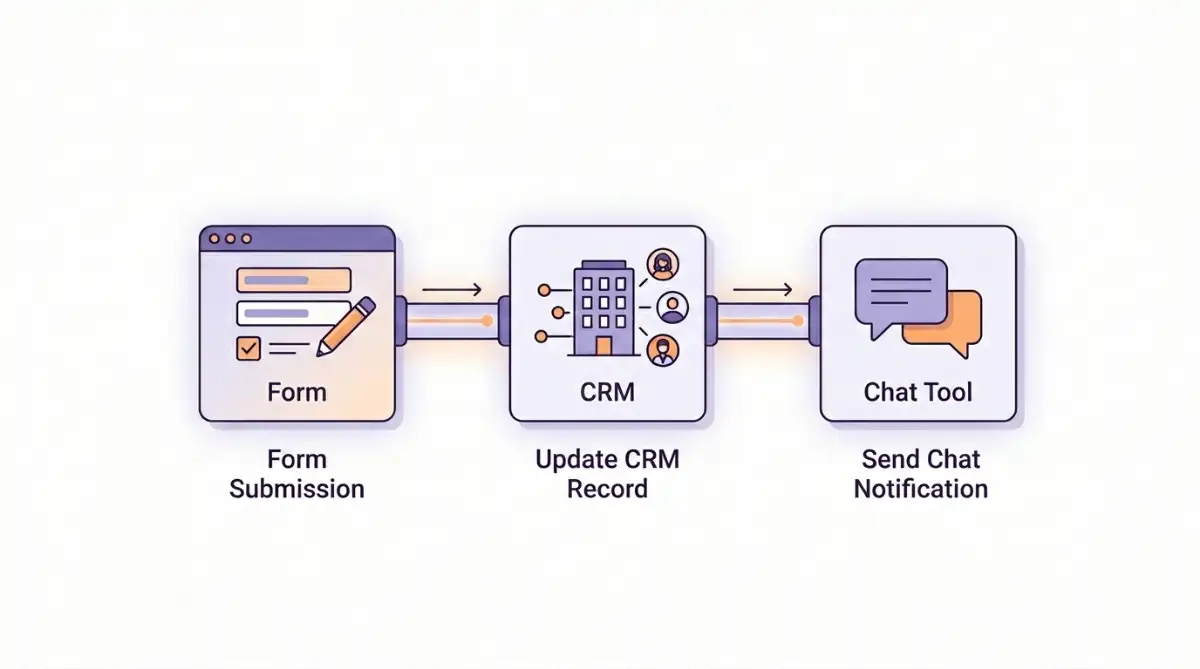
Zapier's contribution to no code automation was conceptual, not architectural. It standardized thousands of incompatible APIs into one mental model: when X happens, do Y. Everything else is plumbing. That abstraction is the reason the category exists.
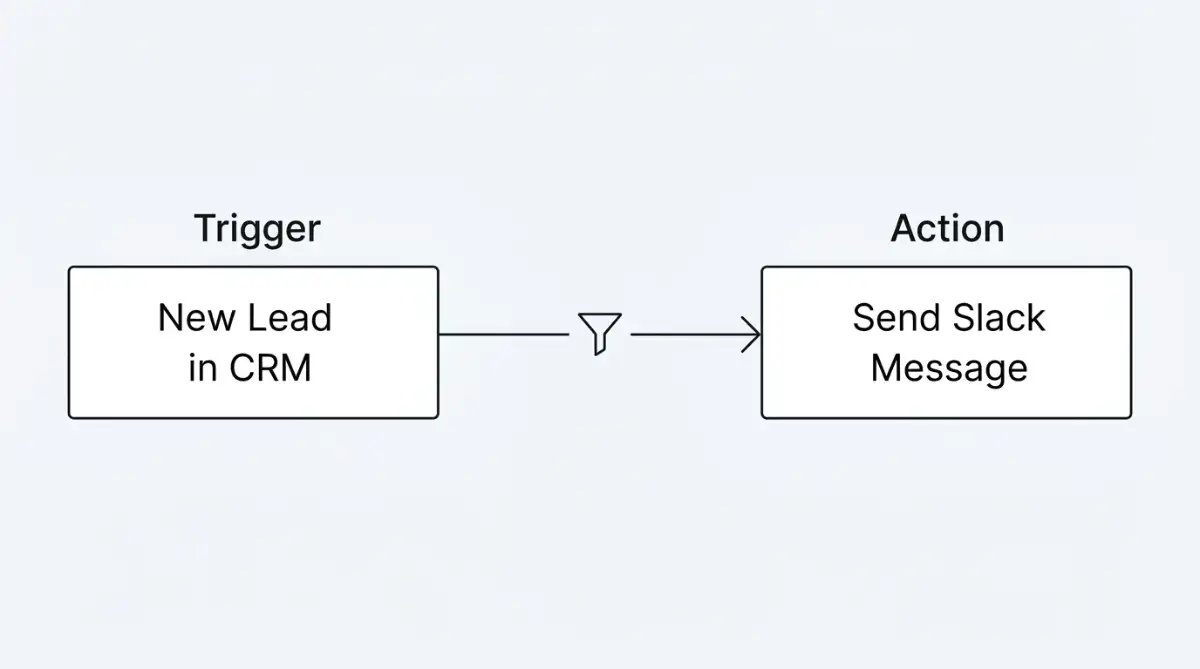
A Zap has two parts. The Trigger is the event that kicks things off, like a new row in a spreadsheet or a new lead in a CRM. The Action is what happens next. Zapier detects triggers two ways: polling the source app's API every 1 to 15 minutes depending on the plan, or webhooks for apps that support real-time pushes. Neither method is novel on its own. Wrapping both behind a checklist UI that a marketing manager could operate without reading documentation? That was the trick.
The platform got more capable as users pushed against its limits:
- Multi-Step Zaps broke the original "if this, then that" ceiling and let workflows chain four, five, eight actions together.
- Paths added conditional branching, so a high-value lead could go to one Slack channel and a smaller one could go elsewhere.
- Filters stop a Zap when criteria aren't met, which sounds boring until you realize how much accidental spam it prevents.
- Formatters convert dates, extract substrings, and reshape data between steps.
This is the same pattern we've seen everywhere in the no-code builder lineage: start with a rigid, almost insultingly simple primitive, then add escape hatches as power users complain. WordPress did it with plugins. Shopify did it with apps. Zapier did it with Paths and Formatters. The companies that survive resist adding escape hatches too early.
The Numbers Behind a Bootstrapped Giant
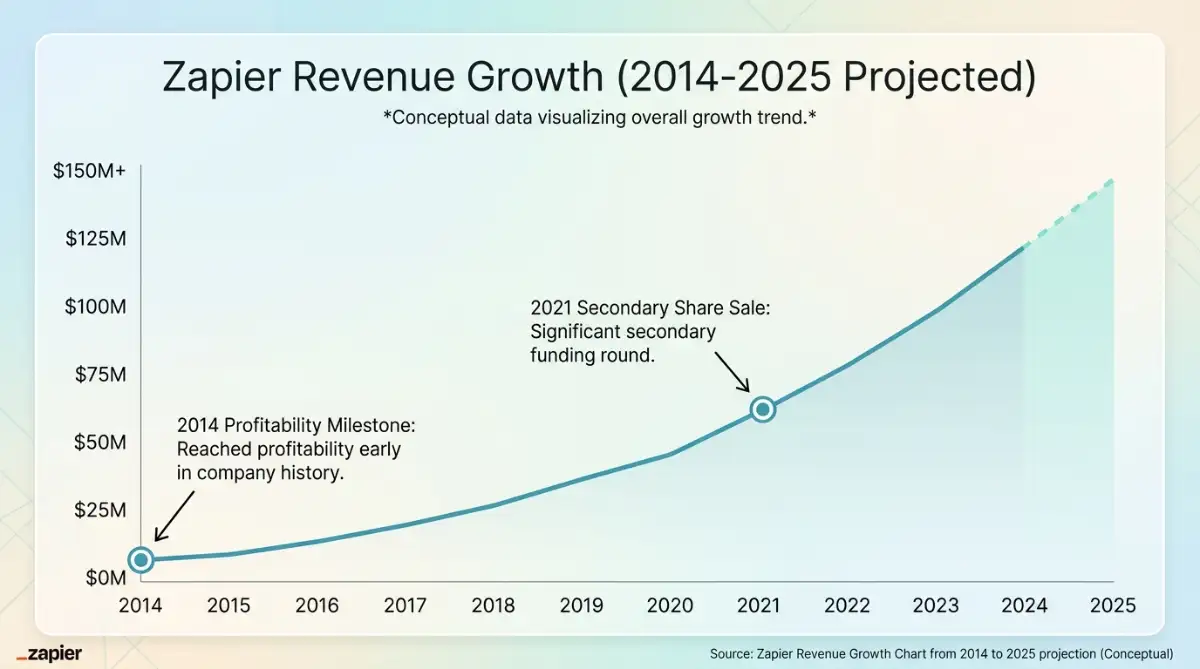
Zapier is the rare SaaS company whose financial story outshines its product story. According to Sacra, it hit $100 million in ARR in under 10 years on only $1.4 million of early funding, a 100x ratio that puts it in Atlassian territory.
The company became profitable in 2014, two years after launch. Here's the trajectory:
| Metric | 2021 | 2024 | 2025 (Projected) |
|---|---|---|---|
| Revenue | $150M | $310M | $400M |
| Valuation | $5B (secondary) | n/a | n/a |
| Monthly active users | n/a | n/a | 10M+ |
| Paying organizations | n/a | n/a | 100,000+ |
| Monthly tasks executed | n/a | n/a | 1.5B |
The 2021 valuation came from a secondary share sale to Sequoia Capital and Steadfast Financial, not a primary fundraise. That distinction matters. Zapier never traded ownership for runway in any meaningful way after 2012, which is why founders studying capital efficiency keep coming back to this case.
The user base is genuinely global. According to platform analytics, the United States accounts for 30.89% of traffic, India is at 10.03% but declining, and roughly 40% of new signups now come from international markets. Forrester research indicates organizations using no-code platforms see an average $1.7 million in annual savings and a 90% reduction in development time compared to traditional coding. Remote, the HR platform, claims it saves $500,000 a year by automating 11 million tasks through Zapier.
Honest Tradeoffs: Where the Zapier Story Gets Complicated
The Zapier origin story tends to get told as a clean victory for democratization. It mostly is. But three things deserve more attention than the founder-myth retellings give them.
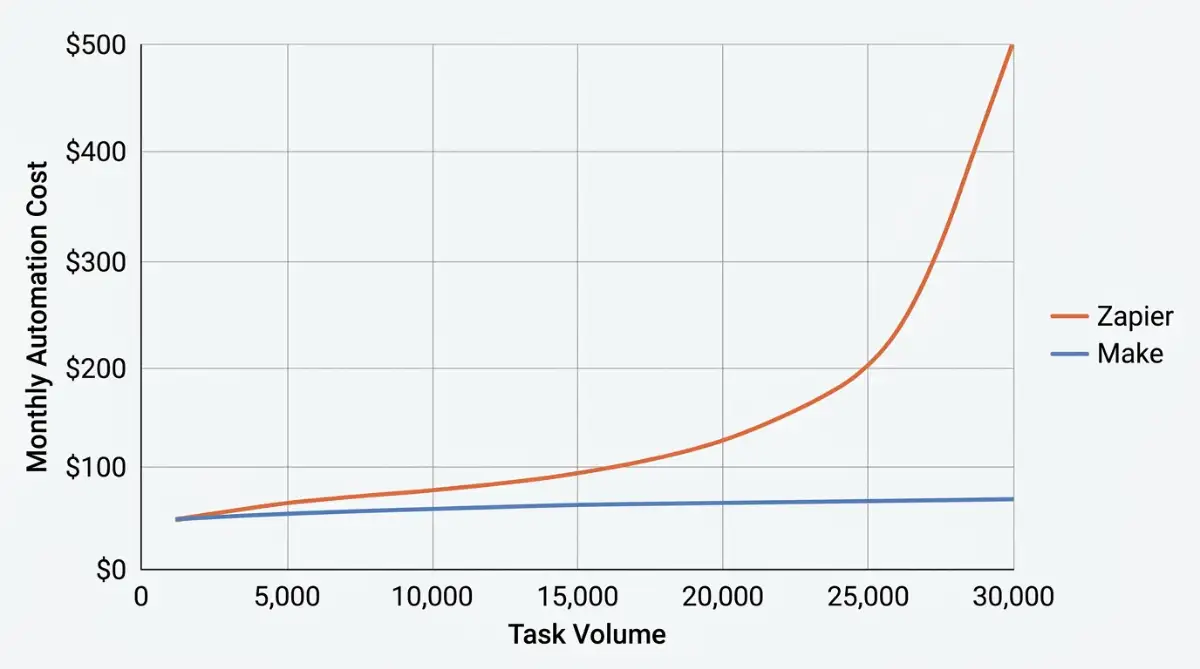
The first is the task tax. Every action in a Zap counts as a billable task, which means the platform charges you more for sophistication. A retailer processing 5,000 orders a day with a 5-step automation burns through 750,000 tasks a month and lands in pricing tiers that can exceed $1,000 monthly, while a competitor like Make would handle the same volume for under $100. An anonymous small business owner on Reddit put it bluntly: "You're not paying for value, you're paying for graph traversal." Users routinely strip useful steps out of their Zaps just to manage costs.
The second is compliance. Zapier is not HIPAA compliant and does not sign Business Associate Agreements on any plan. Healthcare providers handling Protected Health Information have to use Workato, Tray.ai, or Microsoft Power Automate instead. The fine for getting this wrong is up to $1.5 million per violation category, which is the kind of detail that should be on the homepage and isn't.
The third is agentic reliability. Zapier's pivot to AI agents is real and well-funded, but agents are probabilistic in a way deterministic Zaps never were. The platform shipped Agent Checkpoints and Human-in-the-Loop reviewers in December 2025 specifically because agent reasoning can go sideways. Gartner predicts 40% of agentic AI projects will be canceled by 2027 if they don't show measurable ROI. That cancellation curve will hit Zapier customers too.
From Static Zaps to AI Agents in No Code Automation
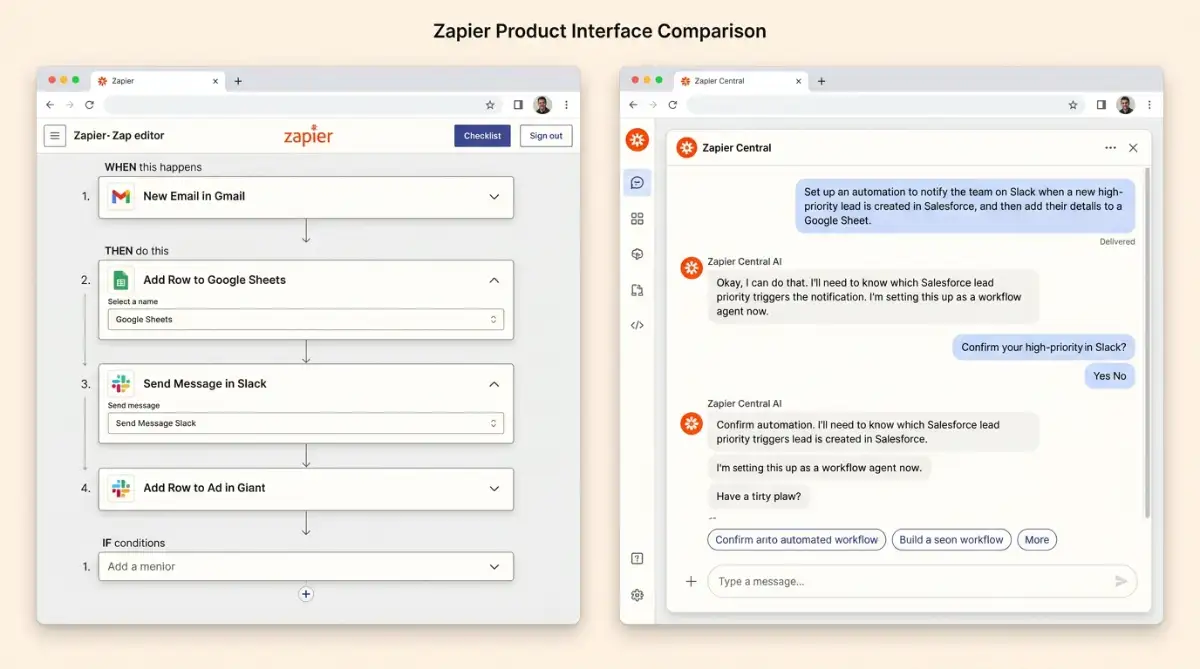
The most consequential thing happening at Zapier right now isn't the revenue. The product is being rebuilt around a fundamentally different paradigm of no code automation, one where AI agents reason through workflows instead of executing fixed steps.
In late 2023, Zapier leadership called a "Code Red" in response to GPT-4. CEO Wade Foster's internal memo, later published on the Zapier blog, framed it directly: "Zapier is now in a race to find our footing in an AI-first world." The output of that pivot is Zapier Central and the adoption of the Model Context Protocol, an open standard that lets AI assistants like Claude and ChatGPT securely access company data and execute actions across Zapier's 9,000+ integrations.
The contrast with the original product is sharp:
| Capability | Deterministic Zaps (2012-2024) | Agentic Orchestration (2025+) |
|---|---|---|
| Logic basis | Rigid "if this, then that" | LLM reasoning and planning |
| Data handling | Structured fields | Unstructured emails, docs |
| Adaptability | Breaks if API schema changes | Self-corrects or asks for clarification |
| Interface | Linear list editor | Natural language chat or canvas |
This is part of a broader shift toward vibe coding and natural-language software building, where the line between configuring an automation and describing one in English keeps blurring. Co-founder Mike Knoop has increasingly framed Zapier's role as the interface through which intelligent agents touch real business software, even starting the ARC Prize to push progress toward AGI. Whether that vision survives contact with a market where 81% of business leaders plan to integrate AI agents soon, but where most agentic projects will fail Gartner's ROI test, is the open question.
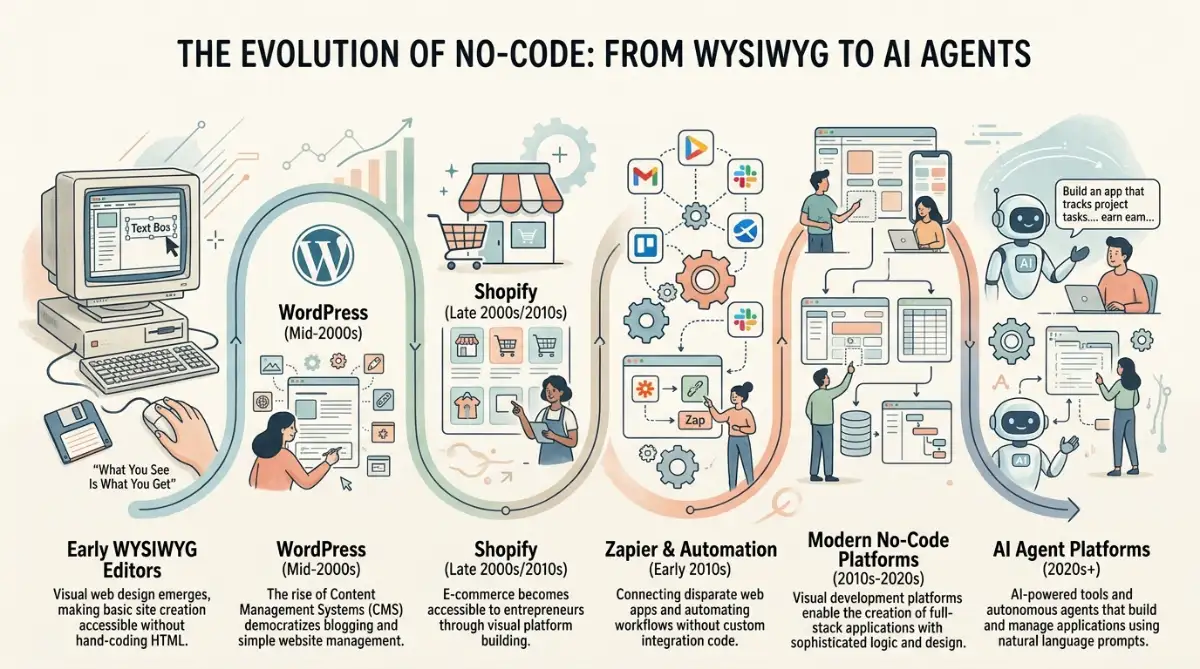
It's worth noting that Zapier's bet is structurally similar to what WordPress did in 2003: take a category that previously required engineers and make it operable by everyone else. WordPress was replacing a coding task with a forms-based UI. Zapier is replacing a forms-based UI with a chat box. Each generation eats the previous generation's interface.
Start exploring launch-ready no-code automation templates here!
Key Takeaways
- Zapier's real innovation was a mental model, not technology. Trigger-Action abstracted away APIs in a way anyone could grasp, which is why the category it created now has nine thousand integrations and a 1.5 billion task-per-month floor.
- Capital efficiency was the strategy, not an accident. Profitability in 2014 on $1.2M of seed funding gave Zapier the freedom to take unfashionable bets, like staying remote since inception and resisting feature bloat for years.
- The next decade will test whether deterministic logic or agent reasoning wins. Zapier is betting on both. Whether that bet pays off depends on solving the reliability problems agents introduce, not just shipping more agent features.
The thread running through every successful no code automation tool is the same one running through the broader SaaS democratization story: take something that used to need a specialist, hand it to a generalist, and trust them to figure out what to build. Zapier's 2012 weekend prototype assumed business users could handle logic if you stripped out the syntax. Fourteen years and 10 million users later, that bet looks correct, but the next version is whether those same users can manage probabilistic agents instead of deterministic flows. That's a much harder question, and the founders who pay attention to how Zapier answers it will learn more than they would from any product launch.
FAQ
What does Zapier actually do in plain language? Zapier connects web apps so they can pass data between each other automatically. You set a trigger event in one app, like a new email in Gmail, and an action in another, like adding a row to a Google Sheet. Zapier handles the API plumbing in between.
How is Zapier different from low-code platforms? Zapier is purely no-code; you configure workflows through a visual checklist with no scripting. Low-code platforms like Workato or n8n let you write custom logic in Python or JavaScript when you need it, which suits developers but adds a learning curve.
How much does Zapier cost for a small business? The Professional plan is $19.99/month and covers most solo and small-team use cases, including premium app access. Costs climb sharply once you exceed monthly task quotas, with high-volume users sometimes paying over $1,000/month on the Company tier.
Is Zapier safe to use for sensitive data? Zapier is SOC 2 compliant but does not sign HIPAA Business Associate Agreements, so it cannot legally process Protected Health Information in the U.S. Security firm Reco has also documented "Ghost Login" risks where attackers maintain persistent OAuth access.
What are the main alternatives to Zapier? Make (formerly Integromat) is the cheaper visual alternative with around 1,800 integrations. n8n is the developer-focused, self-hostable option. Workato is the enterprise choice with HIPAA support and annual contracts starting around $10,000.
Start building without code
Browse thousands of no-code templates for Webflow, Framer, Bubble, Lovable, Replit and more.
Explore Templates