Vibe-Code Builders Compared: Lovable vs Bolt vs v0

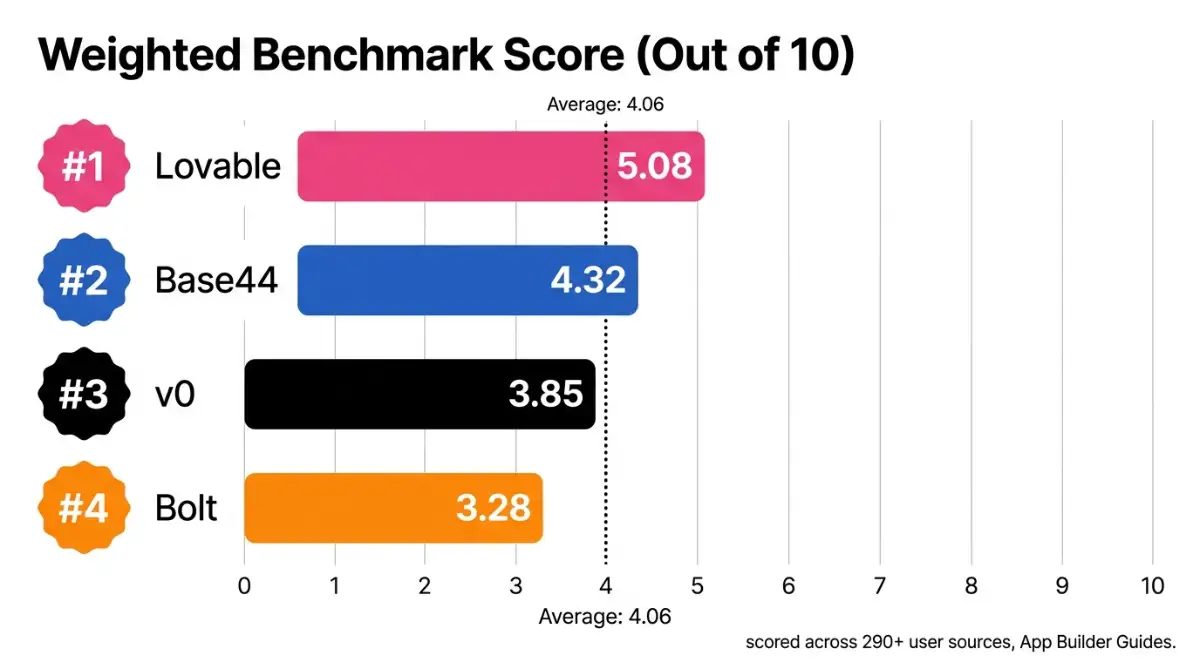
Across a weighted benchmark, Lovable ranks first (5.08/10) as the strongest all-around full-stack MVP builder, while v0 by Vercel produces the highest-quality frontend code and Base44 is the easiest for non-coders. Bolt.new offers the widest framework support and in-browser Node.js execution but ranks lowest on cost predictability. The best pick depends on your coding comfort, budget, and whether you need a real backend.
Table of Contents:
- Key Takeaways
- Introduction
- What Are Vibe-Code Builders, and Why These Four?
- Is Lovable the Best Vibe-Code Builder for Full-Stack MVPs?
- What Makes Bolt.new Different from the Rest?
- Does v0 by Vercel Win on Code Quality?
- Is Base44 the Easiest Vibe-Code Builder for Non-Coders?
- How Do These Vibe-Code Builders Compare on Price?
- Which Vibe-Code Builder Is the Most Secure?
- Decision Framework: Which One Should You Pick?
- FAQ
Key Takeaways
- Lovable tops the weighted vibe-coding benchmark at 5.08/10, yet its default Supabase setup hides a Row Level Security gap most builders never check before they hit publish.
- v0 by Vercel writes the cleanest frontend code of the four, but it quietly leaves the entire backend, and the third-party bill that comes with it, up to you.
- Bolt.new runs a full Node.js environment inside a browser tab, which is either the slickest trick on this list or the fastest way to torch a monthly token budget.
Introduction
Pick the wrong vibe-code builder and you can burn a month of credits fixing bugs the AI introduced in the first place. That is the real reason indie hackers and small product teams keep asking to see the leading vibe-code builders compared side by side, not on glossy marketing pages, but on the stuff that bites later: cost, code quality, security, and lock-in.
This piece runs Lovable, Bolt.new, v0 by Vercel, and Base44 through the same wringer. I pulled from independent benchmarks, published pricing, and real security scores, then translated the jargon into calls you can actually make. According to App Builder Guides, which scored the field against more than 290 user sources, these four don't land anywhere near each other, and the gaps show up exactly where a first launch hurts most.
By the end, you'll know which one matches your MVP, your budget, and your tolerance for reading code.
What Are Vibe-Code Builders, and Why These Four?
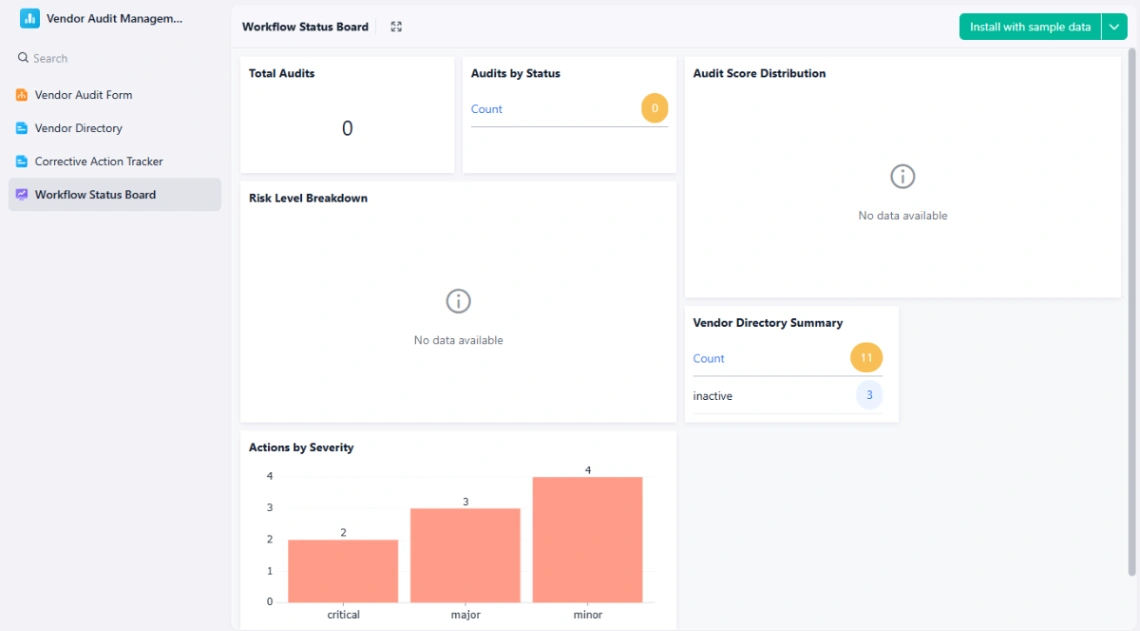
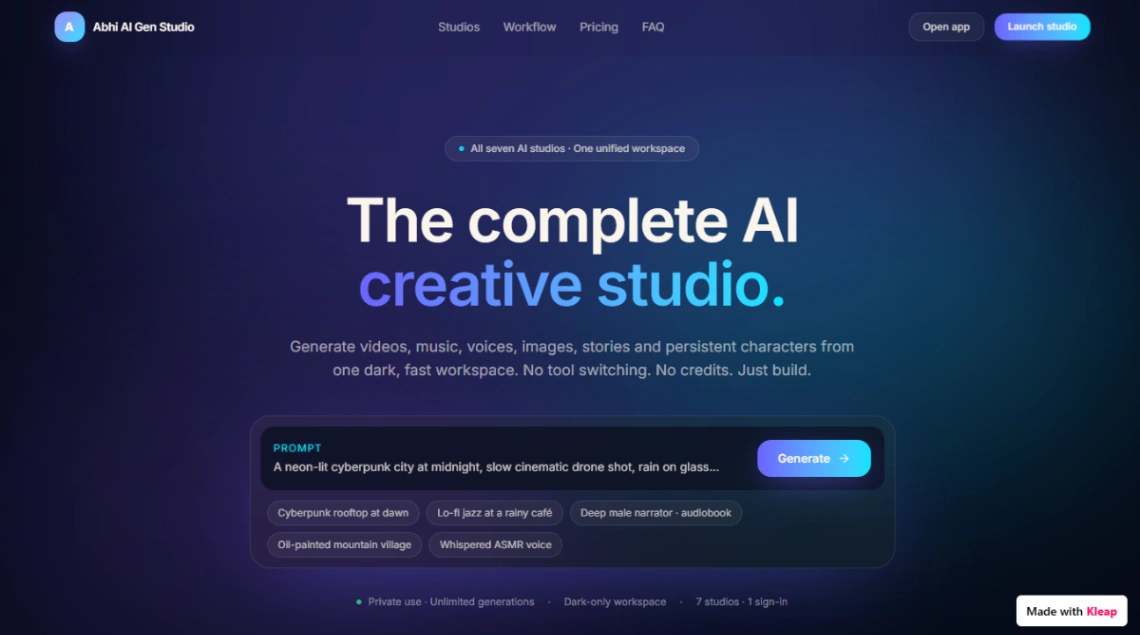
Vibe coding means building software by describing what you want in plain language and letting AI generate the components, wire up the backend, and handle deployment. Lovable, Bolt.new, v0, and Base44 lead the category, but they solve genuinely different problems: two lean developer-first, one is frontend-only, and one hides code entirely. That split is why a single blanket ranking misleads more than it helps.
If you want the fundamentals first, our plain-English guide to what vibe coding actually is covers the basics, and how no-code and vibe-code differ is worth a read before you commit to any tool.
The four leading vibe-code builders share one workflow but disagree on almost everything that matters after your first working prototype.
Here is the quick orientation before we dig in:
| Platform | Built by | Best known for | Do you see the code? |
|---|---|---|---|
| Lovable | Ex-GPT Engineer team | Full-stack MVPs with GitHub sync | Yes, fully |
| Bolt.new | StackBlitz | In-browser Node.js, many frameworks | Yes, plus a terminal |
| v0 | Vercel | Production React and Next.js UI | Yes, clean exports |
| Base44 | Acquired by Wix (2025) | Managed no-code apps | No, abstracted away |
Is Lovable the Best Vibe-Code Builder for Full-Stack MVPs?
For a full-stack MVP you plan to actually own, yes. Lovable (formerly GPT Engineer) ranks first overall at 5.08/10 and pairs React, Vite, and Tailwind with an auto-provisioned Supabase backend. Its standout feature is bidirectional GitHub sync, which means real, exportable code and no vendor trap. The catch is credit burn.
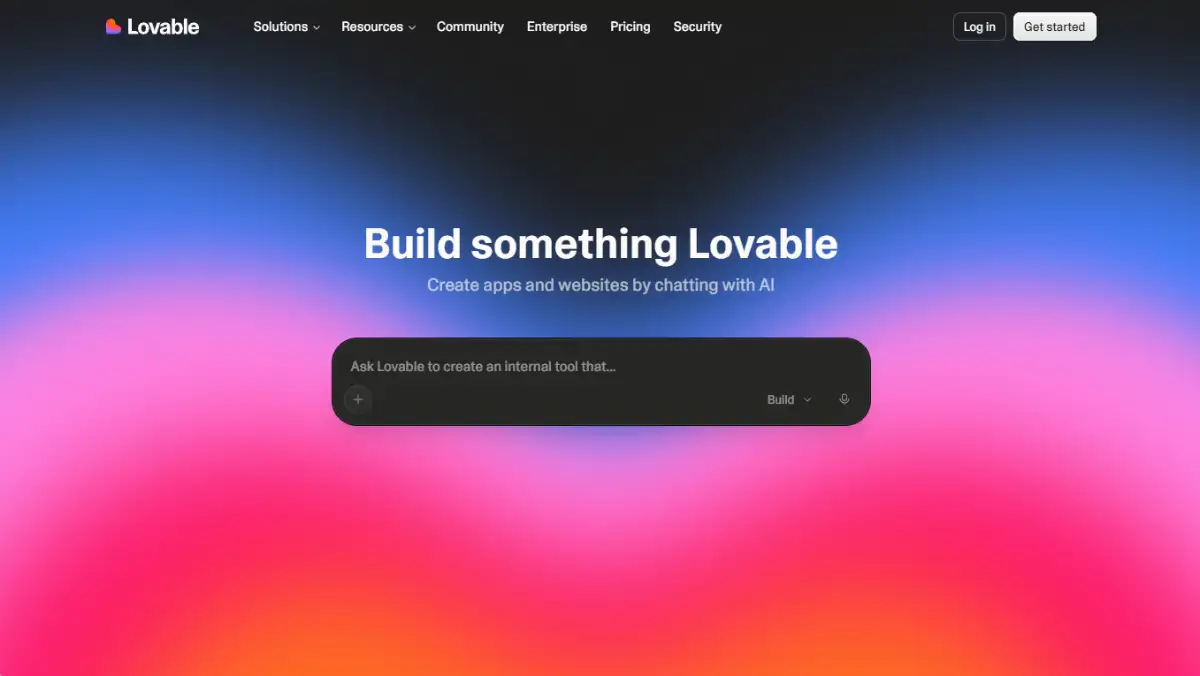
Lovable gives you three ways to work: Chat Mode for big structural prompts, Code Mode for direct edits, and Visual Edits Mode for dragging elements around. That last one is the quiet money-saver, because layout and style tweaks in Visual Edits cost zero credits and skip the AI entirely. You can see the full breakdown on the Lovable platform overview or straight from Lovable itself.
Pricing and credit reality:
- Free: 5 daily build credits (about 30 a month) plus 20 Cloud credits on a
.lovable.appsubdomain. - Pro ($25/mo, $21 annual): 100 credits, custom domain, badge removal, credit rollover.
- Business ($50/mo, $42 annual): team workspaces, SSO, and data-training opt-out.
- Credit costs: CSS tweaks run about 0.50 credits, but adding authentication or full CRUD logic can eat 8 to 12, and messy multi-file refactors hit 10 to 15 per prompt.
Lovable ranks first overall, yet builders report 30% to 50% of a paid credit allotment vanishing just to repair the AI's own regressions.
It earns a solid 4.6/5 on G2. The nagging asterisk is security, which we'll get to, and it's a real one.
What Makes Bolt.new Different from the Rest?
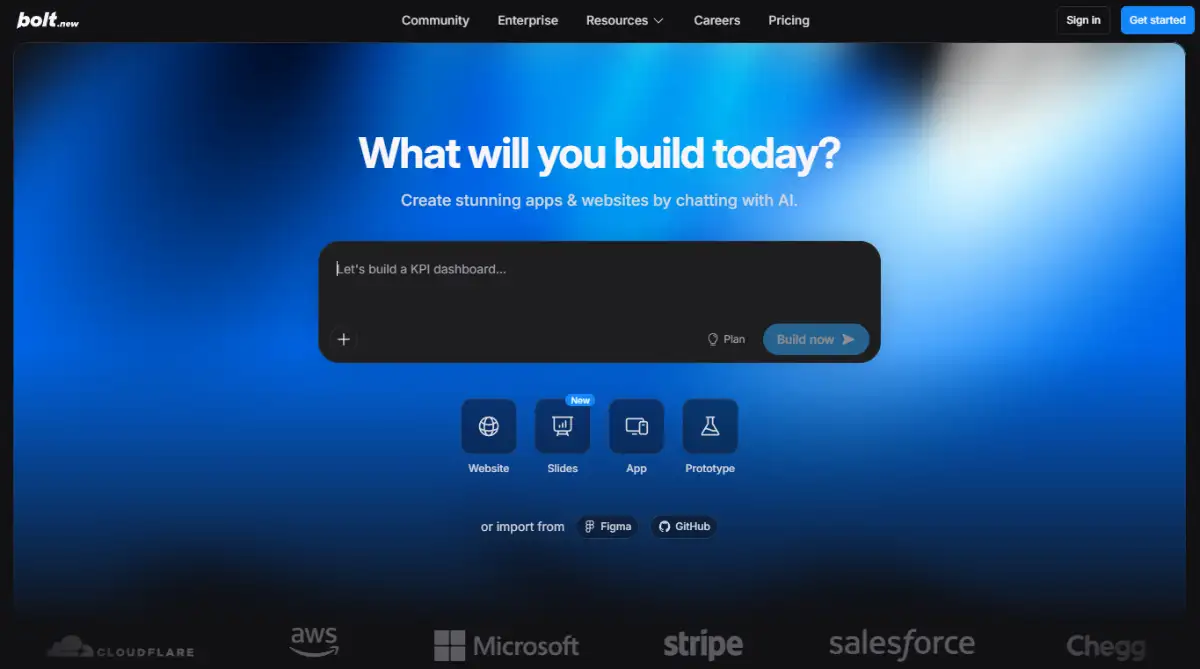
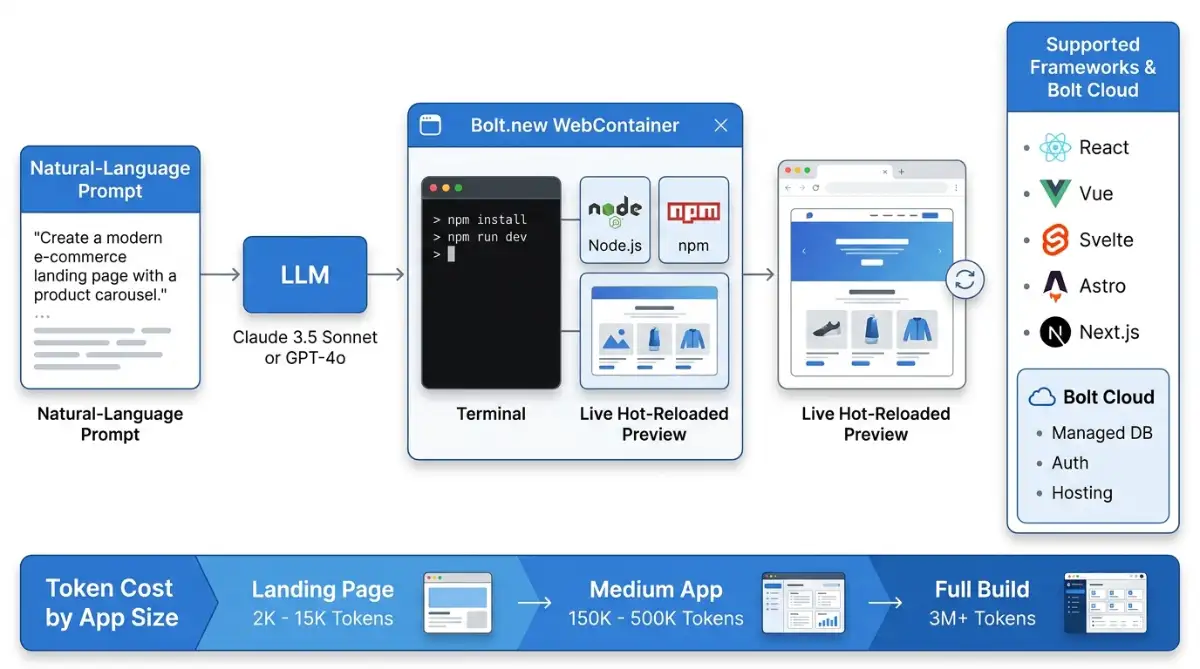
Bolt.new, built by StackBlitz, does something none of the others do: it runs a complete Node.js runtime inside your browser using WebContainers. It supports React, Vue, Svelte, Astro, and Next.js, and hands you an actual terminal. It also finishes last overall at 3.28/10, dragged down by cost predictability and a rough Trustpilot score.
Under the hood, Bolt feeds your whole project filesystem into a top-tier model (Claude 3.5 Sonnet or GPT-4o), which then installs packages, edits files, and fixes its own compile errors. With Bolt V2 came Bolt Cloud, adding managed databases, auth, and one-click hosting. You can dig into details on the Bolt platform page or at Bolt.new directly.
Here's the part that trips people up. Bolt charges by tokens, and tokens scale with your codebase:
| App size | Tokens per prompt pass |
|---|---|
| Simple landing page | 2,000 to 15,000 |
| Medium to large app | 150,000 to 500,000 |
| Full app build (cumulative) | 3,000,000+ |
The Free tier gives 1M tokens a month behind a 300K daily cap; Pro is $25/mo ($18 annual) for 10M+ tokens; Teams runs $30 per member. A serious build can blow through the Pro allotment and push you toward $50 to $200 tiers. If I'm honest, Bolt's last-place ranking feels a little harsh, because for framework-hopping prototypers it's genuinely the most flexible option here. It just punishes big projects.
Bolt is the only builder that hands you a real terminal in a browser tab, and also the easiest one to bankrupt with a large codebase.
Its Trustpilot rating sits at a painful 1.4/5, largely over billing frustration, though it still posts the highest static security score of the group.
Does v0 by Vercel Win on Code Quality?
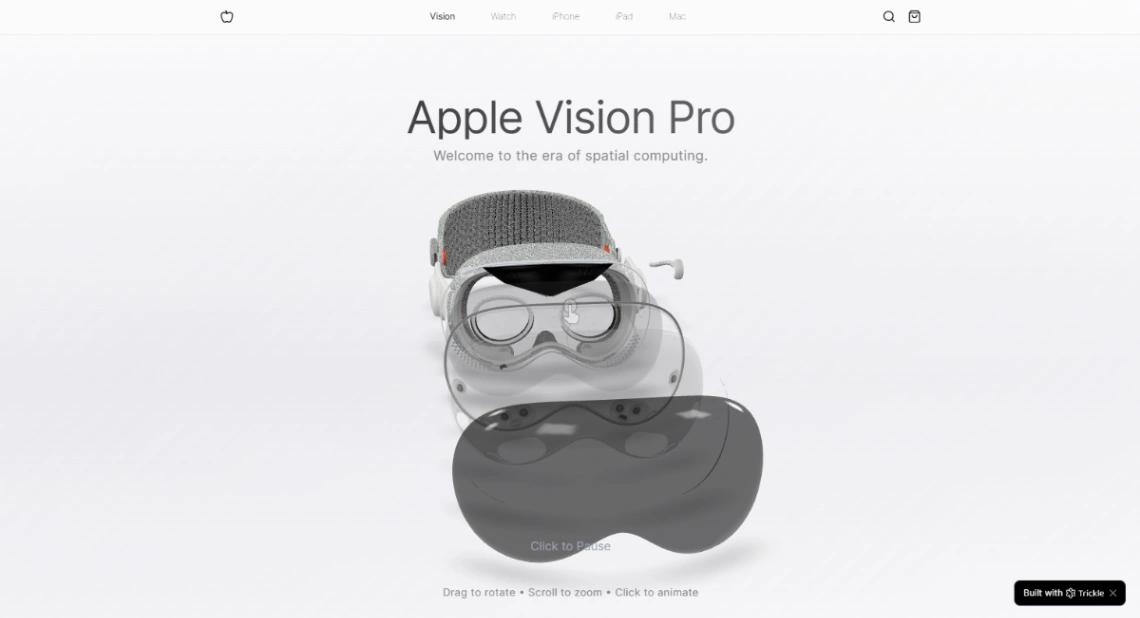
On code quality, it wins outright. v0 scores 9.0/10 for build quality and 8.5 for prompt fidelity, the best marks of the four. Built on Next.js App Router, React, Tailwind, and shadcn/ui, it produces clean, typed, accessible components that drop straight into a real codebase. The trade-off: v0 is frontend-only by design.
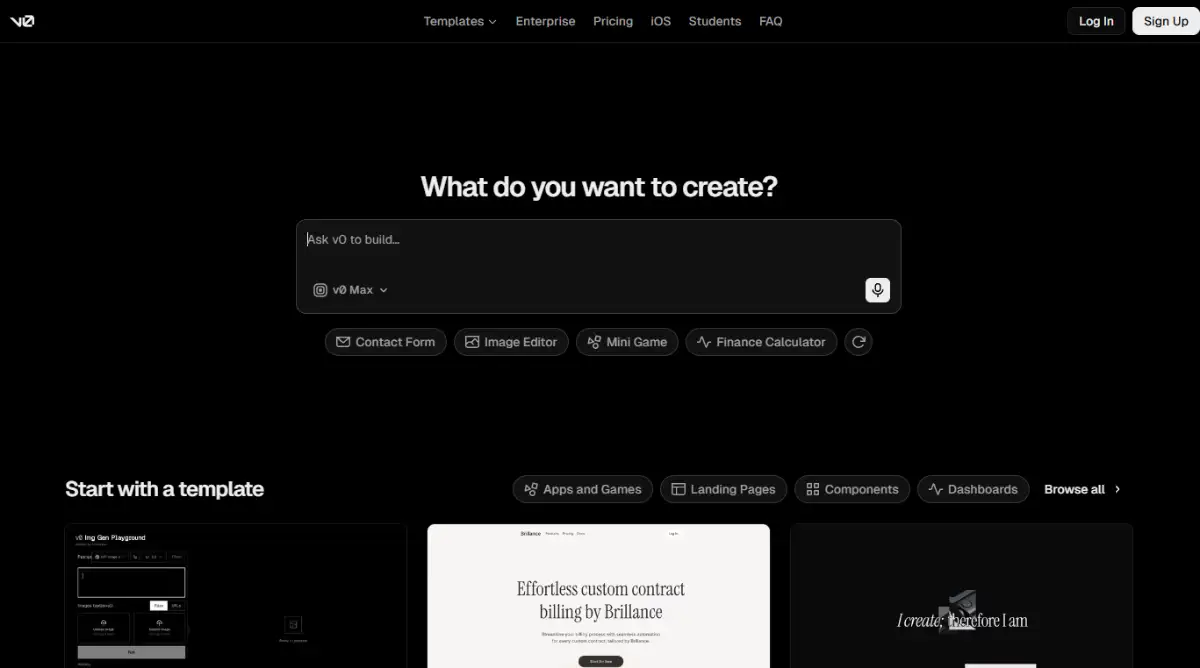
It's also the most agentic of the group. v0 can crawl live sites for design patterns, import Figma files, and turn a screenshot into working UI. Deployment is one click to Vercel, with GitHub sync built in. Explore it on the v0 overview or at v0.
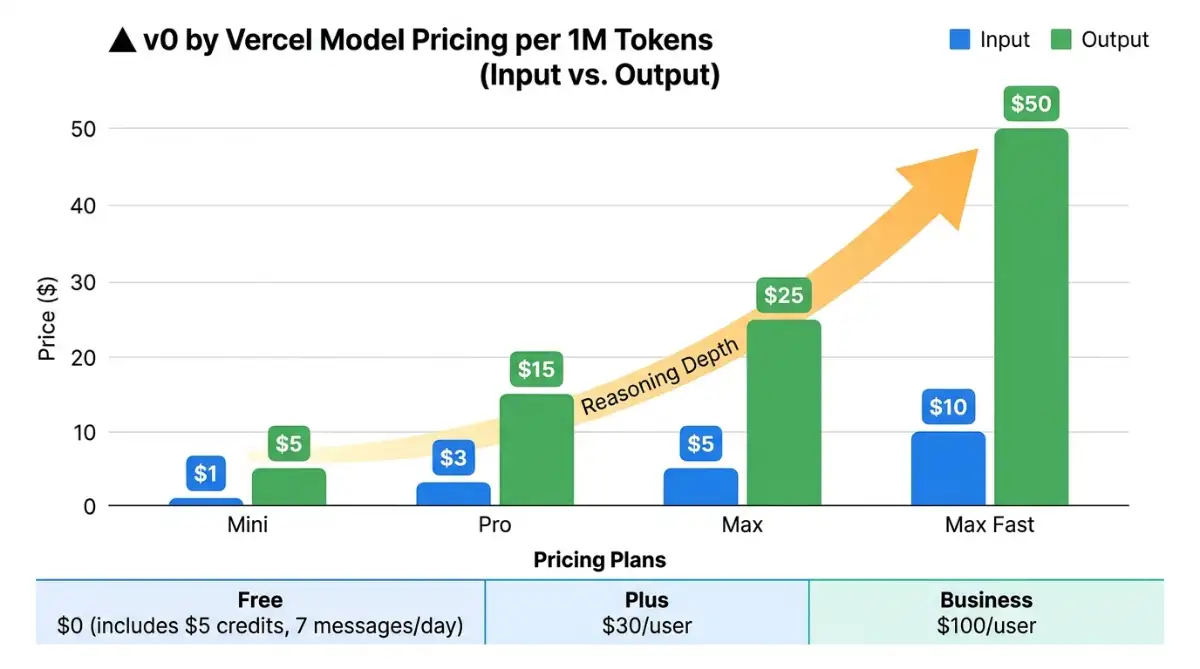
Pricing runs on four model tiers plus plans, per its official pricing page:
- Model tiers (per 1M tokens): Mini ($1 in / $5 out), Pro ($3 / $15), Max ($5 / $25), and the newer Max Fast ($10 / $50).
- Free: $5 monthly credits, capped at 7 messages a day.
- Plus ($30/user/mo): $30 in credits, a $2 daily login bonus, and a shared team credit pool. This is now the entry paid plan.
- Business ($100/user/mo): everything in Plus with training opt-out on by default.
v0 writes the best code on this list precisely because it refuses to do the hardest part: your database and auth are still your problem.
On compliance it leads easily, inheriting Vercel's SOC 2 Type 2, ISO, GDPR, and optional HIPAA controls. It carries a 4.7/5 G2 rating. Just remember you'll bolt on Supabase, Clerk, or a custom API for anything backend.
Is Base44 the Easiest Vibe-Code Builder for Non-Coders?
For non-technical founders, yes, easily. Base44, acquired by Wix in 2025, posts the highest onboarding score (8.5/10) and ranks second overall (4.32/10). It abstracts code away entirely, managing UI, database schemas, user permissions, and hosting from a chat interface. The cost of that comfort is heavy lock-in and US-only default hosting.
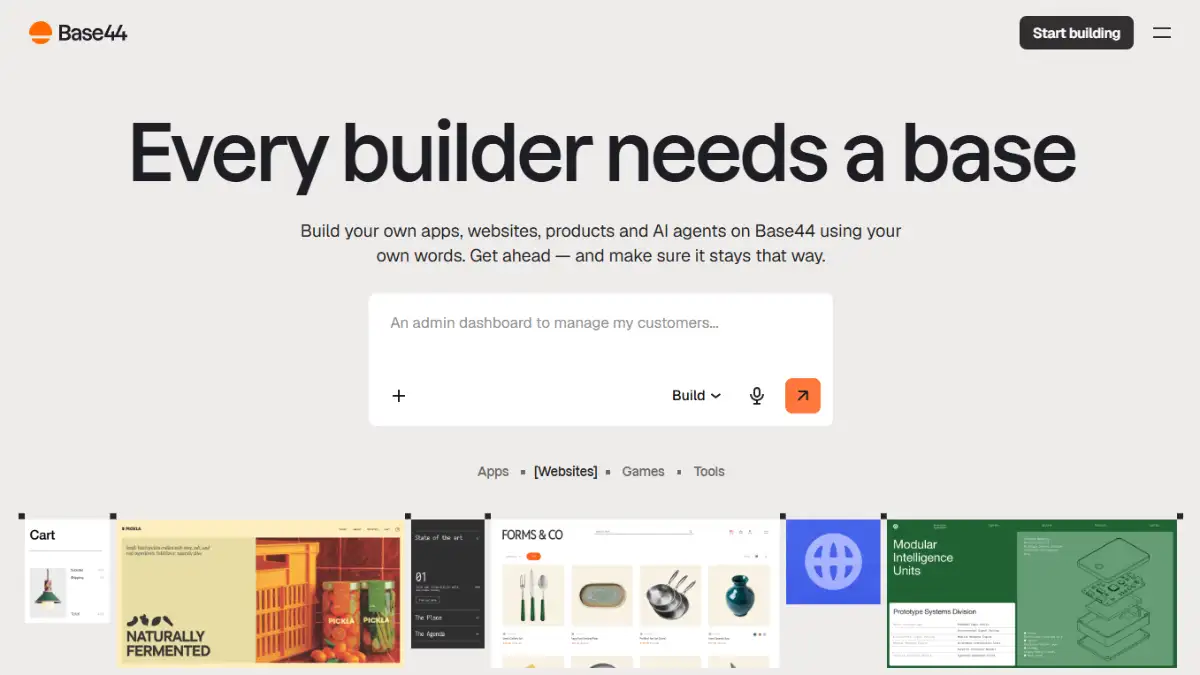
There's no terminal and no file tree. You describe a dashboard or a schema change in plain language, and Base44 updates the live preview beside you. It's the only tool here your non-technical co-founder could realistically ship with alone. See the Base44 platform page or Base44 for the full picture.
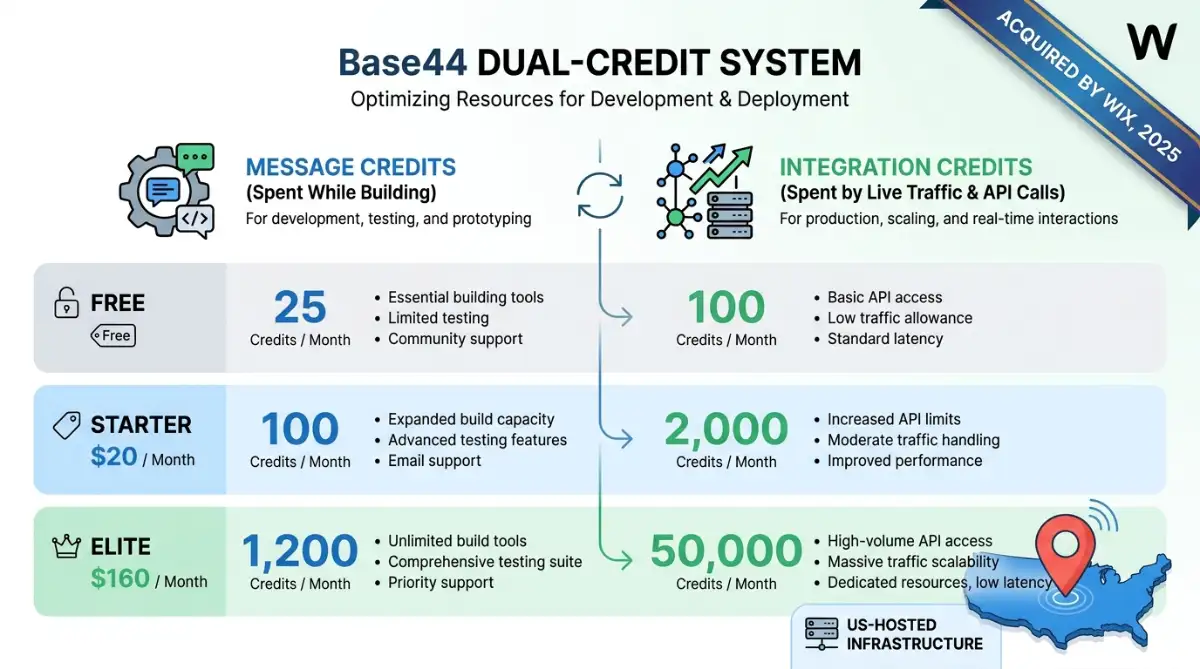
Its pricing uses a dual-credit model across four paid tiers, and it catches people off guard:
| Tier | Price/mo | Message credits | Integration credits |
|---|---|---|---|
| Free | $0 | 25 | 100 |
| Starter | $20 | 100 | 2,000 |
| Builder | $40 | scales up, adds custom domain | scales up |
| Pro | $80 | scales up | scales up |
| Elite | $160 | 1,200 | 50,000 |
Message credits get spent while you build; integration credits get spent by live app traffic and external API calls. That second bucket matters, because your operating cost keeps climbing after launch as real users show up.
Base44 is the only one your non-technical co-founder could ship with alone, and the hardest one to ever leave.
Two caveats worth flagging: code export out of the Wix and Base44 ecosystem is limited, and default US hosting can clash with GDPR or the Australian Privacy Act. As an emerging platform, it doesn't yet carry established G2 or Trustpilot scores.
How Do These Vibe-Code Builders Compare on Price?
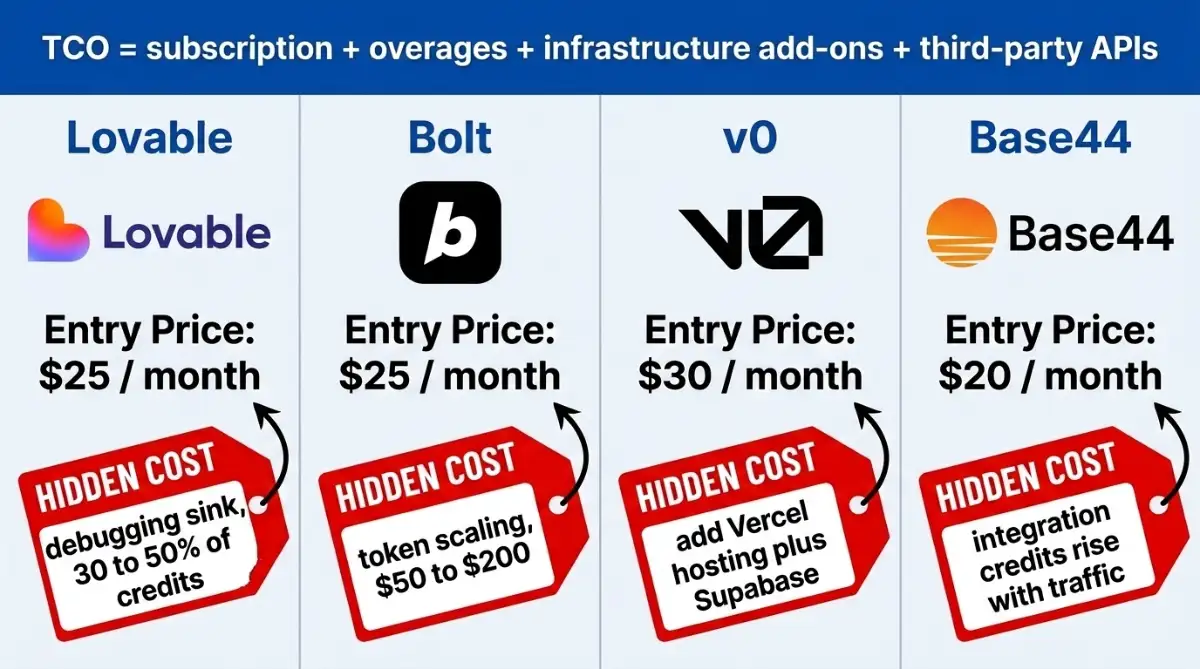
On paper, entry plans cluster between roughly $20 and $30 a month, with Lovable and Bolt at $25, Base44 near $20, and v0 now starting at $30. In practice, the real number depends entirely on how fast you burn credits or tokens. Total cost of ownership stacks four things: base subscription, credit or token overages, infrastructure add-ons, and third-party API bills. The cheapest sticker rarely stays the cheapest.
Here is the side-by-side, before the hidden costs:
| Plan level | Lovable | Bolt.new | v0 | Base44 |
|---|---|---|---|---|
| Free | 5 daily credits (~30/mo) | 1M tokens (300K daily cap) | $5 credits (7 msgs/day) | 25 msg + 100 integration |
| Entry paid | $25/mo, 100 credits | $25/mo, 10M tokens | $30/user/mo, $30 credits | $20/mo Starter |
| Team/Business | $50/mo | $30/member/mo | $100/user/mo | $160/mo Elite |
| Usage unit | Action credits | Token context | Tiered token credits | Dual credit |
Now the costs the pricing pages downplay:
- The debugging sink: on Lovable, users report spending 30% to 50% of monthly credits repairing AI regressions.
- Context scaling: on Bolt, a growing codebase means more tokens per prompt, pushing power users into $50 to $200 tiers.
- Add-ons: a real Lovable app needs a Supabase Pro plan (about $25/mo) as it grows, and v0 needs separate Vercel hosting plus a backend.
- Runtime creep: Base44 integration credits climb with live traffic, so success itself raises your bill.
If you're weighing this against simpler options, our guide on whether no-code is worth it once you scale puts these numbers in context.
Which Vibe-Code Builder Is the Most Secure?
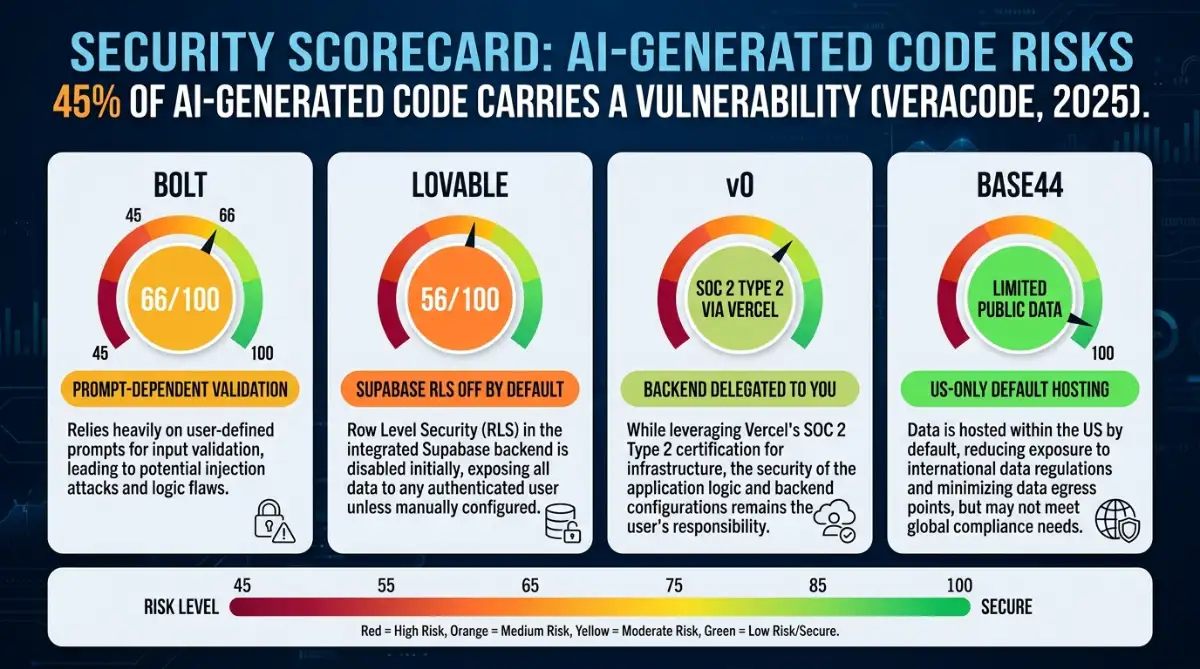
Bolt scores highest on static security (66/100), Lovable lowest (56/100), and v0 inherits Vercel's SOC 2 Type 2 compliance. But the honest headline is that every one of them can ship an insecure app, because AI-generated code carries risk by default. According to Veracode's 2025 GenAI Code Security Report, roughly 45% of AI-generated code introduces a security vulnerability.
The failure pattern is the same across the board: fast natural-language scaffolding produces default configs, then one-click publishing exposes them to the open internet.
| Platform | Security score | Main risk to check |
|---|---|---|
| Bolt.new | ~66/100 | Prompt-dependent rate limiting and input validation |
| Lovable | ~56/100 | Supabase Row Level Security often disabled by default |
| v0 | High (SOC 2 via Vercel) | Backend and route protection delegated to you |
| Base44 | Limited public data | Closed platform, US-only default hosting |
Lovable's is the sharpest edge. Because its React apps embed the public Supabase anon key in the browser, an unconfigured RLS policy can let strangers read or modify your database. Bolt's WebContainer sandbox scores better, but it still leans on your prompts to add defensive patterns.
Roughly 45% of AI-generated code ships with a security vulnerability, which means one-click publishing is also one-click exposure.
The takeaway is unglamorous but non-negotiable: audit your database rules, rate limits, and auth middleware before you go live, on every one of these tools. Our no-code security reality check walks through what to verify.
Decision Framework: Which One Should You Pick?
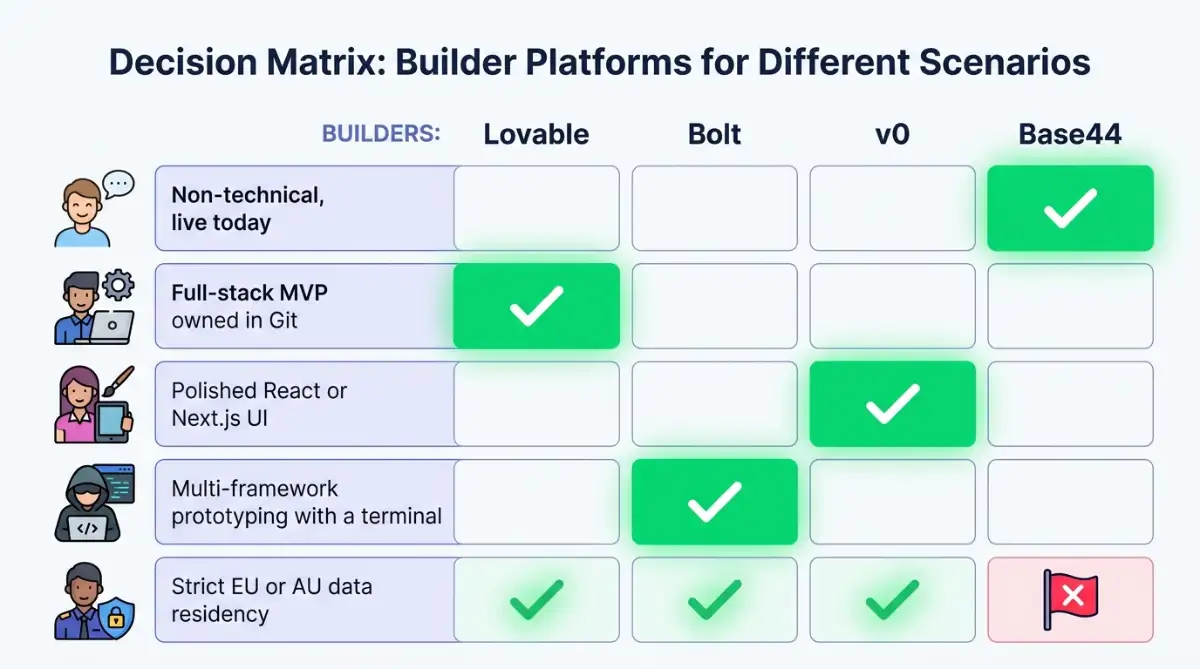
There's no universal winner here, so match the tool to your situation rather than the leaderboard. Use this matrix to shortcut the decision, then pressure-test it against your budget and your team's comfort with reading code.
| Your situation | Pick | Why |
|---|---|---|
| Non-technical and want it live today | Base44 | Highest onboarding score; hosting, DB, and auth all handled |
| Full-stack MVP you'll eventually own in Git | Lovable | Bidirectional GitHub sync plus auto Supabase, ranked #1 overall |
| Polished React/Next.js UI for an existing app | v0 | Best code quality (9.0/10), clean shadcn/ui exports |
| Prototyping across frameworks with terminal access | Bolt.new | WebContainers run real Node.js for React, Vue, Svelte, Astro |
| Strict EU or Australian data residency | Not Base44 | US-only default hosting creates compliance friction |
Three rules of thumb to lock it in:
- Judge cost by how you build, not the sticker. If you iterate messily, Lovable's debugging sink and Bolt's token scaling will cost you more than the plan suggests.
- Decide who owns the code. Lovable and v0 export cleanly; Base44 is the hardest to leave.
- Budget for a security pass every time. No score here excuses skipping an RLS and auth audit before launch.
For a wider field beyond these four, our roundup of the best vibe-coding tools for 2026 covers the rest of the market.
Start exploring launch-ready no-code and vibe code templates here!
FAQ
What is a vibe-code builder? A vibe-code builder is a tool that turns natural-language prompts into working software, generating the interface, backend, and deployment for you. Instead of writing syntax, you describe intent and let AI scaffold the app. Lovable, Bolt.new, v0, and Base44 are four of the leading examples in 2026.
Is AI-generated code safe to use in production? Not automatically. According to Veracode, around 45% of AI-generated code contains a security vulnerability, and these builders often ship with unconfigured database rules or auth. Treat every generated app as a draft, and run a dedicated security review before serving real users.
Which vibe-code builder is cheapest? Entry plans run from about $20 to $30 a month (Base44 near $20, Lovable and Bolt at $25, v0 at $30), so sticker price isn't the real differentiator. Cost depends on credit or token burn: Lovable and Bolt spike during heavy debugging, while Base44's integration credits climb with live traffic.
Can you export your code and leave the platform? It varies sharply. Lovable and v0 offer clean exports through GitHub sync, so leaving is straightforward. Bolt supports source exports but its cloud backend needs refactoring to move. Base44 is the most locked-in, with limited export out of the Wix ecosystem.
Which vibe-code builder is best for total beginners? Base44, by a clear margin. It scored highest on ease of onboarding (8.5/10), hides all code, and manages hosting, databases, and authentication for you. A non-technical founder can ship a working app without ever opening a code editor or touching a terminal.
Start building without code
Browse thousands of no-code templates for Webflow, Framer, Bubble, Lovable, Replit and more.
Explore Templates