Visual Composer & WPBakery: The Plugin That Changed WordPress
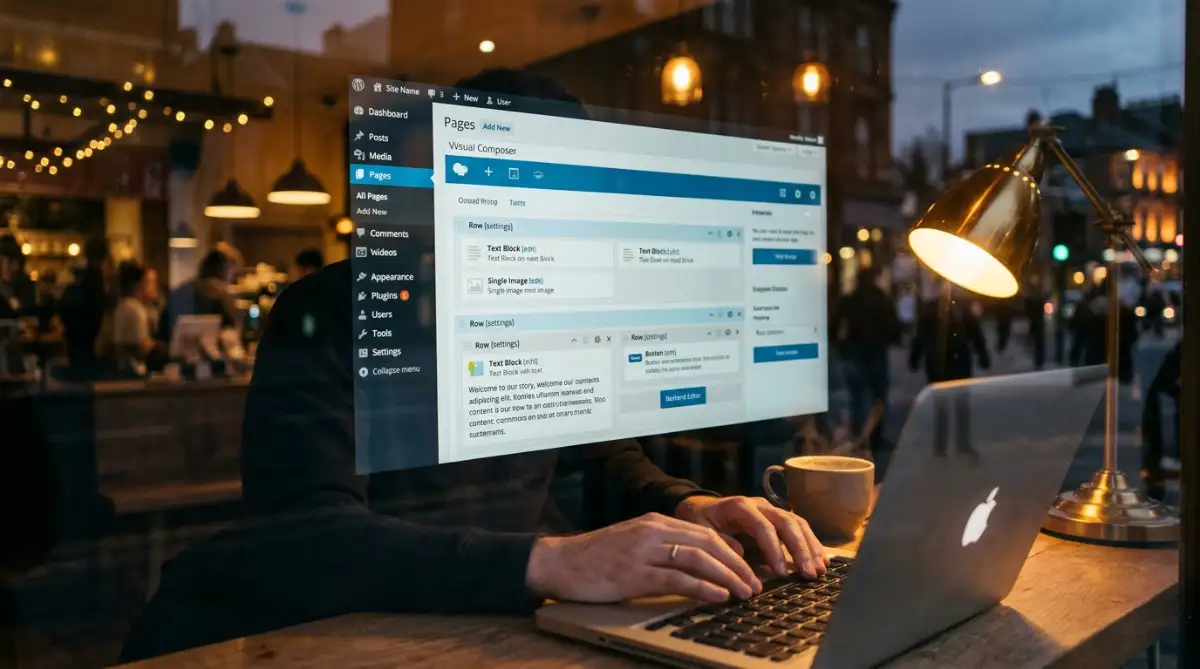
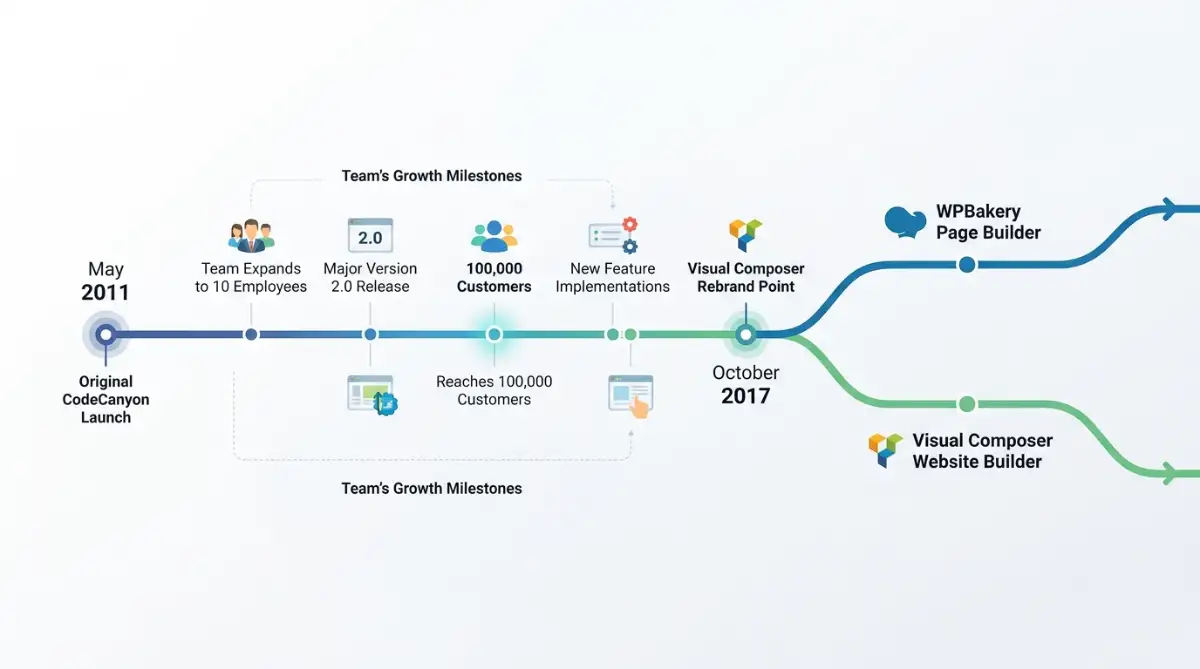
Visual Composer launched on CodeCanyon in May 2011 and introduced drag-and-drop visual editing to WordPress, splitting in 2017 into the shortcode-based WPBakery Page Builder and the React-based Visual Composer Website Builder. WPBakery still powers more than 5,800,000 websites globally.
Table of Contents
- The Plugin That Pulled WordPress Out of the Code Editor
- Why the 2011 Launch Mattered
- The 2017 Split That Confused an Industry
- Shortcodes vs React: The Architecture Argument
- Legacy Footprint Meets Native Pressure
- Honest Tradeoffs
- Key Takeaways
- FAQ
The Plugin That Pulled WordPress Out of the Code Editor
I've watched small agencies wrestle with the same question for years: keep the legacy page builder, or rip it out and rebuild? It only exists because of one plugin's impact on the ecosystem that went mainstream after 2003. Visual Composer, later renamed WPBakery Page Builder, didn't just add a feature. It changed who got to build a wordpress site at all.
For small-team agencies and freelance web professionals, that's a working decision today. This piece covers how the plugin reshaped the platform, why it split in 2017, and what its 5.8M-site footprint means now.
Why the 2011 Launch Mattered
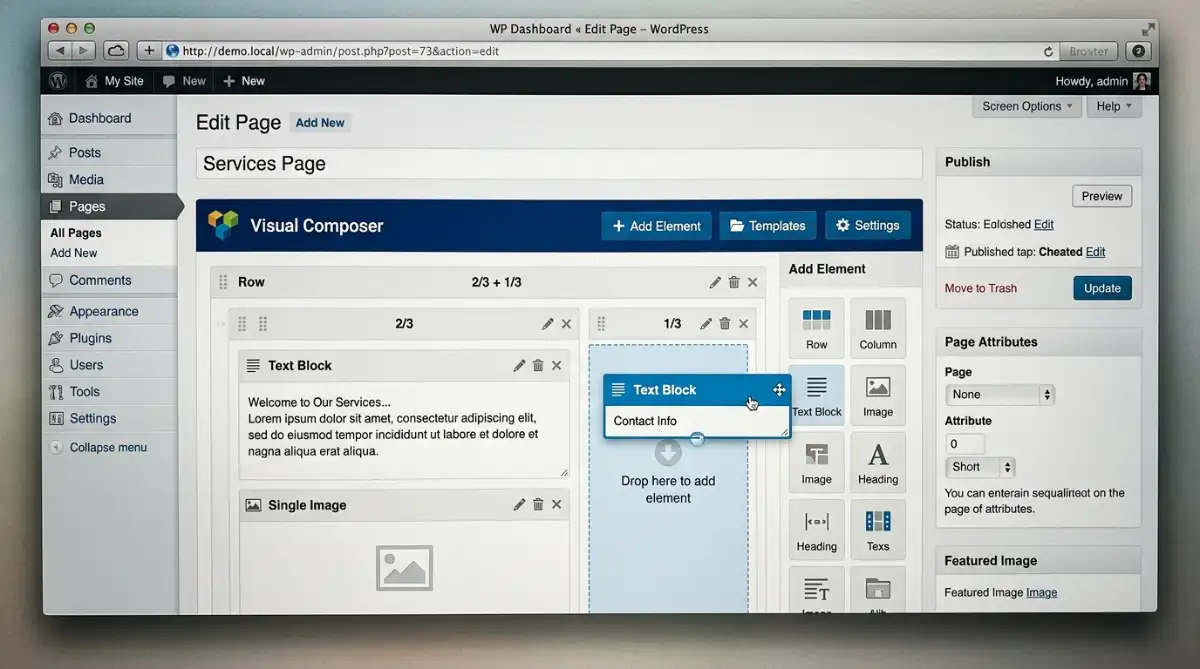
Visual Composer hit CodeCanyon in May 2011 and turned the platform into a layout tool overnight. Before it, building a multi-column page meant editing PHP templates or wrestling with theme-specific shortcodes. The plugin gave non-developers a visual surface that mapped directly onto HTML output.
Founder Michael Makijenko built the plugin while still working a full-time job, then spun up a company around it. By February 2019, the team had reached 17 people, with Makijenko still taking weekly support shifts (per a 2019 founder AMA on Reddit).
Why does this matter? In 2011 the platform was still primarily a blogging engine for people willing to touch code. Visual Composer accelerated its drift into a general-purpose CMS, the same arc that produced Squarespace, Wix, and the drag-and-drop SaaS builders that came later, but inside an open-source platform agencies could own.
The 2017 Split That Confused an Industry
In October 2017, the company did something genuinely odd: it renamed the existing plugin to "WPBakery Page Builder" and released a separate product called "Visual Composer Website Builder," built from scratch on React.js.
Per a head-to-head comparison from 1stwebdesigner, the two products are independent codebases. WPBakery edits the content area of a page. Visual Composer Website Builder edits the entire site, including headers, footers, and sidebars. Many theme authors kept calling the original "Visual Composer," which is the source of years of buyer confusion.
The split was a strategic bet. The shortcode engine had a massive installed base and couldn't be rewritten without breaking millions of sites. So they kept it alive and built the future as a separate product. Pragmatic, but a branding mess.
| Product | Launched | Architecture | Editing Scope |
|---|---|---|---|
| WPBakery Page Builder | 2011 (renamed 2017) | PHP / jQuery / Shortcodes | Content area only |
| Visual Composer Website Builder | October 2017 | React.js / JSON | Full website |
Shortcodes vs React: The Architecture Argument
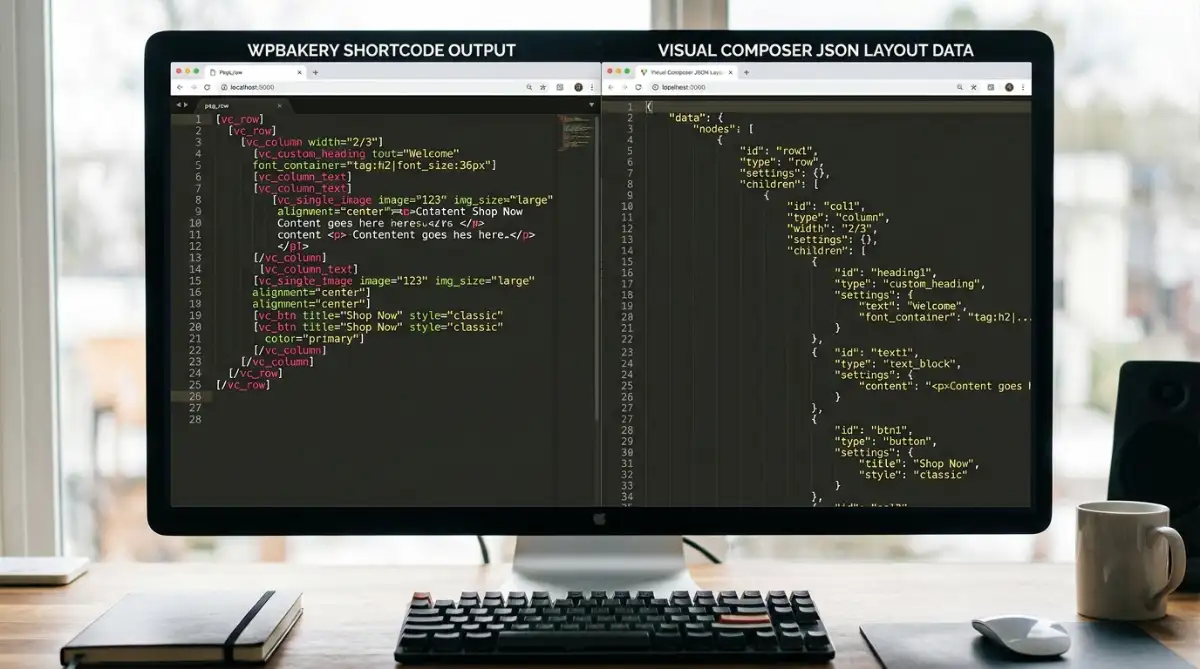
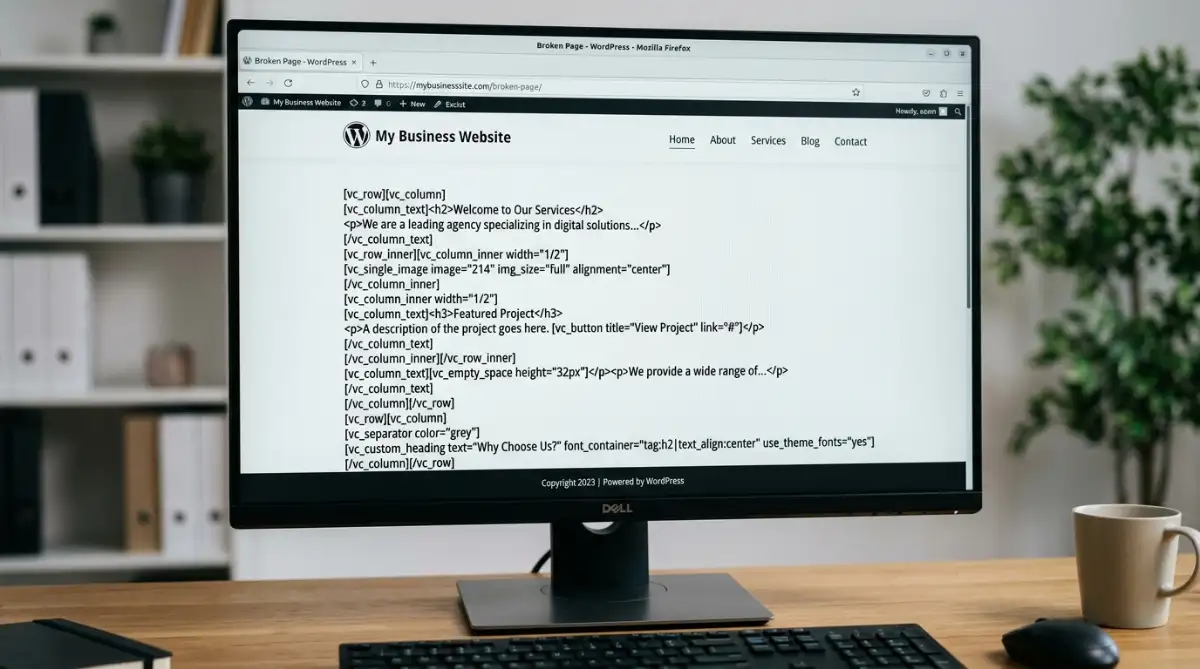
The technical gap between the two products is the cleanest example of legacy debt in the page builder space. WPBakery wraps content in shortcodes like [vc_row] and [vc_column]. Deactivate the plugin and your pages render as raw bracket text on the frontend, the lock-in problem shortcodes were warned about for years.
The Website Builder skips shortcodes entirely. It stores layouts as JSON, generates static CSS during the design phase, and serves the result without runtime parsing. Per Smashing Magazine's review, identical layouts loaded 1 to 1.5 seconds faster on the React-based product than on the older engine.
Legacy Footprint Meets Native Pressure
Per W3Techs as of May 4, 2026, WPBakery is used by 3.3% of all websites and 4.7% of sites with a known CMS. The platform itself holds 59.9% of the CMS market. WPBakery is still embedded in a meaningful slice of the live web.
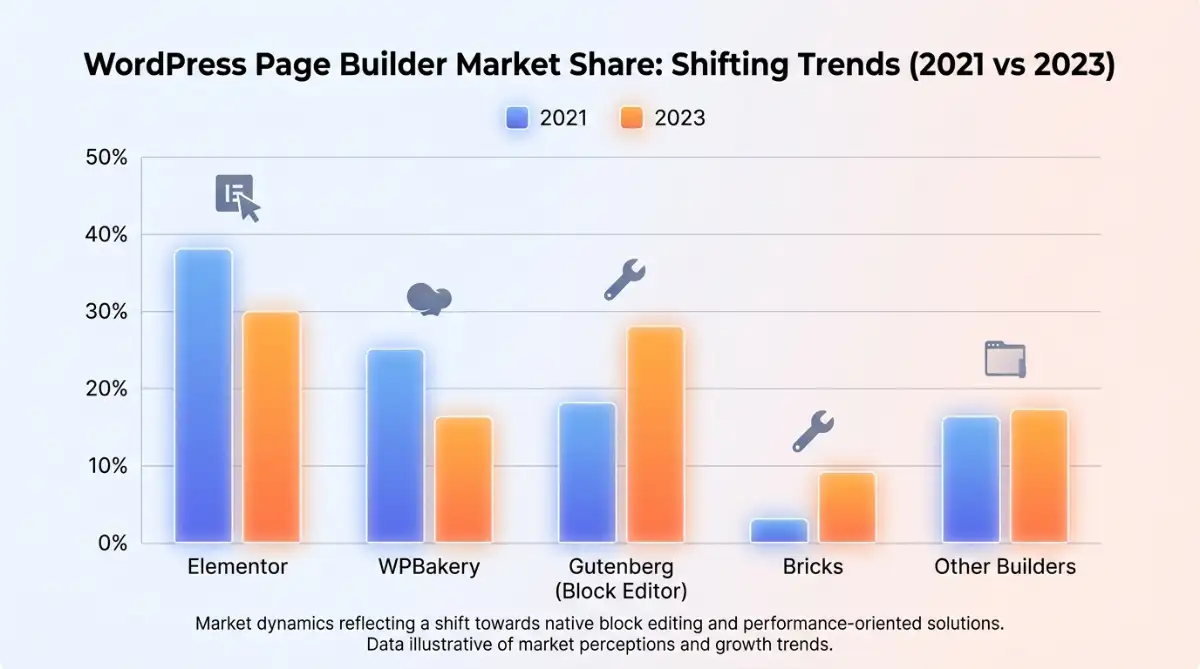
The trajectory, though, is downward. Per WPZoom's 2026 builder data, WPBakery's share of page builder usage dropped from 21% in 2024 to 13% in early 2026. Elementor slid from 56% to 43% over the same period. The native Block Editor (Gutenberg) climbed to 18%.
| Page Builder | Share of Builder Usage (early 2026) |
|---|---|
| Elementor | 43% |
| Block Editor (Gutenberg) | 18% |
| WPBakery | 13% |
| Divi | 10% |
| Bricks Builder | ~3% (fastest growing) |
Source: WPZoom.
WordPress 7.0 added native AI infrastructure to core, putting more pressure on third-party builders. WPBakery responded with version 8.5 (December 2025), adding meta-content generation for SEO, and "Custom GPTs" launched in September 2025 that turn text or image prompts into WPBakery elements.
Honest Tradeoffs
The marketing version is a clean arc: scrappy plugin grows into a billion-site ecosystem player. The honest version has rougher edges.
Shortcode lock-in is a real cost, not a footnote. Inherit a WPBakery site and migrate off it, and you're stripping every [vc_row] and [vc_column] tag from years of content. Expert reviews going back to 2020 flagged this as the plugin's central design flaw. The 2017 split tacitly admitted it.
The "performance refactor" claim deserves scrutiny too. WPBakery's team reports recent updates put it among the fastest builders for Time to First Byte. Independent benchmarks tell a mixed story. In the "WP Builders Fight Club" test, Visual Composer Website Builder hit 98 on desktop PageSpeed Insights while Bricks scored 100 with sub-1-second load times.
The product split still confuses buyers nine years on. I've watched freelancers buy a "Visual Composer" license expecting the React product and end up with the shortcode plugin because a theme bundled the older one. A branding tax that hasn't gone away. And staying on WPBakery is often pragmatic rather than strategic. Expert analysis argues that for sites already running it, staying put is the cheapest move given migration costs. A real argument, also a description of inertia.
Start exploring launch-ready no-code templates here!
Key Takeaways
- Visual Composer democratized layout in 2011 before Elementor, Divi, or Gutenberg existed, and that first-mover position is why 5.8M sites still run on its descendant.
- The 2017 split was a confession, not just a strategy. The shortcode architecture couldn't be saved, so the team kept it on life support and built the future separately.
- WPBakery's declining builder share reflects a slow handover from third-party tools to native infrastructure, accelerated by core AI features.
The bigger point: WPBakery is a case study in what happens when a tool wins early enough to define the category. It locked in millions of sites, set expectations for what "easy" looks like, and pushed the platform toward visual editing a decade before core caught up. The shortcode debt is real. So is the fact that the conversation about modern page builders, including the no-code-builder category founders evaluate today, starts with one CodeCanyon plugin.
FAQ
Is WPBakery the same as Visual Composer?
Not quite. WPBakery Page Builder is the original 2011 plugin, renamed in October 2017. Visual Composer Website Builder is a separate React-based product launched the same year by the same company. Many themes still bundle WPBakery under the older name, which causes most buyer confusion.
How much does WPBakery cost?
WPBakery Page Builder runs $56 to $74 for a single site annually or as a one-time purchase, with extended licenses for theme integration at $299. Visual Composer Website Builder offers a $49 annual single-site plan and a $149 lifetime option that includes two years of support.
Is WPBakery free?
WPBakery Page Builder has no free version. Visual Composer Website Builder, the separate React-based product from the same company, offers a free forever plan with 40+ assets through the WordPress.org plugin directory.
Does WPBakery work with the block editor?
Yes, but they don't share content. WPBakery operates as its own editor inside the post content area, while Gutenberg is the native alternative. You can use both on the same site, but each post or page commits to one.
Is WPBakery being discontinued?
No. WPBakery's roadmap includes a 9.0 release with a new grid system, improved responsiveness, element auto-save, and expanded API access. The team reported a 0.4% churn rate on its Support Plus subscription as of December 2025.
Start building without code
Browse thousands of no-code templates for Webflow, Framer, Bubble, Lovable, Replit and more.
Explore Templates