Lycos, Tripod and the Rise of Personal Websites
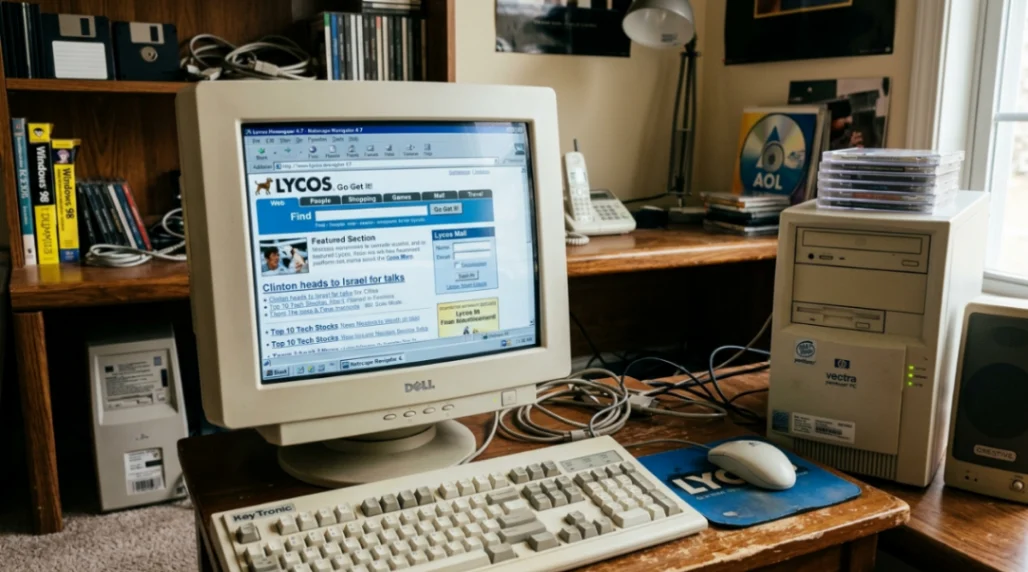
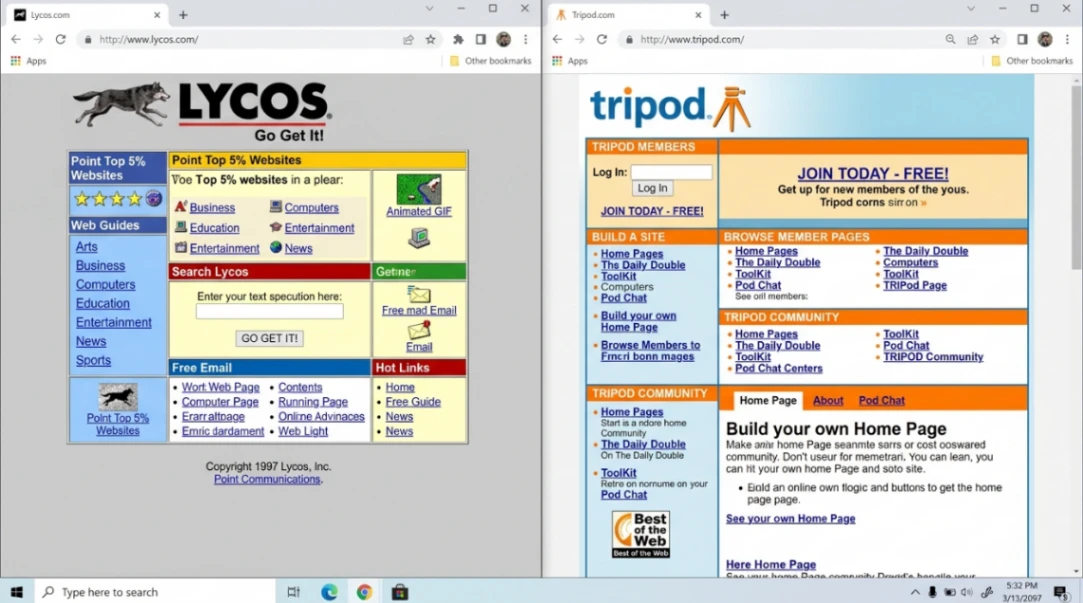
Lycos launched commercially on April 13, 1995, as the first major search engine to automatically crawl the web. Tripod, founded in 1992, gave millions of users free hosting and tools to build personal websites without knowing a single line of HTML. Together, they shaped the modern web publishing world - though by 2026, both platforms had fallen into serious decline, with users reporting outages and years of neglect since free hosting was pulled in 2012.
Table of Contents
- Introduction: The Internet's First Home Builders
- Lycos: The Search Engine Born in Three Pages of Code
- Tripod: Where Personal Websites Actually Came From
- The Portal Wars and the $58 Million Deal
- The Accidental Invention That Broke the Internet
- From $12.5 Billion to $95 Million: The Rise and Fall
- The Slow Fade: What Happened to Tripod and Angelfire
- Key Takeaways
- FAQ
Introduction: The Internet's First Home Builders
Before Instagram profiles. Before LinkedIn pages. Before anyone even knew what a "personal brand" was -- there were personal websites.
And for millions of people in the late 1990s, building one meant logging into Tripod or searching through Lycos.
These two platforms didn't just shape the early web. They invented the very idea that anyone could have a corner of the internet to call their own. No coding degree required. No budget. Just a dial-up connection and something to say.
Here's the full story of how they did it, why it mattered, and what the web lost when the last Tripod and Angelfire servers finally went dark in 2026.
Lycos: The Search Engine Born in Three Pages of Code
Most people forget that Lycos started as a university project, not a Silicon Valley pitch deck.
In May 1994, a Carnegie Mellon researcher named Michael "Fuzzy" Mauldin built the first version of Lycos using just three pages of code. His goal was to solve what he called "web blindness" -- the problem of having millions of interconnected documents online with no real way to find any of them.
His solution was elegant. Instead of waiting for site owners to submit their URLs, Lycos sent out automated "spiders" to crawl the web on their own. It was the first search engine to index the web proactively, and one of the first to show users a short snippet of each page in the results so they could judge relevance before loading the whole thing over a sluggish dial-up connection.
| Metric | Detail |
|---|---|
| Founder | Michael "Fuzzy" Mauldin |
| Home Institution | Carnegie Mellon University |
| First CEO | Bob Davis |
| Initial Funding | $2 million (CMGI) |
| Commercial Launch | April 13, 1995 |
| Key Innovation | Automated spidering and link-based relevance |
By June 1995, Lycos spun off as a commercial company with $2 million in venture capital. Less than a year later, it completed the fastest IPO in NASDAQ history at the time, ending its first trading day with a market value of $300 million. It was the first search engine to go public, beating both Yahoo! and Excite to the punch.
For a bit of context on just how creative early web tools were getting at this point, check out what was happening in parallel with tools like Netscape Composer and the very first WYSIWYG builders.
Tripod: Where Personal Websites Actually Came From
If Lycos was about finding content, Tripod was about making it.
Tripod started in 1992 at Williams College in Massachusetts, founded by two students, Bo Peabody and Brett Hershey, alongside economics professor Dick Sabot. It began life as a print magazine called "Tools for Life" tucked into college textbooks. Not exactly a Silicon Valley origin story.
By 1995 though, the team noticed something unexpected. Users were taking the site's Resume Builder and other tools and basically hijacking them to create personal homepages. People didn't want career advice. They wanted to publish themselves.
So Tripod pivoted.
The Tripod platform started offering free web hosting with 20 megabytes of storage, support for CGI scripts in Perl, and a WYSIWYG editor called Trellix that let users build personal websites without touching a line of HTML. This was genuinely revolutionary at a time when the only alternative was learning FTP from a photocopied manual.
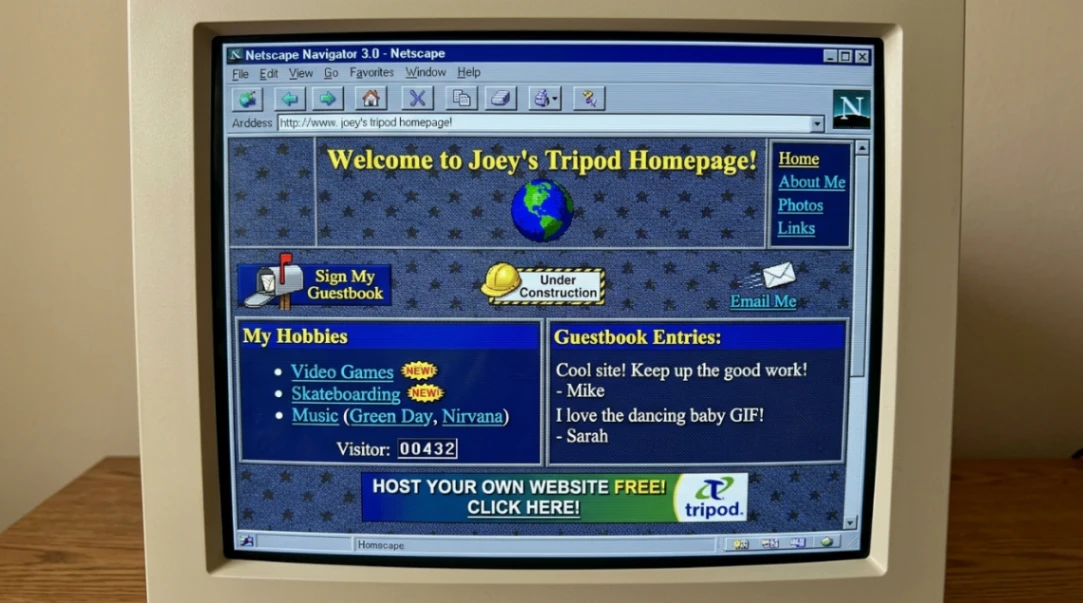
By early 1998, Tripod had nearly one million registered users and was adding 250,000 new sites every single month. It had effectively built the first large-scale no-code platform, years before anyone was using that term.
If you want to see how Tripod compared to its rivals at the time, our deep dive on GeoCities and Angelfire is a great companion read.
How the Platforms Stacked Up
| Feature | Tripod | GeoCities | Angelfire |
|---|---|---|---|
| Target Audience | College students | General "homesteaders" | High school / hobbyists |
| Free Storage | 20 MB | 2 MB (early) | Varied |
| Key Selling Point | Advanced tools (CGI, Perl) | Sense of place and address | Simplicity and individuality |
| Acquired By | Lycos (1998) | Yahoo! (1999) | Lycos via WhoWhere (1998) |
The Portal Wars and the $58 Million Deal
By the late 1990s, search engines had stopped being just search engines. Everyone wanted to become a "portal" -- a one-stop destination where users would start their entire internet experience.
Lycos CEO Bob Davis was dead set on building exactly that.
In February 1998, Lycos acquired Tripod for $58 million in stock. Then in August 1998, Lycos bought WhoWhere, Inc. for roughly $133 million -- a deal that also bundled in Angelfire, Tripod's main competitor. Suddenly Lycos owned both the dominant personal website platforms, running them side by side for different demographics.
The strategy worked. In March 1999, the Lycos Network surpassed Yahoo! to become the most visited hub on the entire web, reaching 51.8% of the global internet population. Lycos had already turned profitable in 1997, making it one of the first internet businesses to do so.
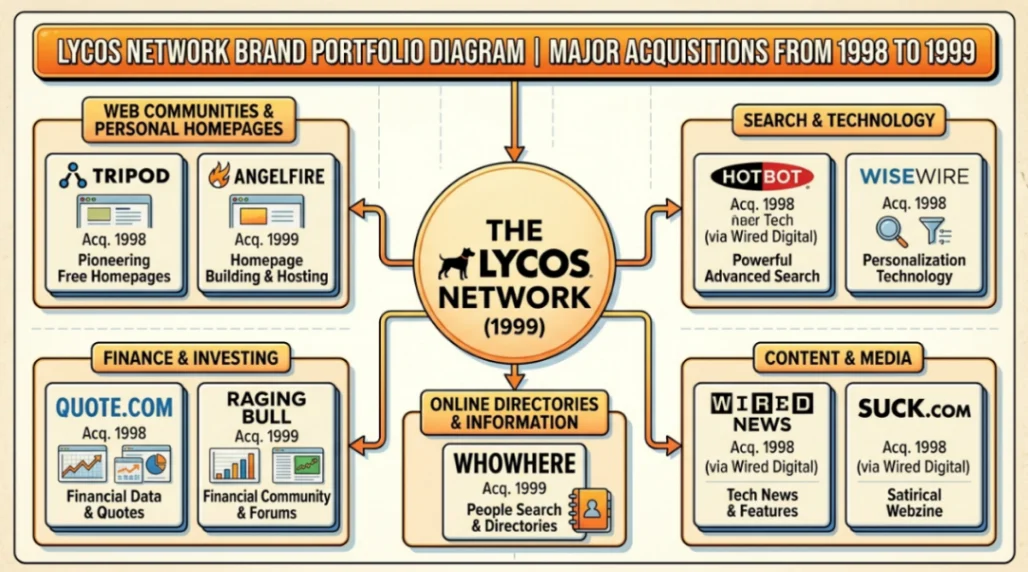
This was the golden era of personal websites. Millions of people had their own corner of the internet, and Lycos was the company that tied it all together. Tools like Microsoft FrontPage and Dreamweaver were fueling a whole parallel ecosystem for users who wanted even more control.
The Accidental Invention That Broke the Internet
Here's one of the wildest footnotes in internet history.
The pop-up ad was invented by a Tripod developer. By accident.
In 1997, a programmer named Ethan Zuckerman was trying to solve a very specific problem. A major car manufacturer (reportedly Ford) complained that their banner ad had appeared on a Tripod user's page with... let's say, very adult content. The advertiser freaked out and demanded a solution.
Zuckerman's fix was clever: write a few lines of JavaScript that would open a separate browser window containing only the advertisement, completely isolated from whatever was on the user's page.
It worked perfectly. Until other advertisers realized they could launch not one, but dozens of these windows simultaneously. Browsers crashed. Pages were buried. Users went insane.
In a 2014 essay titled "The Internet's Original Sin", Zuckerman publicly apologized for the invention, acknowledging that his good-intentioned workaround had helped create an advertising model built on surveillance and intrusion rather than genuine value. You can read more about how the pop-up ad was accidentally born if you want the full story.
The broader impact was massive. Companies like X10 pushed pop-unders so aggressively by 2001 that they reached 32.8% of the entire web -- but Jupiter Media Metrix found that 73% of X10's visitors closed the window within 20 seconds. X10 filed for Chapter 11 bankruptcy in 2003.
This same era of messy monetization influenced the table-based design chaos covered in our article on how web builders and table layouts broke the web.
From $12.5 Billion to $95 Million: The Rise and Fall
In May 2000, at the absolute peak of the dot-com bubble, Terra Networks acquired Lycos for $12.5 billion in stock. It was one of the largest internet deals ever done.
By August 2004, Lycos was sold again. This time to South Korean company Daum Communications. The price? $95.4 million. That's less than 1% of the 2000 valuation. A 99% wipeout in four years.
Daum tried to reinvent Lycos for the Web 2.0 era with products like Lycos Cinema, Lycos Phone, and Lycos MIX. None of them stuck. The company kept changing hands -- sold to Indian firm Ybrant Digital in 2010 for $36 million, then eventually rebranded as Brightcom Group in 2018.
| Date | Event | Outcome |
|---|---|---|
| May 2000 | Terra acquires Lycos | $12.5 billion deal at peak of bubble |
| Aug 2004 | Sold to Daum Communications | $95.4 million, 99% value loss |
| Aug 2010 | Sold to Ybrant Digital | $36 million |
| 2018 | Rebranded as Brightcom Group | Focus shifted to programmatic ad-tech |
The whole saga is a pretty stark reminder of how fast things can unravel when a platform's identity gets detached from its users.
The Slow Fade: What Happened to Tripod and Angelfire
There was no dramatic farewell. No big announcement. Just a slow, quiet unraveling.
Lycos had already pulled free hosting accounts back in 2012, shifting to paid "Lycos Publish" plans. Tens of thousands of legacy pages from the 1990s hung on in a kind of limbo -- semi-accessible, largely ignored, kept alive more by inertia than intention.
By January 2026, users on Reddit's r/DataHoarder and r/Archiveteam were reporting outages and "403 Forbidden" errors on Angelfire and Tripod. Whether these pointed to technical failure, neglect, or something else entirely wasn't fully clear -- but the community response was immediate. People started scrambling to save what they could.
The archiving effort ran into serious problems.
- Tripod servers were returning 502 errors that made bulk scraping extremely difficult
- Many old sites depended on Adobe Flash, which had already been dead for years, meaning even saved versions lost their original functionality
- Thousands of niche pages -- amateur game walkthroughs, early fandom sites, political papers -- had never been copied anywhere else
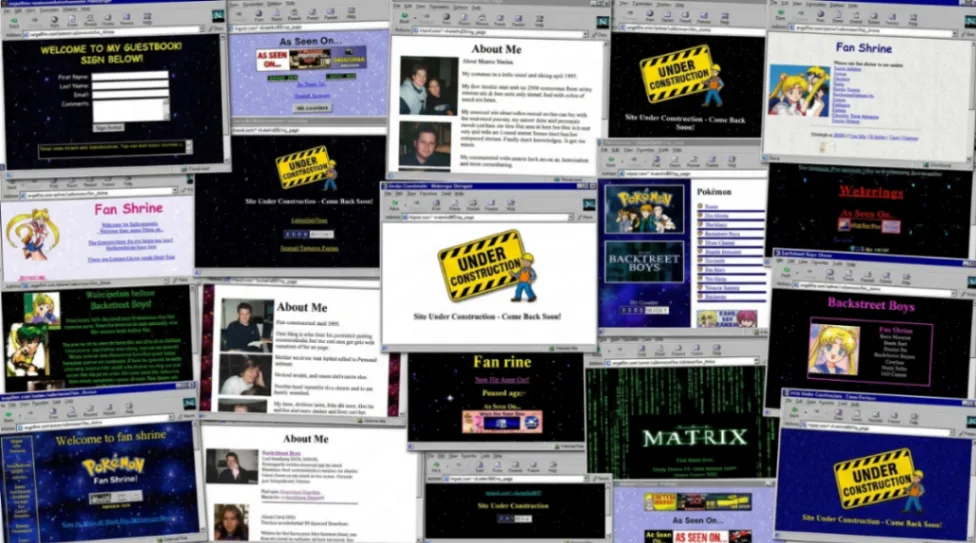
This is the part that stings most. These weren't polished publications. They were personal websites built by real people who just wanted a space on the internet to call their own. Fan pages, poetry, opinions, jokes, obsessions. The kind of building ugly first culture that the modern web has almost entirely lost.
Explore launch-ready no-code templates here!
Key Takeaways
-
Lycos was a genuine technical breakthrough. Built from three pages of code at Carnegie Mellon in 1994, it became the first search engine to automatically crawl the web and the first to go public, all within about 18 months. The speed of that rise still impresses.
-
Tripod invented personal publishing at scale. By pivoting from a college advice site to a free hosting platform with WYSIWYG tools, Tripod became the original no-code web builder -- letting millions of people create personal websites before the term "no-code" even existed.
-
The pop-up ad was born from a real problem. Ethan Zuckerman invented it at Tripod in 1997 trying to protect advertisers from brand-unsafe content. It was a reasonable solution that the industry weaponized beyond all recognition. That tension between monetization and user experience still defines the web today.
The story of Lycos and Tripod isn't really about two companies. It's about the first time the internet felt like it belonged to regular people. That feeling is worth chasing again.
FAQ
What was Tripod used for in the 1990s? Tripod was a free web hosting platform that let users build personal websites without coding knowledge. It offered 20MB of storage, CGI support, and a WYSIWYG editor, making it one of the first truly accessible web publishing tools.
Who invented the pop-up ad and why? Ethan Zuckerman, a developer at Tripod, invented the pop-up ad in 1997 to separate advertisers from inappropriate user content. He later publicly apologised for the creation in a 2014 essay.
How much was Lycos worth at its peak? At its peak in May 2000, Lycos was acquired by Terra Networks for $12.5 billion in stock. By 2004 it had sold again for just $95.4 million -- a loss of roughly 99% of its value.
When did Tripod and Angelfire start having problems? By January 2026, users were reporting outages and "403 Forbidden" errors on both platforms. Lycos had already removed free hosting accounts back in 2012, leaving legacy sites in a fragile, neglected state for years before that.
What replaced personal websites after the 1990s? Social media profiles on platforms like Facebook, MySpace, and later Instagram largely replaced personal websites. However, tools like Neocities and modern no-code builders have sparked a small but growing revival of the personal website format.
Start building without code
Browse thousands of no-code templates for Webflow, Framer, Bubble, Lovable, Replit and more.
Explore Templates