How to Launch on Product Hunt in 2026 (Maker's Guide)
To launch on Product Hunt in 2026, go live at 12:01 AM PST on a Tuesday, Wednesday, or Thursday with a public product, polished collateral, and a maker account that has built genuine community karma for weeks beforehand. Featuring is decided by a human curator, not raw upvote count, so authenticity beats volume.
Table of Contents:
- Key Takeaways
- Introduction
- Why Should Indie Makers Still Launch on Product Hunt in 2026?
- What Does Product Hunt's Curator Actually Look For?
- How Do You Build Launch Collateral That Converts?
- Do You Need a Hunter, and When Should You Go Live?
- How Do You Rally Support Without Getting Penalized?
- What Should You Do on Launch Day?
- Honest Tradeoffs: What a Product Hunt Launch Won't Do
- FAQ
Key Takeaways
- A human curator named Gabe Perez decides what gets featured on Product Hunt, which means raw upvote count alone will not save a generic launch.
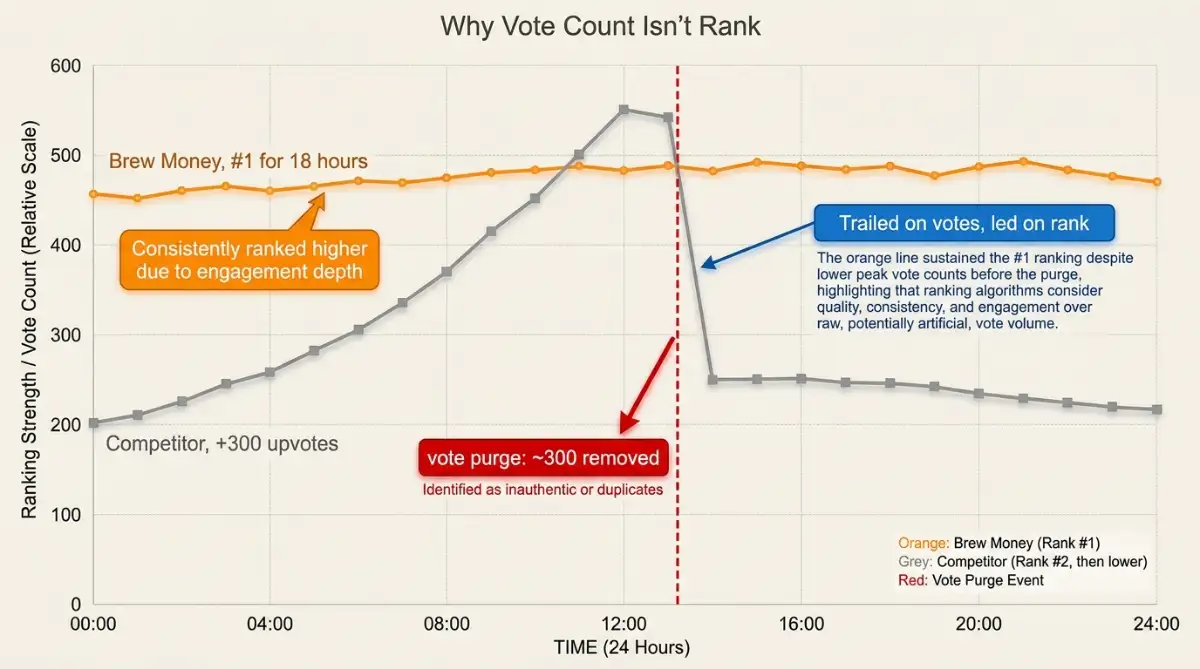
- Brew Money sat at #1 for 18 hours despite trailing a rival by 300 upvotes, proof that gaming the system backfires harder than losing the vote count.
- Your maker account needs weeks of genuine karma before launch day, because upvotes from brand-new accounts can quietly tank your whole launch.
Introduction
Most first-time indie makers treat a Product Hunt launch like a popularity contest, and that is exactly why most of them flop. The Brew Money team spent roughly 70 to 75 hours across ten days preparing, ranked third, and walked away with a playbook worth stealing.
Typo, by contrast, hit #1 of the day with around 2,000 upvotes and an 8x traffic spike. The gap between those outcomes is not luck. It is preparation, timing, and an understanding of how the platform actually works under the hood. This guide pulls real numbers from makers who have done it, plus the curator who decides what gets seen. Here is exactly how to launch on Product Hunt in 2026 without wasting your one good shot.
Why Should Indie Makers Still Launch on Product Hunt in 2026?
Product Hunt remains the fastest way for a bootstrapped SaaS builder to put a product in front of early adopters, investors, and tech press in a single 24-hour window. The payoff is exposure plus genuine feedback, not just a badge. When you launch on Product Hunt and rank near the top, the compounding effects start immediately.
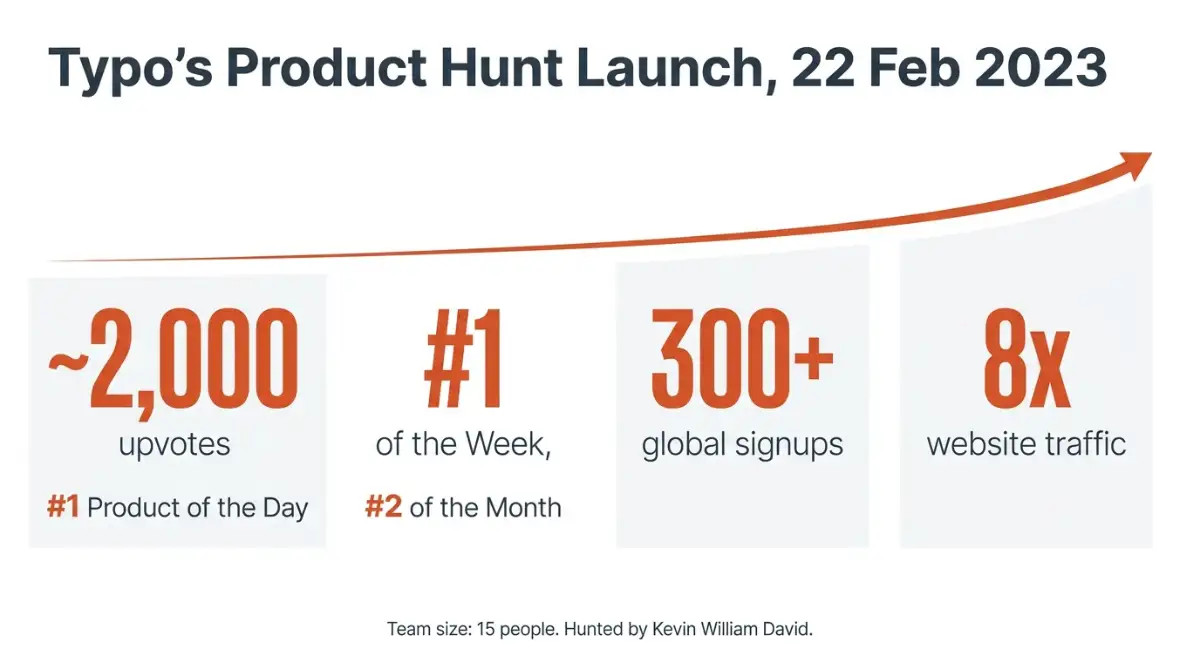
According to the Typo team's own launch breakdown, their February 2023 launch produced measurable results that small teams rarely see organically:
- Reached the #1 product of the day with roughly 2,000 upvotes
- Became #1 product of the week and #2 of the month
- Generated 300+ global signups
- Boosted website traffic by 8x
Typo is a 15-person team, and Brew Money was smaller still. Neither outspent anyone. The platform rewards a polished, public product that early adopters can actually use, then amplifies it through newsletters and social channels.
The top three products are usually featured in Product Hunt's blog, newsletter, and social channels, turning one strong day into weeks of residual reach.
If you are still validating, a clean landing page built for solopreneurs often matters more than the launch itself.
What Does Product Hunt's Curator Actually Look For?
Featuring on Product Hunt is decided by a human, not an algorithm chasing vote totals. Gabe Perez, who leads leaderboard curation, says he tries to test nearly every product hunted each day and surfaces the ones that feel novel, useful, and polished. Upvotes inform the picture, but they do not buy a feature.
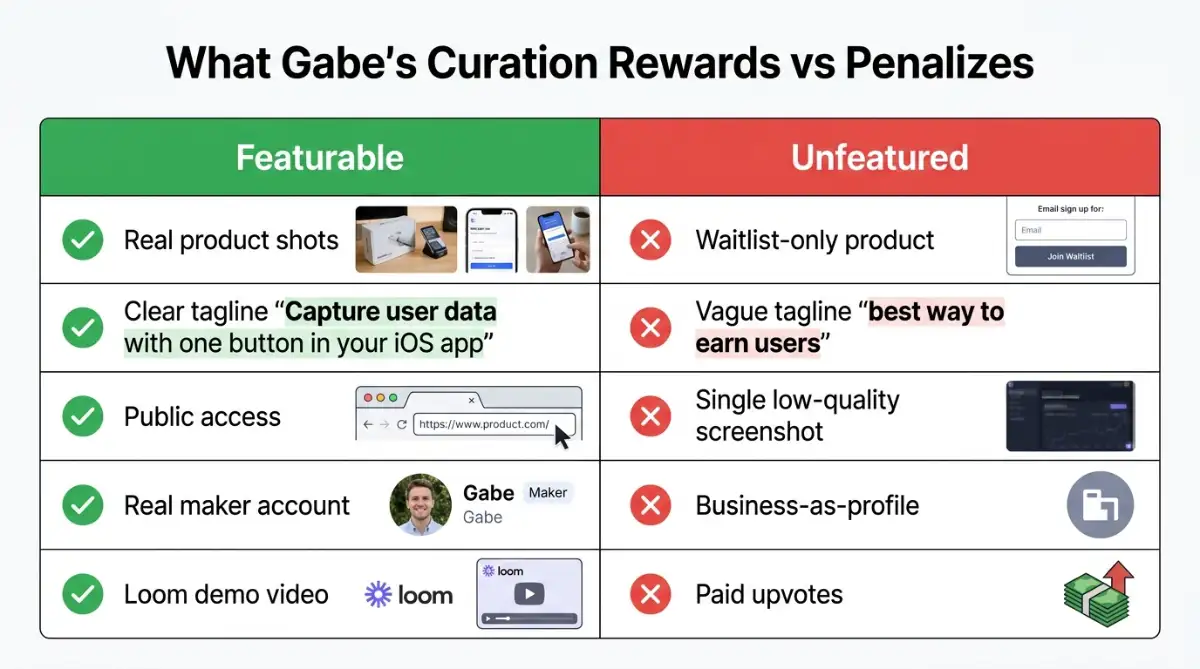
Perez has publicly listed the launch mistakes he sees most often. Avoid all of these:
- Launching a waitlisted or beta-only product the community cannot try
- Scheduling a draft instead of a real submission
- Using your product or business as your maker profile rather than a real account
- A vague tagline like "best way to earn users" that fails to describe what you do
- Marketing fluff images with no product shots or video
- Paying for upvotes or hunters, which can get you unfeatured entirely
His shorthand for a strong listing is the "mom test."
Make a draft and share it with people to confirm they actually understand what you're launching, before the clock starts.
Uniqueness weighs heavily. Perez compares it to being the first burger shop in town versus the twentieth: if your category is crowded, your launch has to stand out on design, approach, or integrations. If you are building in a hot space, picking the right no-code builder for SaaS founders can make that polish achievable on a solo budget.
How Do You Build Launch Collateral That Converts?
Collateral is the single most important lever in a Product Hunt launch, ranking above support and hunters in the Brew Money framework. Your images, video, tagline, and maker comment have to communicate the product before anyone clicks. Keep visuals simple and readable even as thumbnails.
The Brew Money team got strong feedback on design by following a few rules: minimal text in images, a short authentic walkthrough video (a simple Loom works), and an animated logo where possible. Because the product description caps at 260 characters, the maker comment is where you tell your real story, introduce the team, and detail features.
Here are the specs and limits worth bookmarking:
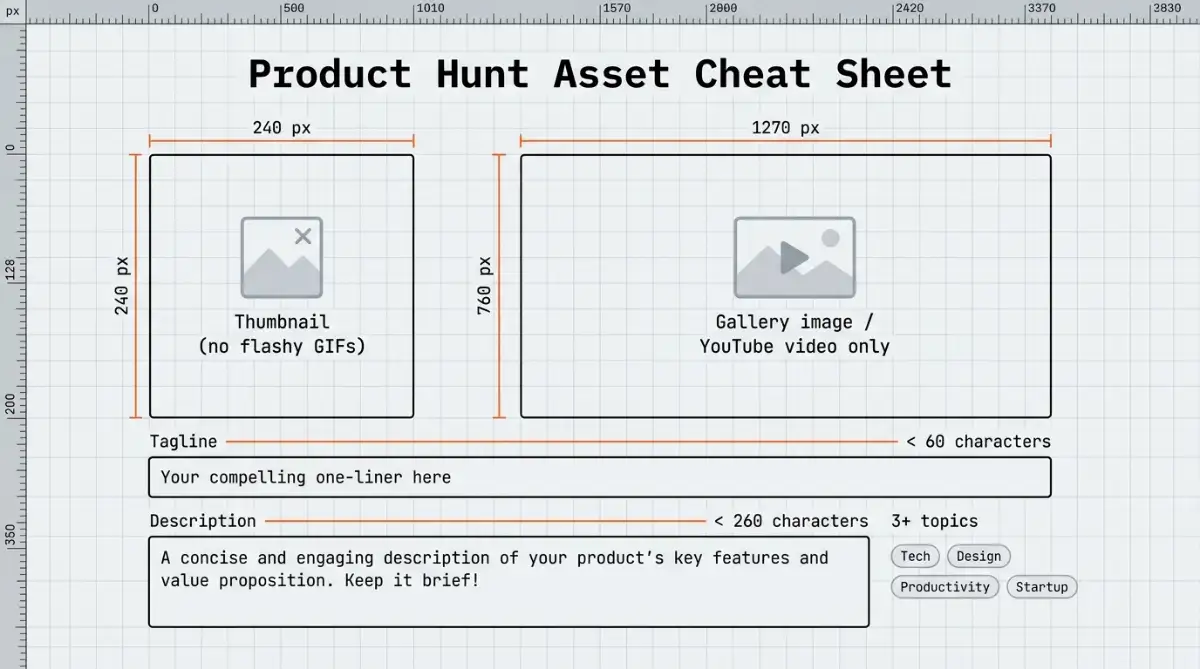
| Element | Spec or limit | Source |
|---|---|---|
| Tagline | Under 60 characters | Typo |
| Description | Under 260 characters | Brew Money, Typo |
| Thumbnail | 240 x 240 pixels | Typo |
| Gallery images | 1270 x 760 pixels | Typo |
| Video | YouTube links only | Typo |
| Topics | Add 3 or more | Typo |
Your images should make sense to someone who never clicks the listing, because most of the feed never does.
Give the Product Hunt community a special offer too. An incentive to try the product, per Brew Money, nudges genuine engagement. And make sure every maker on your team adds a comment.
Do You Need a Hunter, and When Should You Go Live?
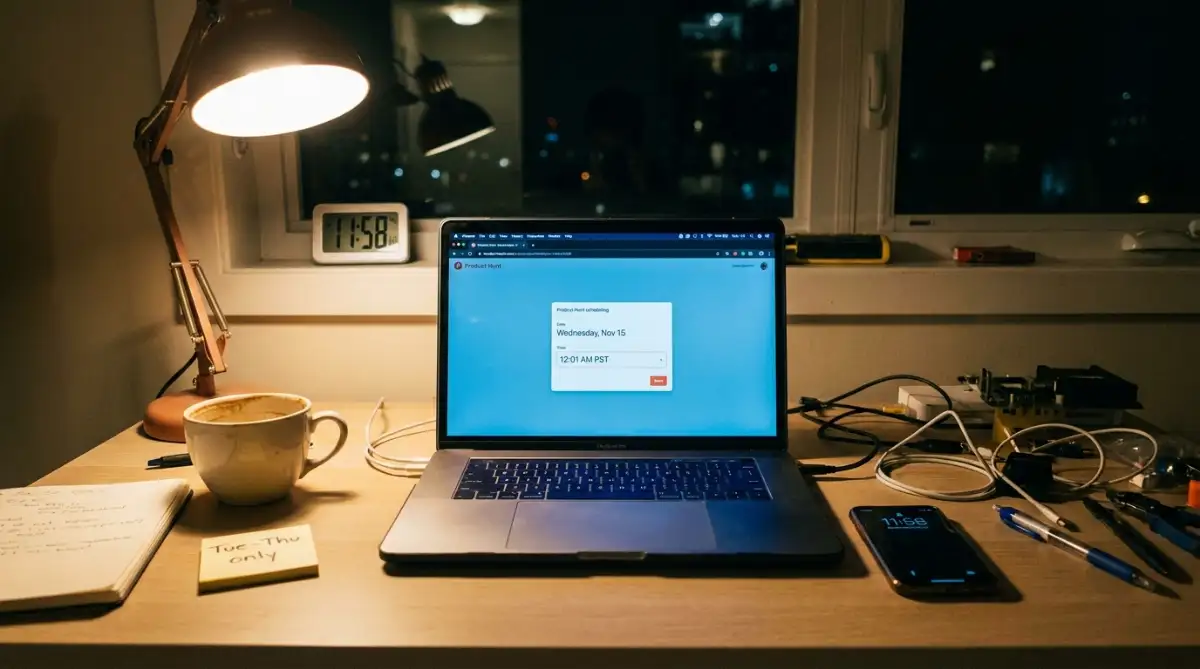
A hunter is not required, and paying one violates Product Hunt's guidelines. Both Brew Money and Typo confirm timing matters more: go live at exactly 12:01 AM PST so the 24-hour cycle gives you maximum runway. Posting after 9 AM PST is, in Typo's words, a hard no.
On the hunter question, Brew Money hunted itself and recommends you do the same or use an active power user. The official Product Hunt launch guide is blunt: there is no rule against an outside hunter, but paying anyone to hunt breaks the rules. Maker Florian Merian, named on a community shortlist of active hunters, adds that a hunter should match your audience, since he focuses on developer tools specifically.
When picking a launch day and approach, use this quick matrix:
| Scenario | Recommended move |
|---|---|
| You have a strong power user active on PH | Ask them to hunt; it stays authentic |
| No aligned hunter exists | Self-hunt, like Brew Money did |
| A hunter never covers your domain | Do not ask; it will look forced |
| Anyone requests payment to hunt | Walk away; it risks your feature |
Tuesday through Thursday are considered the best launch days. Schedule at least ten days out so you can run a coming-soon page and gather notify-me subscribers. The community-driven maker movement is built on this kind of mutual, unpaid support.
How Do You Rally Support Without Getting Penalized?
Support means building genuine community karma weeks ahead, not blasting upvote requests on launch day. Perez confirmed that authentic support never triggers Product Hunt's spam review, but rewarding users for votes, buying votes, or spamming communities does. The line is intent, and the platform watches it closely.
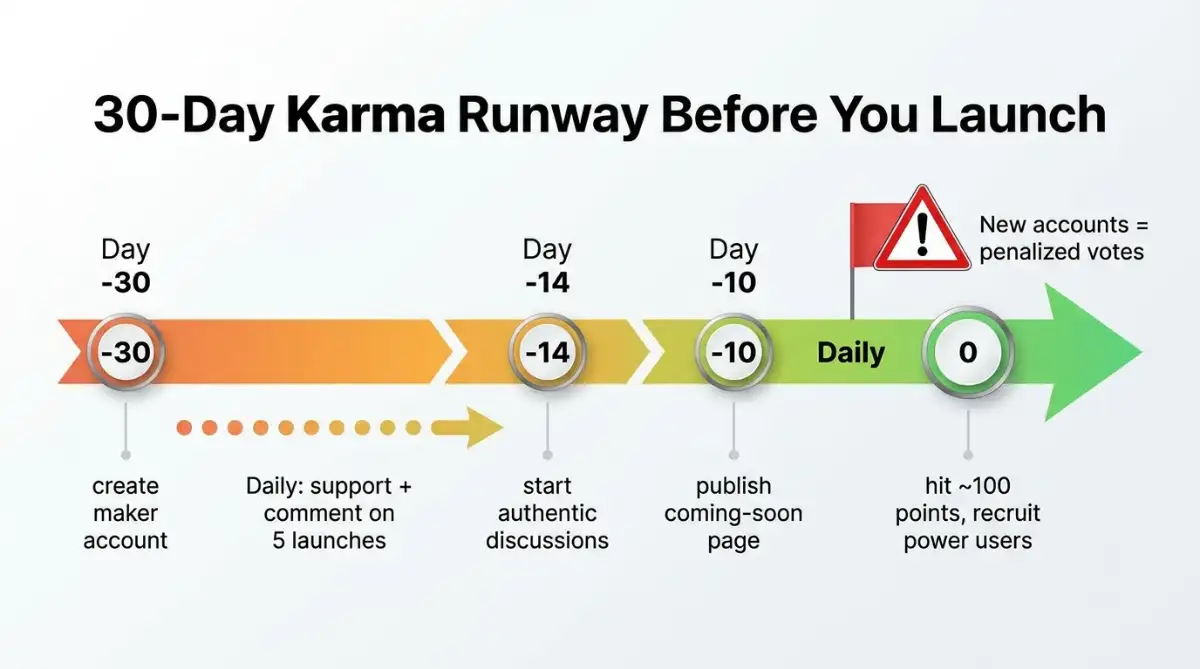
Brew Money recommends starting your personal brand at least a month early with daily habits:
- Support and leave meaningful feedback on at least 5 launched products a day
- Answer other makers' discussions with comments that add real value
- Start your own authentic discussions about problems you face
- Aim to reach roughly 100 karma points before you launch
There is one trap that quietly kills launches: new accounts. Brew Money warns that upvotes and comments from accounts created just before launch will be penalized, so power users must sign up weeks early. Avoid agencies promising you "product of the day" entirely, because that path gets you penalized.
The Product Hunt forum guidelines reinforce this. Low-effort posts that exist purely to farm engagement, link-dropping without context, and excessive self-promotion can all get your contributing privileges restricted.
Brew Money trailed a competitor by 300 upvotes yet held #1 for 18 hours, because the rival had farmed votes from new accounts.
What Should You Do on Launch Day?
Launch day is a 24-hour engagement sprint, and responsiveness moves the needle more than any single upvote push. The Brew Money team replied to every comment as fast as possible, which lifted engagement and ranking. Their competitor outscored them on raw votes but still lost the top spot for most of the day.
Run your launch day on these non-negotiables:
- Go live at 12:01 AM PST, not a minute later
- Reply to every comment immediately to drive engagement
- Track progress minute by minute with a live leaderboard tracker
- Stagger your outreach across the 24 hours rather than all at once
- Keep someone manning social channels to thank supporters
- Never pay for upvotes; the rival reportedly lost about 300 votes for trying
Typo divided outreach into blocks, asking close contacts in the first few hours and widening from there, while posting hourly upvote updates on LinkedIn. The point is steady momentum, not a single spike that looks manipulated.
Ask for support and feedback, never for upvotes, because peer-pressured votes are exactly what the platform's spam systems are tuned to catch.
After the dust settles, thank every supporter personally and analyze your numbers: upvotes, comments, referrals, and signups. Then pay it forward by helping the next maker launch.
Honest Tradeoffs: What a Product Hunt Launch Won't Do
A great launch is not a growth strategy, and pretending otherwise sets indie makers up for disappointment. Here is what the highlight reels leave out.
First, ranking is not promised, and being product of the day guarantees nothing afterward. Typo is candid that what worked for them may not work for you, and that reaching your target audience matters more than a badge. One forum maker pointed out that a non-featured launch can produce almost no organic queries, even when it tops the unfeatured section.
Second, the system is curated, not democratic. Gabe Perez reviews products, not vote counts, and openly says the leaderboard is not meant to be a popularity contest. That means a quirky, polished toy can beat a serious tool, which frustrates makers expecting merit to equal function.
Third, the time cost is real. Brew Money spent 70 to 75 hours over ten days, and that was for third place. If your product is waitlisted, in beta, or genuinely undifferentiated in a crowded category, the honest answer is to wait. Relaunch later when you have a public product and a significant update, since Product Hunt generally expects six months between launches.
Start exploring launch-ready no-code templates here!
FAQ
What is the best day and time to launch on Product Hunt? Go live at 12:01 AM PST on a Tuesday, Wednesday, or Thursday. The homepage runs on a 24-hour cycle that refreshes at midnight Pacific, so an early start gives you the full window. Posting after 9 AM PST is widely discouraged.
Do I have to pay a hunter to launch on Product Hunt? No. Paying anyone to hunt your product violates Product Hunt's guidelines and can hurt your launch. Brew Money self-hunted and ranked third, and the platform allows outside hunters as long as money never changes hands.
How much does it cost to launch on Product Hunt? Launching is free, including a coming-soon page. The real cost is time. Brew Money invested roughly 70 to 75 hours over ten days. Paying for upvotes, hunters, or "top product" agencies is banned and risks getting you unfeatured.
Why didn't my product get featured even with lots of upvotes? Featuring is decided by a curator who weighs novelty, usefulness, and polish, not vote totals. Common disqualifiers include waitlisted products, vague taglines, missing product shots, and any sign of purchased votes or fake engagement.
Can I relaunch on Product Hunt if my first launch flops? Yes. Product Hunt generally expects about six months between launches, though significant updates may qualify sooner. Relaunch only with a meaningfully improved, public product, since near-identical relaunches can be flagged as spam.
Start building without code
Browse thousands of no-code templates for Webflow, Framer, Bubble, Lovable, Replit and more.
Explore Templates